Special Purpose Inspections — Damp at the Base of a Wall After Garden Watering
A wall stays dry through some rain but shows marks after irrigation. Give the inspector a record of when the marks appear and how the garden meets the building.
Explore special purpose inspection options
Compare timing before drawing a conclusion
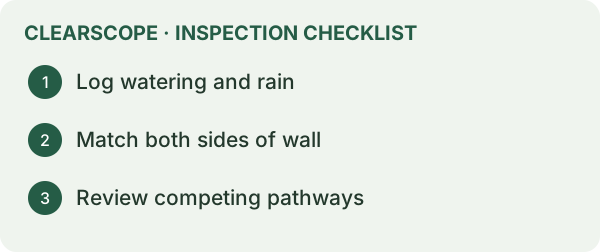
Record the watering zone, approximate start time and how long it took for the mark to appear. If it also happens after rain or on days when watering is off, keep those entries too. A repeat pattern is a lead for investigation. Similar marks can have more than one contributing source.
Photograph both sides of the affected area
Show the inside wall and skirting in a wide view. Outside, take an image of the corresponding elevation and include garden levels, sprinklers, visible drains and downpipes. If a planter or paving meets the wall, show that junction from an accessible angle. Record an interior landmark so the locations can be lined up during the visit.
What a targeted building visit can establish
An inspector can describe accessible moisture-related signs, visible site conditions and the scope limits. If readings are suitable and agreed, comparisons may help identify where evidence is concentrated. Depending on the pattern and access, possible follow-up can include a drainage assessment, an irrigation check or examination of concealed conditions by the relevant specialist.
Distinguish a correlation from a confirmed pathway
For example, an internal mark beside a garden bed that is watered nightly could justify checking sprinkler spray and nearby drainage. If the external view also shows a downpipe at the same location, preserve that observation separately. Ask which observations are consistent, which remain unexplained and what additional evidence would materially change the next decision.
An example with competing explanations
Suppose the mark follows watering on several days but also appeared after a storm. Record both sets of dates. If the outside wall sits beside a downpipe, a planter and a sprinkler head, photograph them all. The next inspection can consider the whole location and recommend which line of investigation has the strongest visible support.
Show the property layout in your enquiry
A quick sketch with the room, outside garden, watering zone and nearest downpipe can clarify the brief. If a side passage is shared or locked, explain how access will be arranged. If the irrigation controller has a program log, keep the relevant dates available.
Agree what would justify the next step
Ask how the visible findings will be reported and which unknowns could affect the next decision. If a separate trade visit is recommended, provide the same location notes and dated evidence. If finishes have been painted or landscaping has changed, include that history.
Prepare the inspection brief
Send a dated sequence, property photos and any recent landscape or plumbing work. Mention which locations are safe and accessible and whether the problem affects several rooms. Discuss the assessment scope before any destructive work is arranged.
Map where the irrigation water goes
Start with a sketch of the wall and the garden on its other side. Mark the nearest sprinklers, drip lines, hose connection, paving edge and low points that are visible. If the garden is uphill from the wall, show where the surface changes from soil to paving and whether there is a channel or inlet between the two. A bed can be wet next to the wall while the irrigation head points away from it. That makes the route through soil or over the surface a separate question from direct spray. Record the parts you can see and label buried connections or outlets as unknown unless their locations can be established from documents or appropriate investigation.
Look for the earliest change you observed rather than only the darkest mark. A wet line on an outside wall immediately after sprinklers run is one clue. A mark that appears indoors later and takes longer to fade is a separate observation. Identify each one relative to a window, corner or doorway so the positions can be compared. If the mark is higher than the nearby soil, record the exact locations and ask whether other sources need to be considered. Water does not always appear at the point where it entered the construction.
In an example, a sprinkler wets paving close to a window and the garden bed stays wet against the wall. The affected interior finish is below the sill at one end. The inspection brief should ask whether visible clues support direct spray at the opening, water held near the base of the wall or another source. If more than one path remains plausible, list the observations that support each and identify what further access or checks would distinguish them. This can help you avoid changing a whole garden before you know which conditions matter.
Compare several events without recreating the problem
Write down what happened during normal use and recent weather. Include the irrigation schedule if you have it, which zones operated and whether the outside area was already wet. If there was rainfall the same day, note approximately when it began and how long it lasted. A soil bed that remains damp between events can make it hard to see the effect of one watering period. An inspector can use the timeline with the visible condition and may still need another source of evidence to distinguish the effect of irrigation from rain.
If you can safely pause irrigation, tell the person investigating when it was paused and whether the affected finish changed. Avoid turning the system back on or directing a hose at the wall to demonstrate the concern. The priority is to prevent further exposure while you gather useful information. Any controlled testing should be planned by the relevant practitioner, with the area and purpose agreed in advance. A result will relate to the conditions and parts tested. It may leave other possibilities open, such as rain entering a different junction or a concealed irrigation line releasing water over a longer period.
Suppose the garden watering was paused for several days, the stain lightened and then grew after a storm. Record the time between the two changes and where rain was seen near the wall. The pattern can support an investigation of more than one pathway. It might warrant looking at surface levels and nearby drainage as well as the irrigation installation. Drying after an event can take time, and an earlier change may overlap a later one. Report the observed sequence in plain terms so a person assessing the site can decide how much weight it deserves.
Give the inspector a view of both sides of the wall
Inside, mark where paint, plaster, cabinetry or floor finishes first changed. Outside, identify the corresponding section of wall and the features close to it. If the floor level and garden level appear close, show their relationship in a wide view. If a garden feature hides the wall base, mention the obstruction. A useful inspection can compare accessible observations inside and outside, describe the layout, and identify where further work is needed. The report should state if a buried drain, concealed wall detail or inaccessible boundary limits what can be established.
Surface measurements, where appropriate, can help describe a pattern. Ask which materials were compared and what conditions were present. A reading near damp soil and a reading on a dry interior lining answer different questions. Concentrate on what the measurements add to the visible observations. They do not identify which pipe, junction or event contributed to moisture without further evidence. Tell the inspector if the area was recently repainted, dried or disturbed, so that changes in appearance can be considered alongside the timing.
Check visible stormwater features in the same area as part of the site context. A downpipe discharging near the affected corner or a path sloping towards the wall can be relevant even if the issue was first noticed after watering. The Building and Plumbing Commission’s stormwater guide explains what runoff is and how it relates to a property. Questions about the installed drain connection or performance should be directed to a suitably qualified drainage practitioner. Give them photographs, a sketch and the times at which the area was wet.
Sequence the decisions before replacing finishes
Decide which issue needs attention first. If a sprinkler visibly wets the wall, tell the person responsible for the irrigation and record how exposure will be prevented. If a wet patch persists when irrigation is off, give that information to the building inspector and plumber or other relevant practitioner. If evidence suggests a concealed problem, ask what targeted assessment would resolve it and what permissions or making good are involved. A gardener, irrigation installer, plumber and building inspector may each have a different role. A short scope for each helps avoid treating one observation as the answer to every question.
For example, an irrigation contractor adjusts the spray direction and the outside wall is no longer visibly wet after watering. Interior skirting remains swollen and the same corner darkens after rain. Record the improved spray condition separately from the ongoing interior concern. That can guide the next inspection towards the rain event and any accessible drainage or wall junctions. The practical question is whether moisture is still entering and whether any affected material needs drying or repair before new finishes cover it.
Provide the property address, a sketch of the inside and outside locations, photographs from before changes and your short timeline. If you have a sprinkler diagram or a record of recent drainage or landscaping work, include it and mark any part you cannot confirm. Give ClearScope the question you need answered, such as whether visible site conditions help explain repeated damage at a bedroom wall. A special purpose inspection can then be discussed around the concern and available access. If there are signs of mould, the BPC moisture and mould guidance also explains why addressing the moisture source matters before relying on cosmetic repairs.
Record what changed after the first repair
Ask for a short written record of any work carried out to an irrigation head, pipe, drain or garden surface. Include where it was done and how the person who did the work checked it. If a garden bed has been reshaped, ask where water is intended to go now. A wide photo can show the new falls or the location of an inlet. Keep observations of the repaired outside area separate from the condition of the inside finishes. The two may change at different rates.
Where the work depends on a concealed detail, record which part was opened and what remained beyond the opening. Ask whether a follow-up observation after ordinary rainfall or irrigation is appropriate once the relevant practitioner has completed the work. If a mark returns, record the first date it reappears and what happened beforehand. A reliable sequence can make further investigation more efficient, especially when the original contractors and the people later inspecting the building are different.
Where the garden adjoins another property, tell the inspector which features are visible from your side and whether any work will require the neighbour's involvement. The relevant drain or irrigation zone may serve a different area from the part you can photograph. Confirm any permission before asking a contractor to investigate beyond your property. If a fence or raised bed hides the relevant edge, include that limitation in the brief so the investigation can distinguish the visible conditions from questions that need a different view.
Talk to ClearScope about the inspection
Tell us the address, the date that matters and the item you want checked so we can discuss scope and availability.