Pre-Purchase Building Inspections in Watsonia
You’ve found a house in Watsonia close to the station, and the listing photos show a hairline crack at the front window. During the open you notice a second mark by the driveway. You want to know what you’re buying and whether nearby infrastructure works change what you should ask for. Start with the actual address, the visible condition and any dated information for that property. For a Watsonia purchase near major works, ask for dated condition records alongside a fresh inspection of the areas you can access. This helps you put the crack, the driveway and the seller’s account into an order that makes sense before the auction or offer deadline.
Establish which project information applies
Banyule Council’s Watsonia Train Station page explains the council’s advocacy for station and precinct changes. Victoria’s Big Build identifies Watsonia in its North East Link project information. These public sources give you local context and a place to check project boundaries or current notices. Use the address to see which project information is relevant to your enquiries. If a plan or notice is unclear about access from the street, ask the project team for the current information and whether there are address-specific records that can be shared with the current owner.
The evidence basis here is public council and project information, checked alongside ClearScope’s existing service coverage. It supports questions about the location and potential relevance of works, and it cannot establish condition at any home or predict which property will show damage. A house along a street with temporary access changes may still have a straightforward inspection. A quiet street can have properties with longstanding defects worth understanding. Book the Melbourne pre-purchase inspection for the building condition you need assessed, and ask the selling agent about access arrangements separately so the visit can proceed as planned.
Make the property address do the work
Start with the house or unit you are buying. Mark the parts you expect to use, such as the driveway, side entry, garage and ground-level rooms. If the driveway is shared, ask the agent who can arrange access and whether there is a title plan or owners corporation information your conveyancer can review. Arrange access to the parts relevant to your purchase with the person who can authorise entry. If the inspector can see a concern in a nearby common area from an accessible point, ask how it can be described and what would require further permission.
If you’re comparing Watsonia with a house in a neighbouring suburb, keep your questions anchored to the address. Our Greensborough pre-purchase guide is a separate guide for buyers looking there. Take the same practical approach when comparing homes: list which parts were accessible, which observations were supported by documents and which checks you still need. If the local planning or works information names a precinct, check the boundaries and notice date rather than assuming the entire suburb has the same circumstances. Ask the agent for any relevant current notices held by the seller.
If the agent mentions that the seller received a project letter, ask for the whole document and any later updates. A letter about road access can be useful to plan the visit. A letter about a condition survey can help the owner identify who to ask for a copy. Give each record a short label with its date and purpose. That makes it easier for the inspector to see which material is relevant to the physical condition question and for your conveyancer to pick out the items that belong with the sale documents.
Start with observable condition
At the open, stand back far enough to see the wall, paving or opening around the mark. If you’re allowed to take photos, keep a wide view and a close view of each location. Look for clues that help the inspector find it again. A diagonal crack beside a window may be easiest to locate by recording the room, wall face and corner of the opening. Note whether doors or windows appeared to stick during normal use. Leave forced operation and any unsafe or inaccessible views for a suitable assessment.
When briefing the inspector, mention whether you see a similar mark inside and outside or whether only one face is visible. Ask for the crack’s position, pattern and any nearby signs of movement to be considered together. The cracked brickwork buyer’s guide explains how an inspector considers observations around the affected area. A new patch or a painted section can change what is visible. Ask the seller when the repair took place and if there are earlier photographs. A short answer such as “it was patched before painting last summer” still gives you a date range to compare with other records.
Ask for a property-specific timeline
Ask the agent whether the seller holds any dated condition survey, photographs, maintenance invoices or relevant correspondence. Find out who prepared each document, why it was prepared and which areas it covered. A survey arranged for nearby work may cover certain external areas only. A photograph can help establish how one wall looked at a particular date when you can match its position and angle. If the document is described as a baseline, check what stage of nearby work it predates, how access was obtained and which building faces were outside its scope.
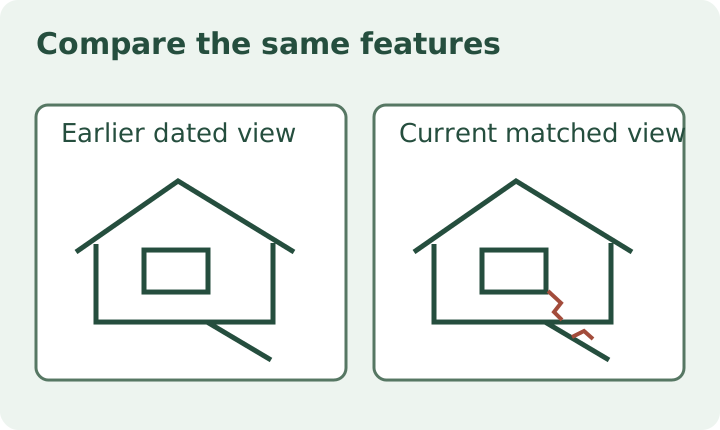
Compare equivalent views wherever possible. A driveway photo taken from the street may show the top edge clearly while hiding the joint at the garage door. An internal image from before repainting might show a mark, but at a resolution that limits what you can compare. Our condition comparison guide explains why matching viewpoints and recording the date matter. If no older material is available, record that gap and commission the inspection on the understanding that it will describe the current accessible condition. Ask your conveyancer about access to records and any transfer questions relevant to your purchase.
Look beyond the front wall
Pay attention to what could change your day-to-day use of the house. Can you reach the garage without crossing a visibly uneven area? Does the lower part of the drive send surface water towards the house? Is the rear yard accessible on inspection day? A photo at the front window can become the focus because it was in the listing, while an inspection of accessible building areas may identify a separate issue at a lower threshold or around the roof drainage. Give the inspector the concern that brought you to the inspection and the features that would affect your plans.
If a paving joint or a damp garage wall is part of the question, ask for nearby falls, accessible drains and the relationship between the garage and adjoining spaces to be considered. Banyule’s property flooding guidance explains the role of the property’s legal point of discharge. If drainage records matter, ask for the relevant property documents and advice from a plumber about what can be checked. Use our home buyer’s drainage guide to note the outside locations you want the inspector to see. Visible falls and grates can guide the next enquiry while the condition of buried pipes remains a separate question.
Decide which follow-up is worth arranging
In an illustrative purchase near the Watsonia precinct, a buyer notices a crack below a bedroom window and another at the driveway edge. The seller provides a front elevation photo from before nearby works, taken far enough away that the brick joints are hard to read. A later photo clearly shows the crack but has no comparable driveway view. At inspection, the practitioner records the observable wall and paving conditions and comments on other nearby signs that can be assessed. The buyer can use those observations to ask whether an engineer should look at the wall, without assuming the same explanation applies to the driveway.
Where an inspector recommends a targeted assessment, ask what it would add before organising it. A survey of floor levels, an engineer’s assessment of movement or an accessible drainage investigation may each answer a different question. The available access, permission and time before the sale matter. If the seller’s older records are inconclusive, ask the inspector to say where the limits were and which finding warrants follow-up. You can see the kinds of observations and limitations that appear in the ClearScope example reports. Bring the report to your conveyancer when you need help with sale terms or property records.
Consider the possibility that one of your follow-up checks can’t be arranged before the sale. Make a note of the affected part of the building, the observations already available and what the specialist would need to see to give you a useful answer. If a vendor offers more photos instead, ask for the date, location and a wider view around each feature. The images can help you direct a future inspection. Where the evidence stays incomplete, put the unresolved issue in your decision notes and discuss timing and conditions with your conveyancer.
Book around access and the sale date
When you request a visit, send the Watsonia address, your offer or auction date, the name of the person arranging entry and the features that concern you. Let the agent know if you need access through a side gate or to an unlocked garage, and ask whether there are keys or arrangements for any shared space. If nearby works affect your travel route, use the current project information to plan arrival and allow for changes to access. Ask the inspector to flag any important area they could not reach and explain whether another appointment would be useful.
After you receive the report, keep three records together: the observations from the inspection, the older documents you were able to obtain and the questions that still need an answer. A visual report can describe visible condition at a point in time. Assigning a cause or assessing future movement can require earlier records and specialist investigation. Decide which uncertainty affects your offer and get advice before your deadline where possible. If it’s useful to give the inspector context before the visit, send one or two relevant, dated images and say exactly where they were taken. That usually gives a clearer starting point than sending a folder of unlabelled screenshots.
References
Ask ClearScope about your property
Send the property address, your buying deadline and the areas you want checked.
Request an inspection