Pre-Purchase Inspections — What You Can Find Out About Buried Stormwater
The downpipes at a home may all disappear neatly into the ground. That still leaves a useful buyer question: where does the water go? If the property has a rear extension, a sunken courtyard or a history of yard flooding, ask what the building inspector can see and whether the buried system needs a separate check. A well-framed drainage question gives the next person a place to start.
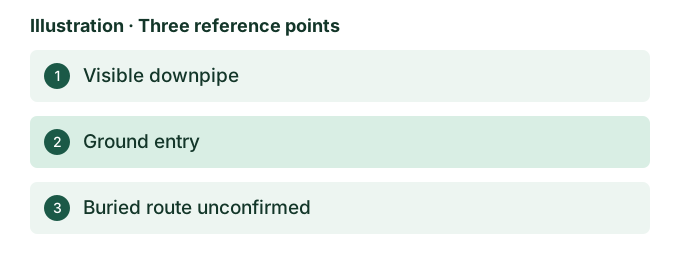
Make a rough map at ground level
Mark the downpipes, surface grates, accessible inspection points and any visible overflows you can identify from the agent’s plan or photographs taken with permission. Show the rear addition and any garden wall dividing a low area from the street. Ask whether there is a plan or invoice for drainage changes. A drawing showing a proposed route is worth having, but confirm whether it is a record of what was actually installed. The Victorian due diligence checklist gives buyers a way to organise broader enquiries about water risks and property records. Victorian home buyer due diligence checklist.
Record the symptom and its timing
Water at the rear door after short intense rain raises a different question from dampness that develops days later in a shaded room. Ask when it happens, how long the water stays and whether there are images from an actual event. Note if the symptoms began after a pergola roof was connected or paving was laid. Look for surface grades and outlet locations before asking someone to diagnose the buried pipes. Even a clear photograph of a downpipe entering a socket can only show what is visible at that point.
Know what the ordinary visit can achieve
A visual building inspection can identify accessible conditions such as an isolated downpipe, damaged grate, ponding marks or signs of earlier changes to the ground. Its scope depends on the property and the access agreed. A dry visit cannot reproduce a storm, and inspection of a downpipe at ground level does not trace concealed connections. Consumer Affairs Victoria discusses arranging independent inspections before a purchase. Ask separately if you want a licensed plumber to identify the downstream route, investigate a blockage or assess drainage performance. Consumer Affairs Victoria’s pre-purchase inspection guidance.
Brief the drainage specialist with a question
Give the plumber the problem location, rain history, available drawings and agent’s instructions for access. Ask which accessible entry points can be used and what their report will show. A camera may identify defects or obstructions in a reachable length, while a tracing exercise answers a routing question. If the line cannot be reached or passed, ask which part remains unknown. If the question is whether the property floods in major storms, discuss the need for broader advice on runoff, local flood information or downstream constraints separately from a pipe condition report.
Ask about the discharge point and shared systems
On a sloping or subdivided block, there may be more than one possible route from the house to a discharge point. If a pipe seems to run across another title or join a common area, ask your conveyancer about relevant plans and documents. Ask the council or other responsible authority for available drainage information where appropriate. An apparent route on a plumbing sketch does not establish permission to use it. Put responsibility, approvals and physical condition in separate columns so the person checking one question can see the others remain open.
Decide what a limited visit can leave you with
A plumber may be able to locate a line without determining the overall stormwater capacity. An engineer or drainage designer may need additional levels, catchment information or information about what happens downstream. In a short purchase window, start with the point that most affects your decision. For example, if the laundry flooded and the visible grate is heavily obstructed, ask whether the line can be assessed with existing access and whether the observed obstruction explains what happened. If the entire rear courtyard has no visible outlet, tell the specialist what you could and could not see. If access cannot be arranged, carry that constraint into your discussion with your conveyancer rather than treating silence in a general report as confirmation.
Separate three questions about a buried drain
Ask whether you need to know the route, the pipe condition or how the system performs under heavy rainfall. These are different tasks. Locating a line may establish where it runs and approximately how it relates to a future extension. Inspecting the accessible interior may reveal a displaced joint or obstruction. Assessing the system’s performance may need more information about contributing roof areas, surface drainage, downstream conditions or the type of rainfall associated with the problem. Before asking for a quote, decide which of these questions could change your purchase decision and give the specialist the available drawings, observations and dates.
If you intend to extend the house, mark the proposed works area alongside the observed and documented service routes. The property inspection records the existing condition it can see. A plumber or designer can advise on what else needs to be established for the proposed work. Ask your conveyancer which documents, plans and enquiries are relevant if a line may cross other land. Keep a proposed route separate from a confirmed one when taking the information to a designer or builder.
Use the seller’s account to plan the visit
If the owner reports that one drain backs up, ask for the grate location and an approximate date or season. Was water confined to the garden, did it reach a door, or was it noticed somewhere indoors? Was there a particular storm, or does it happen during ordinary rain? Check whether the owner had a plumber attend and ask for the report or invoice. A receipt for clearing a drain and a record identifying the cause provide different information. Ask whether there has been another event since the work and whether it affected the same area.
At the property, note which of the recorded areas can be reached without moving heavy covers, entering pits or removing finishes. Ask the inspector to describe the visible features that could assist further investigation, including accessible grates or pipe entries. A wet area near an extension could also be affected by paving falls, water from above or discharge from a separate roof. Ask the inspector to locate those visible observations without assigning a concealed cause from surface evidence alone.
Request a report you can use after the visit
If a drainage specialist can inspect part of the system, ask them to identify the access point, direction of inspection, which section was reached and where the assessment stopped. Ask for enough context to match the finding to the property. A sketch or marked plan can help the building inspector and plumber discuss the same place. If an obstruction prevents inspection further along, find out whether the specialist recommends clearing it, finding another access point or investigating that portion later. Clarify what would require further permission from the owner.
Compare the proposed repair with the question the evidence supports. A quote to replace a local damaged section may leave a separate capacity problem unresolved. A recommendation for further testing may be appropriate if the affected area cannot be linked to a reachable line. Ask what the specialist would check after the work and whether the result depends on rainfall or a planned test. Before your purchase deadline, give your conveyancer the findings and the outstanding checks. A clear record of which issue remains open is more useful than treating a short inspection as a guarantee that the whole drainage system will work in every storm.
Keep private drainage and the street system separate
When a resident describes water backing up from the street, ask where they actually saw it. A report of water rising at a yard grate does not, by itself, identify a failure in the street system. The specialist may need to understand the property’s discharge arrangement, which parts are accessible and which party manages the downstream asset. Send any available record to the relevant authority or trade and ask what further evidence is needed to investigate. Avoid promising that replacing private pipework will resolve a problem outside the property.
If the purchase includes a unit or townhouse, clarify whether the pipe serves several dwellings. Ask the conveyancer what documents describe the shared arrangement and who can authorise inspection or work. If a line cannot be traced on the purchase timetable, record that as a limit. The decision can then take account of both the visible site condition and the unanswered shared-drainage question.
Compare evidence from two areas
Illustrative example. The downpipe serving an old laundry ends over a garden bed. The downpipe on the extension is connected at the surface, but the owner says a grate beside the extension backs up in heavy rain. The inspector records both locations. Fixing the first discharge would address a visible local issue, while the backed-up grate needs its own investigation. A report that assigns the whole issue to the old laundry based only on proximity would miss the uncertainty about the rear system. Ask for a price for the confirmed scope and a separate allowance or option where additional access is needed.