Pre-Purchase Inspections — Vacant Homes and Disconnected Services: What Buyers Should Arrange
A vacant house can be easier to walk through, yet harder to assess in some important ways. Water may be turned off, appliances may have been removed and the home may not have been heated or ventilated for months. A clean, empty room tells you little about how the building behaves when it is occupied. Before buying, establish which services are available and which questions will remain unanswered after the inspection.
This guide concerns an existing property being considered for purchase. A pre-purchase inspection can record accessible building condition and explain limitations. It cannot replace electrical, gas or plumbing certification, or establish the operating condition of disconnected systems. Tell ClearScope about the vacancy and your purchase deadline when arranging access.
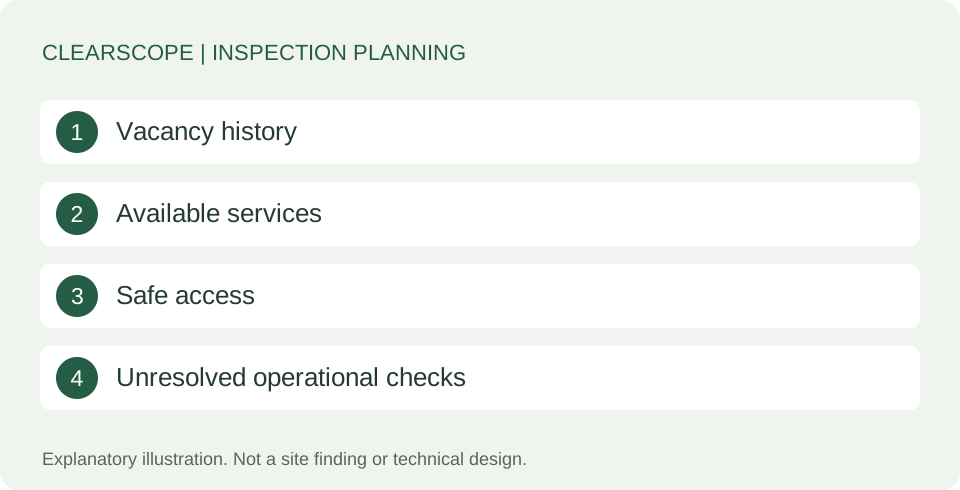
Ask how long the home has been empty
There is a useful difference between a home vacated last week and one left unattended through several Melbourne winters. Ask when it was last occupied, whether water leaks have occurred and who has visited regularly. These are questions for the seller or agent; an inspector cannot infer an accurate history from dust, an odour or a recently cleaned room.
Record answers as supplied information rather than established facts. A seller's account can guide inspection priorities, but the report should distinguish it from what was actually observed. Request any available maintenance invoices, repair photographs and service records. A missing invoice does not prove a defect, and a repair invoice does not prove the underlying issue has been resolved.
Confirm services before the appointment
Ask the agent which services will be connected and available on the inspection date. Include water, electricity and any equipment relevant to a particular concern. Do this before the visit so there is time to clarify arrangements. Do not assume that a light at the front door means all circuits and appliances can be operated.
The owner or authorised person should arrange any reconnection through the appropriate provider or trade. An inspector should not reconnect a supply, operate unfamiliar isolation equipment or energise a system considered unsafe just to complete a checklist. Confirm what normal operation is included in the agreed inspection. Specialist testing needs its own scope, permissions and arrangements.
Understand the effect of disconnected water
If the water supply is unavailable, the inspector may still observe staining, corrosion, damaged fixtures or visible plumbing concerns. However, normal water flow, accessible fixture operation and some leakage questions cannot be assessed in the same way. A dry cupboard on the day is particularly limited evidence if the sink above it has not been used for months.
Ask how this will be expressed in the report. It should identify the unavailable service and the affected checks rather than simply describing the bathroom as satisfactory. If operational checks matter to your buying decision, discuss a suitable return visit or a licensed plumber's assessment before your contractual deadline. Your conveyancer can advise how unresolved questions affect the purchase process.
Separate vacancy odours from a diagnosis
An empty property may smell musty for several reasons. Poor ventilation, damp materials, a plumbing issue or stored contents can all deserve consideration. Odour alone cannot establish mould species, a concealed leak or a health risk. Equally, opening windows before an inspection does not establish that the underlying conditions are acceptable.
Describe what you noticed, where it was strongest and whether it changed between visits. A mould inspection enquiry should identify the affected rooms and the question you want investigated. A general building inspection and a focused moisture investigation have different purposes. Neither should be described as laboratory testing or medical clearance unless those services have actually been arranged separately.
Look for evidence of water over time
Vacancy does not stop rain. Ceiling stains, swollen skirtings, peeling finishes and damaged cabinetry can be useful visible clues, even when surfaces are dry. Their significance depends on location, surrounding details and the available history. A stain might relate to a previous repair, an ongoing weather event or another moisture source; appearance alone does not settle the cause.
Tell the inspector about any photographs from earlier visits. The roof-leak and repair-history guide explains why a dry inspection and a claimed repair should be considered together. Do not ask anyone to recreate a leak by spraying a roof or flooding a fixture without a separately planned and authorised testing method.
Check outside maintenance and drainage
Long grass, stored materials and unmanaged gardens can obstruct parts of the house. Leaves may conceal drains or gutters, while soil and garden beds can make lower wall details difficult to see. The question is what is visible and accessible, not whether the property looks untidy. Ask for reasonable access before the inspection rather than expecting an inspector to clear the site.
The drainage guide for buyers provides context for surface water and surrounding ground. Visible observations do not establish buried drainage layout or performance during a storm. If a drain route or blockage is important, a licensed plumber may need to investigate it under a separate scope.
Keep pest and building questions distinct
An empty home is not automatically pest affected, and an occupied home is not automatically protected. Timber deterioration, damaged boards or inaccessible areas may lead to further questions, but a building inspection should not be represented as a specialist timber-pest inspection. Confirm whether a separate pest assessment is needed and who will provide it.
Do not lift boards, remove suspect materials or enter an unsafe subfloor yourself. The building versus pest inspection guide explains the difference in purpose. Where both assessments are arranged, share the relevant reports so that building repairs and pest recommendations can be considered together without assuming one professional has certified the other's work.
Make access arrangements specific
An empty house still requires authorised access. Check keys for external doors, garages and accessible inspection hatches. Ask whether alarm systems are active and whether any areas are excluded. A locked shed or inaccessible roof hatch should not become an unexpected limitation halfway through the appointment.
The access-limitations guide explains why safe entry depends on more than the presence of a hatch. Low clearance, unstable surfaces and other hazards can prevent inspection. A vacant property may contain fewer belongings, but this does not remove safety constraints or permit destructive investigation. The report should explain the practical consequence of each important exclusion.
Decide when a return visit would help
A return visit is useful when it answers a defined unresolved question. For example, normal operation of an accessible fixture may become possible after an authorised water reconnection. That is different from expecting a second visit to reveal every concealed defect. Agree the additional scope and access before relying on it in your purchase timetable.
Ask whether the report can distinguish checks completed initially from those completed later. Keeping dates clear matters if the property condition changes between visits. New photographs, service reconnection and repair work should not be blended into a single undated account. If your deadline arrives before the question can be answered, seek purchase advice from your legal representative.
Read limitations as part of the decision
A useful report connects an observation to its implication and an appropriate next step. It may identify a visible concern, recommend specialist assessment or explain why an important area could not be checked. None of these is an automatic instruction to proceed or withdraw. Your decision also depends on the property, likely repair scope and advice from the relevant professionals.
Avoid treating a report's general conclusion as a substitute for its exclusions. A short list of significant unknowns can be more important than many pages of minor maintenance items. Report examples can help you understand the style of information to expect, while your booking agreement establishes the actual inspection scope.
Prepare a short vacancy brief
Send the property address, approximate vacancy period if known, available services, agent details and purchase deadline. Include your own concerns in plain language: a musty bedroom, a water stain, a locked garage or uncertainty about a disconnected fixture. Photographs are helpful when taken with permission, but they should supplement a site assessment rather than substitute for access.
ClearScope can then discuss the accessible building areas, likely limitations and whether another trade or specialist should be involved. The aim is a better informed purchase decision, with the important unanswered questions visible from the start. Arrange the inspection early enough to act on the findings rather than leaving service and access problems until the last available appointment.
Keep service reconnection and settlement checks distinct
If the seller reconnects services after your inspection, ask which earlier limitations have actually been resolved. Confirmation that water is connected is different from evidence that every accessible fixture has been operated and assessed. A return building visit, a specialist service check and your final pre-settlement walk-through each answer different questions.
The pre-settlement comparison guide can help organise these steps. Keep the original report available and make a short list of unresolved items so the next person knows exactly what requires attention. Avoid assuming the agent's confirmation of connection constitutes a technical assessment.