PRE-PURCHASE INSPECTION GUIDES
What if the roof space or subfloor cannot be fully inspected before you buy?
The short answer: read the limitation, not just the summary
A pre-purchase inspection is a visual assessment within the agreed scope and the access available on the day. A report can explain visible conditions and flag concerns, but it cannot reliably describe everything concealed behind finishes, stored goods or unsafe access.
Before relying on a report, ask which areas were entered, which were viewed only from an opening and which were not seen. “Roof space inspected” may need more explanation if only a small part was visible from the manhole. The same question applies to a subfloor viewed from one access point.
For the broader service scope, start with ClearScope’s pre-purchase inspections and our guide to what a pre-purchase inspection actually checks. This article focuses on the specific decisions created by restricted access.
Why might an area be inaccessible?
- No usable opening: the hatch may be missing, locked, obstructed or unsuitable for safe entry.
- Restricted clearance: there may be insufficient room to enter or move through the area safely.
- Stored belongings or fixed coverings: an inspector cannot assume permission to move possessions, remove panels or damage finishes.
- Safety conditions: unstable surfaces, suspected hazardous materials, exposed services, pests or other hazards may prevent entry.
- Partial access: insulation, ductwork, extensions or separate floor levels can restrict the view beyond the opening.
The limitation should be tied to the actual property and inspection. A generic exclusion alone does not tell you whether a particular room, roof section or underfloor area was observed.
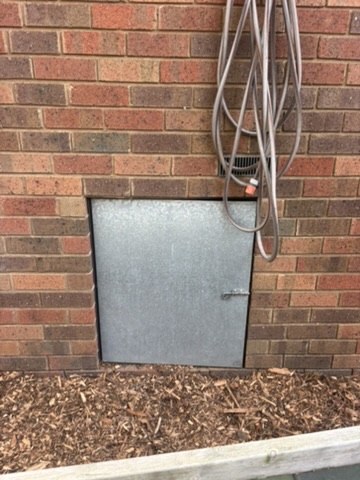
Five questions to ask about the report
- What was not seen? Ask for the affected area and extent of the limitation, rather than assuming the whole property was accessible.
- Why was it not seen? A locked hatch may have a different next step from permanently restricted clearance or a safety hazard.
- Were there relevant visible clues elsewhere? Staining, floor movement or other observations may justify a targeted follow-up, without establishing a diagnosis.
- What would improve the assessment? Ask whether authorised access, a further visit or a different professional is appropriate.
- What needs deciding before your deadline? Give your conveyancer or solicitor the report and any unresolved questions promptly.
A useful discussion distinguishes an unanswered question from a confirmed finding. It should not turn “not visible” into “no defect”, or assume that a problem must be present simply because access was limited.
What can a subfloor view help explain?
Where entry is safe and included, accessible underfloor conditions can add context to visible flooring, support, moisture and ventilation observations. However, one photograph cannot establish the condition of every support, the cause of moisture or the adequacy of a drainage system.
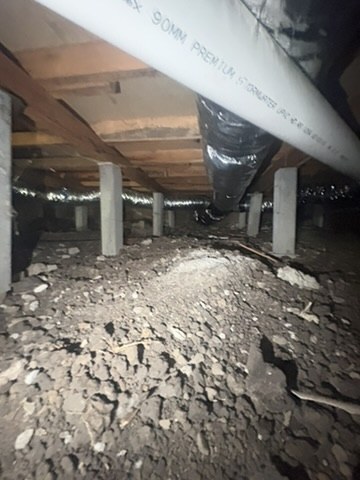
If moisture is a concern, see our guide to underfloor moisture during a pre-purchase inspection. If there is movement or cracking, the accessible building observations may point to the need for engineering advice; an inspector should not infer structural capacity from a limited view.
How to improve access before the appointment
Ask the selling agent to confirm where the roof-space and subfloor openings are and whether they can be made available with the owner’s permission. Mention any known restrictions when you enquire, including additions, split levels or spaces that appear to have separate access.
Request that the occupier safely clears agreed access points before the visit. Do not enter a roof space or crawl under a house yourself to “check it first”, force a hatch open or disturb suspected hazardous materials. Making an opening available does not guarantee that entering the space will be safe.
Send any existing report or photographs relevant to the concern. They can help identify a question to investigate, but an earlier report does not remove the need to understand its date, scope and access limitations. Our guide to pre-purchase inspection timing explains why property size and access can affect the appointment.
When is a further visit or specialist inspection useful?
A further visit can be useful if the original obstacle can be addressed and the additional view will answer a meaningful question. Confirm what new access will be available, what the visit will cover and the separate fee before arranging it.
Some questions need a different scope rather than another general visual inspection. Examples include timber-pest assessment, concealed drainage investigation, electrical testing or structural engineering. Discuss the appropriate professional and availability; do not assume those services are included in a standard building inspection.
Ask your conveyancer or solicitor how the report and outstanding investigations relate to your contract and deadlines. A limitation is not automatically a right to cancel, renegotiate or extend a contract. The inspection informs the property decision; it does not make the legal or financial decision for you.
What to send ClearScope before you book
Send the property suburb, type of home, purchase deadline, agent’s contact and the specific concern. Tell us if roof-space or subfloor access is known to be restricted. We can then discuss the relevant scope and access arrangements before the appointment.
Want to see the reporting style first? View genuine anonymised report findings with photographs and practical observations. These are abridged examples from other inspections, not a complete pre-purchase report or a prediction about your property.
For a local buying checklist, read our Diamond Creek pre-purchase guide. Broader due diligence also matters: the Consumer Affairs Victoria buyer checklist covers issues beyond a visual building inspection.
Frequently asked questions
Does an inaccessible area mean the house has a defect?
No. It means that area could not be fully assessed within the available access and agreed scope. Consider the extent of the limitation, other observations and whether further investigation is warranted.
Can an inspector move furniture or remove fixed panels?
Do not assume so. Access, permission, safety and the agreed inspection scope matter. Ask the agent to arrange suitable access before the visit and discuss any further opening-up separately.
Does a building inspection include a timber-pest inspection?
Not automatically. Building and timber-pest inspections have different scopes. Confirm what you are booking and whether separate specialist assessment is needed.
Should I book before my contract deadline?
Share the deadline as early as possible and confirm availability. Allow time to read the report and discuss any follow-up with the inspector and your legal adviser.