PRE-PURCHASE INSPECTION GUIDES
Pre-purchase building inspections in Diamond Creek: a practical buyer’s guide
Start with the home’s construction and your purchase timeline
Before booking, tell us whether the property has a slab or raised floor, separate levels, an extension, a deck, retaining structures or a pool. Share what you know rather than trying to classify the building yourself. Ask the agent about access and give us any purchase or auction deadline.
A raised floor, a sloping part of a block or an older addition creates questions to explore; none establishes a defect by itself. The inspection should connect visible observations to their locations and limitations, rather than apply a standard list of “Diamond Creek defects” to every home.
See the full pre-purchase inspection service for scope and booking discussion. If you are comparing properties, use the checklist below to make your questions more specific.
A property-focused inspection checklist for Diamond Creek buyers
| Property feature | Useful question | Follow-up to consider |
|---|---|---|
| Raised floor or split levels | Can the relevant subfloor areas be safely accessed, and are there separate sections? | Clarify uninspected areas and any visible moisture or movement concerns |
| Roof space or changed roof line | Is there safe access to the roof space, including areas affected by additions? | Ask what was observed and whether concealed areas need further investigation |
| Sloping ground and retaining structures | What accessible conditions and drainage-related observations can be recorded? | Engineering or specialist drainage advice where the concern requires it |
| Decks, external stairs and timber structures | Which supports, connections and surfaces are visible and included? | Restricted views may prevent a complete assessment of concealed connections |
| Renovations or extensions | What changes are apparent and what documents can the seller supply? | Have the relevant professional check approval records; appearance does not prove approval |
This is a preparation tool, not a list of conditions present at a particular address. Ask about the areas that matter to you and confirm what the agreed inspection includes.
Roof spaces and subfloors: access changes the answer
A roof space can contain framing, services and other features that are not visible from the rooms below. Ductwork, stored items, low clearance or changes to the building can restrict how much of that space can be viewed. An inspection needs to explain those limits rather than imply that an accessible opening means every part was inspected.
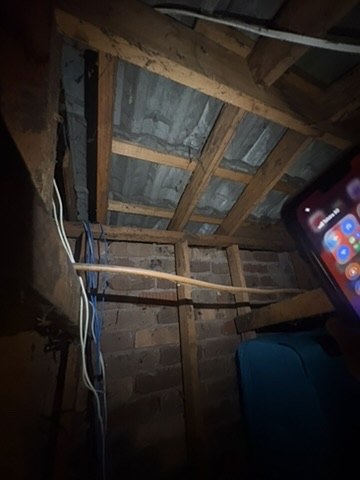
The same principle applies below a raised floor. If the agent knows of a hatch, ask whether it can be made available with permission. A visit may still be limited by safety or clearance. Read our roof-space and subfloor access FAQ for the questions to ask when a report records an inaccessible area.
Outdoor structures deserve their own scope discussion
Where a home has a deck, retaining structure, external steps or other outdoor work, ask which accessible elements are covered. Surface appearance is only part of the picture; supports and connections may be concealed by finishes, landscaping or restricted access.
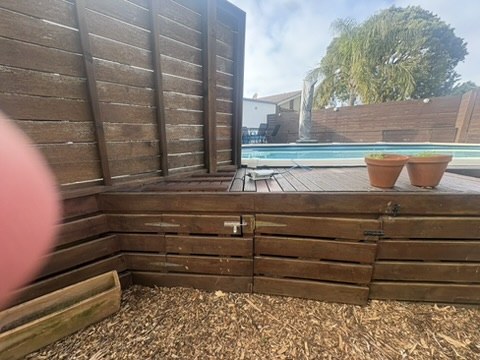
Ask about any concern involving movement, decay, drainage or a change in levels. A photograph can identify the area to discuss, but cannot establish the cause or the adequacy of a retaining design. Structural stability questions may require an engineer. If a pool is part of the purchase, clarify separately what pool, equipment or barrier work is included or excluded.
Check records and mapped risks for the exact property
A building condition inspection is one part of due diligence. Your conveyancer or solicitor can help you identify relevant sale documents and approval questions, while the appropriate council, planning or technical professional can address matters outside the inspection scope.
Do not assume every Diamond Creek property has the same planning controls or mapped hazards. Nillumbik Shire Council points residents to VicPlan property reports to check zones, overlays and bushfire mapping for the actual land. Start with the council’s guidance on checking property mapping and seek advice about the specific property if you plan changes.
The Consumer Affairs Victoria due diligence checklist also highlights property-specific flood and fire questions. A visual inspection does not certify those risks, determine insurance terms or establish permission for future building work.
Use the findings to decide what needs another answer
A useful pre-purchase report gives you a clear record of visible conditions, photographs, locations and limitations. Read it alongside the summary so you understand whether a matter is an observed defect, maintenance item, incomplete assessment or recommendation for another professional.
For example, floor movement, visible cracking and underfloor moisture should be described in context. They do not automatically share a single cause. Our guides to structural-movement concerns in older brick homes and underfloor moisture explain the kinds of questions a buyer may need to resolve.
If you need a repair quotation, engineering advice or legal interpretation, obtain that advice before relying on a guessed cost or a general article. ClearScope can discuss the report findings; the decision to purchase remains yours.
Arrange your Diamond Creek pre-purchase inspection
- Send the property details and deadline. Include the suburb, home type, agent’s contact and any particular concerns.
- Discuss the scope. Flag roof/subfloor access, extensions, outdoor structures and any requested specialist checks.
- Confirm access and availability. The selling agent or owner needs to make agreed areas available; a short deadline does not guarantee an appointment.
- Allow time for the report and follow-up. Ask about expected delivery when booking and leave room for your legal adviser to consider unresolved questions.
Browse ClearScope’s genuine anonymised report examples to see the observation-and-photograph approach, or read how inspection timing is affected by access and property features. We confirm the relevant inspection scope, fee and availability for your property before you decide to proceed.
Frequently asked questions
Do all Diamond Creek homes need the same checks?
No. Construction type, additions, site levels, outdoor structures and access determine the useful questions. A suburb name alone does not establish the condition or risks of a home.
Can you inspect a home with a restricted subfloor?
Discuss the known restriction before booking. Accessible areas may still be inspected, but the report should identify what could not be assessed and whether a further investigation is appropriate.
Will the inspection confirm permits or planning overlays?
A visual building inspection does not establish permit history or planning permission. Check the exact property’s records and mapping with your legal adviser and the appropriate council or planning professional.
How do I request a Diamond Creek inspection?
Send the property details, agent contact, deadline and concerns through the pre-purchase enquiry form. ClearScope will discuss scope, availability, access and the fee before confirming an appointment.