Pre-Purchase Inspections — Cracked External Render
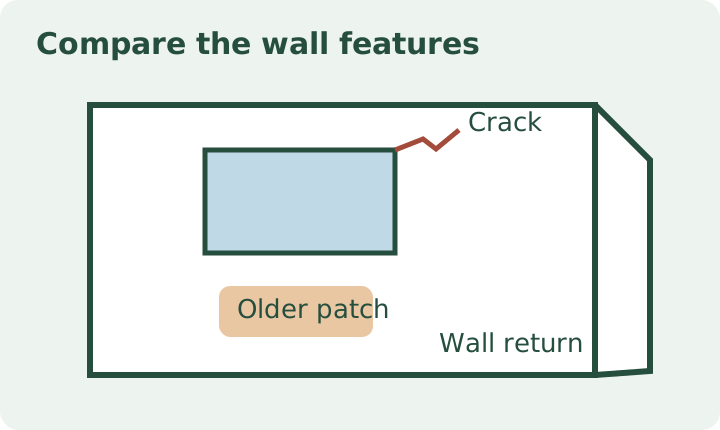
You’re inspecting a house for sale and find a line running through the external render from a window corner. On another wall there’s a patch with a noticeably different texture. You want to know whether to budget for a coating repair or ask for a structural opinion before buying. A crack in render tells you where to compare finishes and wall features before you decide what needs further investigation. The answer depends on the pattern, what the wall is made of and what can be seen on either side. The best first step is to collect those details while you still have access to the house.
Locate the line before interpreting it
Start with the wall’s position and make a simple record. Is the line above the window, at its lower corner or along a return at the end of the wall? Does it cross a change in texture or a joint between two materials? A wide photograph with the owner’s permission puts the crack in context. A close photograph records what it looks like from a safe position. Describe which floor it is on and whether plants, a fence or neighbouring property limit the view. If it is visible only at certain times because of glare or shadows, mention that too.
Look for another reference nearby such as a sill, sill end, wall corner, drainpipe or path. If the area is later reviewed by a renderer or engineer, that detail helps them recognise the same feature. Avoid guessing the width from a long-distance photograph. If a reliable measurement is possible, the inspector can record the method and position. The brickwork cracking guide covers the corresponding clues where the masonry itself is visible. The distinction matters because a rendered surface can conceal the condition and arrangement of the underlying wall.
Compare the finish with nearby features
A surface line that stops within a patch gives you a reason to ask what was repaired and how the patch was finished. A line that starts at one opening and continues beyond the patch raises a different question about what lies behind that area. Compare the same wall above, below and to the side from an accessible position. Look for chipped edges, flaking paint, changes in flatness and whether the texture differs across the line. Record those as observations. An inspector can then consider which parts need more evidence and whether any of the details appear to be related.
A patch at the lower part of a wall might be due to old damage, finishing work, or a change in how moisture reached or left the area. An earlier garden bed, recent paving or a leaking pipe could be relevant to the history. The paint colour cannot distinguish those explanations on its own. If there is also white residue, check the guide to white deposits on brickwork for questions about moisture sources and location. Treat adjacent paved areas and drainage as separate observations until there is evidence linking them to the condition of the wall.
Check clues across the window or wall junction
Where a line runs from a window, compare the visible frame edges, sill and inside wall close to that position. With permission, see whether the window operates and notice if the plaster or architrave has a corresponding mark. A window can stick for several reasons. A smooth operating window also tells you only about its operation on the day. If more than one feature looks affected along the same section of wall, an inspector may recommend a closer review of the relationship between those features before you decide whether a coating repair is a suitable response.
Where the crack sits beside an extension, look for a change in the wall alignment, surface finish or roof line. An inspector can review any available plans and record whether the observed line follows a plausible construction junction. The coating may obscure the joint itself. Ask whether the report can say what was visible on the accessible side, whether the other side could be seen and what documentation could clarify the arrangement. If the seller mentions a recently filled or painted crack, see what to ask when cracks reappear after repairs for follow-up questions about dates and the extent of earlier work.
Decide when water or movement needs a separate look
Consider whether the wall has a pattern of staining around an overflow, plumbing fitting, downpipe or balcony edge. A visible wet area under a failed gutter may give you a productive starting point, while an old stain on a dry day might require records or a more targeted visit. The Building and Plumbing Commission’s water-ingress guidance discusses moisture clues around balconies, decks and terraces. Use it where those features are actually present. It does not establish the origin of marks on a wall or whether there is damage behind the render.
Signs such as visible wall distortion, related cracking on the opposite face or multiple affected openings can change what should be investigated before a purchase. The Building and Plumbing Commission’s foundation movement guide explains why footing and soil information may assist when significant movement is suspected. Its general guidance does not establish the cause of a rendered wall crack or apply a pass or fail threshold to a particular property. Ask whether an engineer would need the soil report, drawings or a history of changes to adjacent ground or drainage. Our guide to major cracks before purchase explains how to put that uncertainty into a decision timeline.
Ask what was repaired and what was observed
Ask the seller when the render was installed or last patched, and whether the invoice describes a local patch, a full recoat or work to the underlying wall. Look at the area on the invoice or photographs and compare it with the location that concerns you. An invoice that names only the front elevation may not help with a line running down a side wall. Where the seller has photographs from before painting, the wider angles can help you locate the repair, especially when the close views show little more than a surface crack.
A renderer’s quote can be useful if you understand what it covers. Check whether it assumes a firm substrate, includes access, and specifies how the finish will be matched. An estimate based on an accessible photograph may have to change once the actual extent is known. Avoid pricing a concealed structural problem as though the repainting cost covers it. If the report identifies moisture or movement questions that could change the repair approach, obtain advice from the relevant practitioner before treating a finish price as the whole likely cost.
Work through an illustrative example
Imagine a buyer looking at a rendered home with a hairline visible above the front window and an older patch below the same sill. The agent supplies a photo from before repainting showing the patch but no wider view. Inside, the window opens on the day and there is no corresponding mark visible on the plaster. At the side wall, however, another line continues across a corner and the fence limits a close view. A report might distinguish the observations at the front window from the unresolved side wall rather than treating them as one defect.
In this example, the buyer asks for the wider repainting photos and the side access arrangements before deciding what advice to seek. They can ask a renderer about the scope and finish of the old patch, while separately asking whether the corner line needs review by an engineer. If a section looks loose or pieces have already fallen, keep clear and alert the owner or agent promptly. Neither the buyer nor their inspector should disturb material overhead to check its adhesion. The useful outcome is a short list of defined questions with different next steps, not a guess at a single cause for all the marks.
Work within inspection limits and set your next step
The pre-purchase inspection service can document accessible visible condition and advise on further investigation. It cannot see through intact render or verify how it is bonded across a wall. Access varies with height, the surrounding ground and permission to approach. If records and safe visual access are insufficient, an appropriately qualified specialist may advise whether closer access or opening up is needed. That is a separate arrangement with the owner, and its timing should be discussed before you rely on the outcome for a purchase decision.
Consumer Affairs Victoria’s buying inspection guidance supports arranging professional advice on property condition. Your conveyancer can advise on the deadlines and conditions for your particular purchase. Send the inspector the address, the wall location, any photographs taken with permission, the date you need the report, and a brief account of what the agent said about earlier repairs. If there are nearby water marks or concerns about runoff, the drainage guide for buyers gives you useful prompts to include. Specify whether the concern is one isolated patch, a line that appears in more than one place, or a wall you could only see from a distance.
When asking for further advice, set out the sequence of observations rather than attaching one label to the wall. For example, say the lower patch is different in texture, the sill above is intact from ground level, and another part of the same elevation could not be viewed. That helps the person quoting decide whether they need closer access or additional records. It also gives you a better basis for comparing two quotes that appear to cover the same concern but allow for different repair areas.
Where timing is tight, ask which further enquiry is most likely to change the immediate decision. It might be whether the report can give a closer view of the return, whether the owner has earlier photographs, or whether a specialist is available to assess a pattern of movement. Avoid treating fresh paint as evidence that the substrate is sound. Equally, a visible line does not settle what repair is needed. A written record of the accessible evidence and the remaining questions is more useful at the purchase deadline than a broad description of the finish as cracked.
References
Ask ClearScope about your property
Send the property address, your buying deadline and the areas you want checked.
Request an inspection