Pre-Purchase Inspections — Rusted Steel Lintels
You are standing outside a house you might buy and spot an orange line above a window. On the next opening, the paint has lifted off a steel edge and a mortar joint looks wider near the corner. Is it a repainting job, or do you need someone to check the support above the window? A pre-purchase building inspection can identify which details are visible, whether the surrounding brickwork shows signs of distress and what would help you make a better decision. The colour is one part of the story. The location, the condition of the material and the way the nearby brickwork sits can matter just as much.
Work out what is above the opening
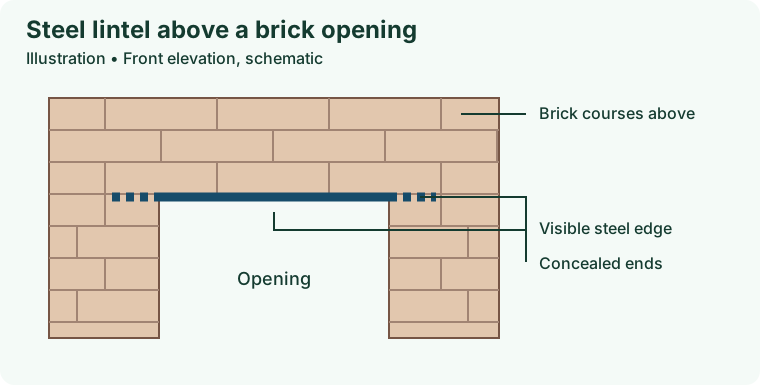
In a brick wall, a lintel can bridge an opening and support masonry above it. Steel angles and other steel profiles are examples. From the ground you might see part of the lower face or edge near the top of a door or window. Other parts can be painted, concealed behind finishes or built into the wall. A metal strip in this location might also be trim or another component. If the support cannot be identified with confidence, it is worth keeping that uncertainty in the inspection record. Knowing that a strip of metal is rusty and knowing that a load-bearing steel member is rusty are two different pieces of information.
Ask for a photograph that shows the whole opening and enough of the courses above it to give the close-up a location. Label the elevation and record whether the stain, lifting paint or visible steel is at the centre, near an end or along most of the opening. The buyer guide to cracked brickwork explains why a crack needs context. Here, the extra question is whether the symptoms seem to follow the shape and position of the support, or whether they are part of a pattern that continues beyond the opening.
Read the steel and the masonry together
A shallow-looking stain on paint is different from visible scaling, an irregular steel edge or movement in the brick courses above it. The inspector can describe those differences and whether the opening looks distorted from an accessible position. Rust products can expand and press on nearby masonry, as Waverley Council describes in its guidance on older brick buildings. Where a joint opens near a rusted edge or adjacent bricks are displaced, the relationship is worth recording. Several causes can produce similar cracking and the evidence may also point towards broader movement or a previous alteration. A photograph from one angle rarely answers the entire question.
For example, a horizontal gap that appears just above the exposed steel might taper as it approaches one jamb. It matters whether the bricks are still aligned above that gap, whether the frame has distorted and whether there is a similar change at another opening. Brick joints can also be irregular from original construction or patch repairs. Ask the inspector to use wording that distinguishes a line on the surface from a change in the position of masonry. The older brick home movement guide gives examples of evidence beyond the immediate opening that may justify separate engineering advice.
Make the comparison between similar openings where practical. An exposed western elevation and a sheltered opening under a verandah may show different paint condition or moisture marks. A wider opening or one created during a renovation may also have a different support detail. Compare features that help clarify the pattern and record the differences in exposure and construction. An apparently tidy neighbouring opening is a useful reference for how the finishes look. It is a poor substitute for seeing what is going on at the end of the affected member.
Keep the water path open as a question
Look for clues in the area above and beside the opening from a safe position. Stains on bricks, obvious defects at nearby finishes and the condition of adjacent roof drainage may help decide which weatherproofing details deserve attention. An orange mark can run down from another metal component or collect beneath the lowest visible edge. Take a wider photo before settling on its origin. If there are separate white deposits, the buyer guide to deposits on brickwork can help separate a surface deposit from the question of deterioration at the steel. Either observation may warrant a different line of enquiry.
Some important water management details, such as the condition of a concealed flashing, may be unavailable to a visual inspection. It is helpful to know whether earlier work addressed a water entry complaint, or simply refreshed the paint. Ask for records that identify the opening and describe what was investigated. A dated photograph taken before the finish was restored can help connect an invoice to the location. When the seller says the mark appears after driving rain, ask which elevation, how soon after the rain it appears and whether anyone has recorded it inside the room as well.
Set a follow-up brief around the unknowns
A visual inspection cannot establish the remaining thickness throughout a concealed steel member, the length and condition of its end support, or the loads acting on it. Galintel's product guide illustrates how profiles and their supporting information differ by product. Selecting a repair or replacement involves the actual opening and construction, so a product catalogue or a photo of the exposed leg alone cannot establish what should be installed. If there is visible distortion, loose or displaced material or significant deterioration, ask about prompt assessment by a structural engineer and follow any access restrictions while the concern is assessed.
Give the specialist the opening location, visible symptoms, accessible photographs and any relevant drawing or repair record. Say which parts were inaccessible and whether the opening appears to have changed during a renovation. Ask what can be assessed visually and what would require the owner's permission for further access or investigation. Avoid testing loose masonry yourself or scraping an unknown coating to see what is underneath. The purpose of the first visit is to gather useful evidence without changing the property or exposing anyone to material that may fall. If the property has other areas of concealed structure, the guide to access limitations helps you read what is recorded and what remains outside scope.
Read earlier repairs against the same opening
Fresh paint on an older steel edge might be part of routine maintenance. It might also cover the surface you wanted the inspector to see. Similarly, neatly repointed joints can tell you that some mortar has been renewed without explaining what led to the work. Note the boundaries of the new finish and whether it is limited to one side of the opening or repeated elsewhere. If dated photos are available, compare them with current photographs from a similar viewpoint. A photo that includes the sill, frame and adjacent corner is often easier to match than a close-up of a crack without reference points.
If the seller says a lintel was replaced, ask for the exact opening, the date, who carried out the work and what documents they can share. An invoice that lists several windows without identifying them still leaves room for uncertainty. If the record describes replacement of a window frame, ask whether any work was done to the support above it. These are separate elements and work to one does not establish the condition of the other. If the opening was made wider, the drawings and the scope of the work can be particularly helpful to the engineer who needs to understand how the masonry is carried.
If you are following up a claim that the area has been stable for years, ask what that assessment is based on. Two useful photographs taken years apart may show whether a prominent edge or joint has visibly changed, provided both actually capture the same area. They can also be inconclusive if shadows, recent pointing or different camera angles hide the relevant edges. Give your adviser the records and the present observations together. Treat an unresolved question about concealed steel as a scope issue when planning your next step, even when earlier painting and repair work are well documented.
On a unit or apartment purchase, there may be a second question about who can approve a specialist visit or arrange repairs to the external wall. Obtain the plan and ask your conveyancer to clarify the responsibility for the affected area. The building report can help identify the opening and describe the concern so the query reaches the right people.
Decide what changes your buying position
Consider an illustrative comparison. At one window, a narrow rust-coloured mark sits below a flaking patch, with the visible masonry courses still aligned. At a wider opening on the same house, the steel edge looks uneven and brickwork near one end is out of alignment. The first finding might lead to questions about coating and maintenance, subject to what the inspector can see. The second changes the brief because a competent specialist needs to look at support and surrounding masonry. If one opening was changed as part of a renovation, ask for any plans, engineering documents or repair photographs specific to that opening.
Make sure any cost information refers to the actual area and the proposed work. A price to prepare and coat a visible steel edge is a different scope from a quotation to assess or replace a lintel. Specialist advice may identify work involving temporary support, brick reinstatement, access or weatherproofing. Ask the person quoting to list what their price assumes and what is still subject to investigation. If you only have a short time before an auction or offer deadline, give the report and the scope of any unresolved concern to your conveyancer or solicitor so you can discuss what the timing means for your purchase.
A useful report lets you locate the opening, recognise the visible concern, understand the limitations and take the next step with the right person. Look at the sample inspection reports to see how observations can be tied to locations. When arranging your pre-purchase inspection, send the property address, the sale deadline and a description of the affected door or window. If you have permission to share an image, send a close view and one that identifies the full opening. That gives the inspector a starting point and helps you ask a more specific question before you buy.