Tile Grout Cracking in Bathrooms — Cosmetic Issue or Waterproofing Problem?

Updated: Apr 7
Tile grout cracking in bathrooms is one of the most common concerns homeowners notice after moving into a newly built home. During inspections across Melbourne growth corridors such as Tarneit, Truganina, Clyde North, Officer, Beveridge, Donnybrook, Fraser Rise, Deanside and Cobblebank, it is quite normal to see small grout cracks appear within the first year of occupancy.
For many homeowners, the immediate worry is that cracked grout means the bathroom waterproofing has failed. In most situations, however, that assumption is not accurate.
Bathroom tiles and grout are part of a layered system. The waterproofing membrane sits beneath the tile layer, meaning minor grout cracking does not automatically indicate a waterproofing failure. More commonly, it reflects normal movement, installation practices, or the rigid nature of grout itself.
Understanding why grout cracks occur, and how inspectors assess them, helps homeowners distinguish between cosmetic finishing issues and situations that may warrant further investigation.
Why Tile Grout Cracking Is One of the Most Common Bathroom Issues
Bathroom tile grout is a rigid material designed to fill the joints between tiles. While grout provides a neat finish and helps stabilise the tile system, it does not handle movement particularly well.
In new homes, a small amount of movement is expected as the building settles and materials adjust to changes in moisture and temperature. This early movement can place stress on grout joints, especially in wet areas where temperature and humidity vary frequently.
Inspectors commonly observe grout cracking in locations such as:
shower recess floors
wall and floor junctions
tile corners
around floor wastes
These areas tend to experience the greatest movement or changes in moisture conditions.
It is also quite typical for grout cracking to appear within the first few months after handover. As a home begins regular use, showers generate heat and moisture that can cause minor expansion and contraction within the tile assembly. Because grout is rigid, even small movements can sometimes cause visible cracking.

Tile Grout Cracking in Bathrooms — Cosmetic Issue or Waterproofing Problem?
When homeowners notice cracked grout, the first question is often whether the issue is cosmetic or related to waterproofing. In many cases, grout cracking is cosmetic and relates to movement rather than a performance issue.
Cosmetic grout cracking typically:
occurs along a single grout line
appears at wall junctions
occurs where movement joints are missing
occurs where silicone should have been used instead of grout
Movement joints in bathrooms are designed to absorb small structural movements. These joints are usually sealed with flexible materials such as silicone rather than grout. If grout has been used instead of silicone at corners or junctions, small cracks can develop as the building moves slightly over time.
More significant concerns may sometimes include:
loose tiles
hollow sounding tiles
movement underfoot
cracked tiles alongside grout cracks
moisture damage outside the wet area
In those situations, inspectors may consider whether installation issues or substrate movement are present.
It is important to understand that waterproofing membranes are installed beneath the tile layer in Australian bathrooms. Because of this, grout cracking alone does not automatically indicate waterproofing failure. The waterproofing membrane acts as the primary barrier preventing water from entering surrounding building materials.
Common Causes of Cracked Tile Grout in New Homes
Several factors can contribute to grout cracking in newly constructed homes.
Settlement movement in the home
All new homes experience a degree of settlement as materials dry and structural loads stabilise. Minor movement during this period can sometimes be visible in finishing materials such as plaster or tile grout.
This is similar to the minor movement that may produce hairline cracks in plasterboard walls. If you are interested in understanding this broader process, our article Cracks in New Homes — What Is Normal and When Should Homeowners Be Concerned? explains how settlement movement commonly appears in new houses. Because grout is rigid, even small structural adjustments can cause hairline cracking along grout joints.
Incorrect grout used at movement joints
Movement joints are commonly required at wall and floor intersections within tiled bathrooms. These joints are usually sealed with flexible silicone rather than grout. If grout has been installed in these locations, small cracks may appear as the building naturally shifts over time.
This is one of the most common reasons inspectors observe grout cracking around shower corners or floor edges.
Grout cracking can sometimes occur when tiles are not fully supported by adhesive beneath the surface. In these cases inspectors may also identify tiles that sound hollow. Our article Loose or Hollow Tiles in New Homes — What They Mean During a Building Inspection explains how inspectors assess tile adhesion.
Tile installation movement
Tile systems rely on proper adhesive coverage and stable substrates. If tile adhesive coverage is inconsistent, or if the substrate beneath the tiles moves slightly, grout joints may crack as the tile system responds to that movement.
Framing shrinkage in timber structures can also contribute to minor movement within tiled walls.
In some situations grout cracking may occur alongside tiles that sound hollow or drummy under foot. Movement within the tile layer can place stress on grout joints over time. Our article Drummy Tiles in New Homes — Are They a Defect? explains how inspectors interpret hollow tile sounds and when they may indicate installation issues beneath the tile surface.
Waterproofing preparation issues
Preparation of the substrate before waterproofing can influence how well the tile system performs over time.
For example, uneven substrates or poor preparation of sheet flooring or wall linings can lead to movement in the tile layer. This may eventually appear as grout cracking.
For homeowners interested in learning more about how wet area construction works, our Waterproofing defects guide explains common issues that can occur during bathroom construction.
Bathroom issues often appear in combination rather than isolation. In Shower Waterproofing Mistake That Can Ruin Adjacent Rooms: Missing Water Stops Near Doorways, related defects like grout cracking can sometimes indicate underlying moisture movement beyond the wet area.
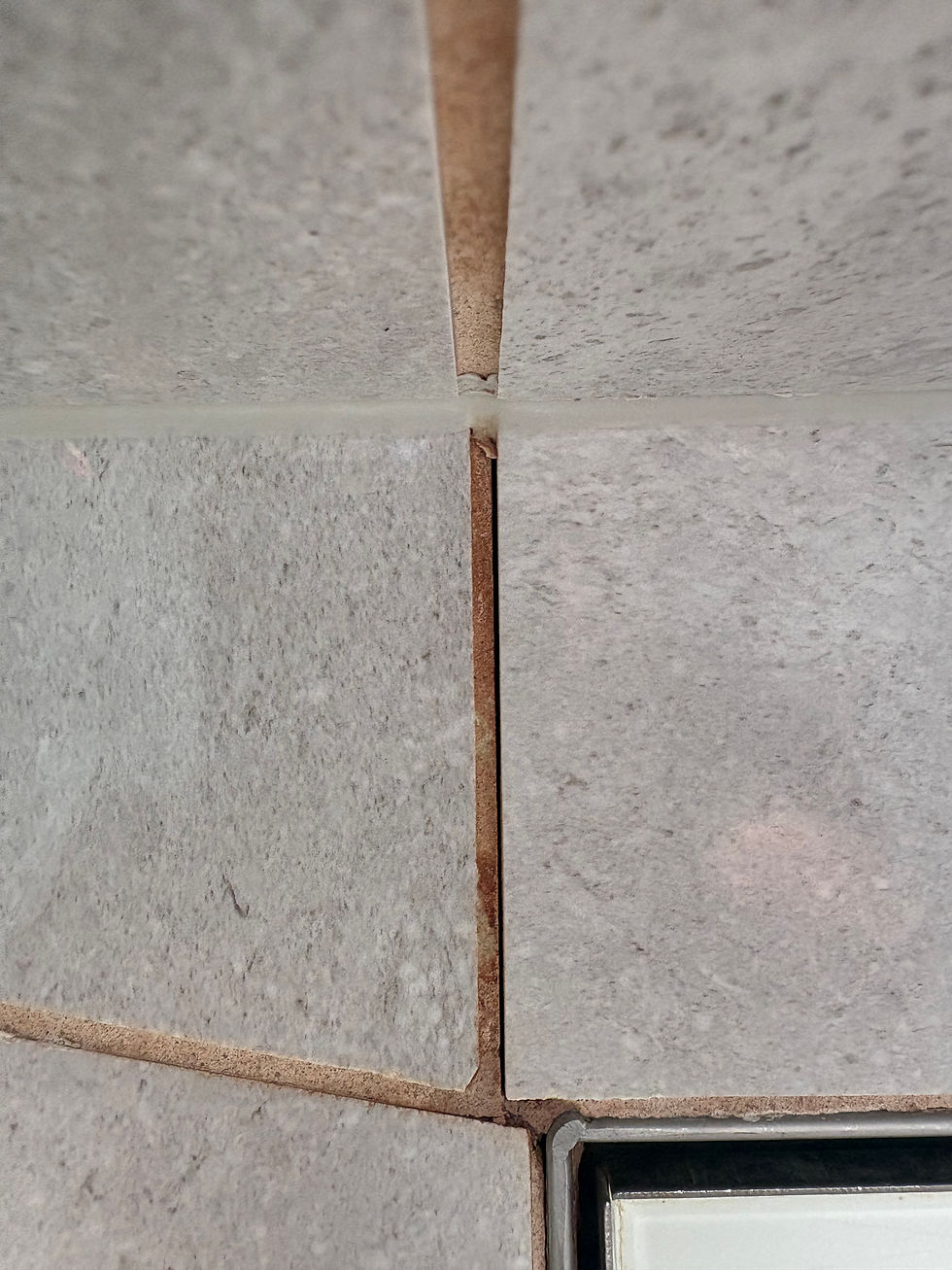
Where Inspectors Most Commonly See Grout Cracking
During staged construction inspections and post-handover inspections, grout cracking most frequently appears in predictable locations.
Common inspection findings include:
shower recess floor corners
wall and floor junctions
around the shower floor waste
tile transitions near bathroom doorways
These locations experience the greatest movement or thermal change within the tiled system. Wet areas also contain specific elements designed to manage water movement, including water stops and floor falls. These components help contain water within the shower recess.
Issues with wet area transitions can sometimes influence how the tile system behaves. Our article Waterproofing Defect: Water Stops Sitting Below or Above the Finished Floor Level in Wet Areas explains how these elements contribute to proper bathroom performance.
How Inspectors Assess Bathroom Tile Defects
When inspectors assess grout cracking, they consider the entire tile assembly rather than focusing solely on the grout itself.
Typical inspection considerations include:
tile adhesion and stability
grout condition
presence of movement joints
signs of moisture migration
For example, an inspector may gently tap tiles to determine whether they sound hollow or firmly bonded. Hollow sounding tiles may indicate insufficient adhesive coverage beneath the tile. Inspectors also review whether flexible sealants are installed at movement joints and whether grout cracking appears isolated or widespread.
Water behaviour in showers can sometimes highlight other installation issues as well. In some cases, homeowners may notice drainage problems at the same time as grout deterioration. Our guide on Water Pooling in Shower — Is the Floor Fall Incorrect? explains how inspectors assess drainage performance and shower floor falls in newly built homes.
Understanding tolerances is also important when evaluating finishing elements in new homes. Our article What Does “Within Tolerance” Actually Mean in a New Home Inspection? explains how inspectors determine whether finishing issues fall within accepted construction standards.
The goal of an inspection is to distinguish between:
cosmetic finishing defects
installation defects
performance-related concerns
Most grout cracking falls within the cosmetic category.

When Grout Cracking Might Need Further Assessment
While grout cracking is often minor, there are situations where additional investigation may be appropriate.
Examples may include:
recurring cracking after repair
loose or hollow tiles
moisture appearing outside the bathroom
tiles moving underfoot
cracked tiles alongside grout cracks
When multiple indicators appear together, inspectors may recommend further assessment to determine whether substrate movement or installation issues are present. However, it is important to emphasise that these situations are not the most common outcome. In most new homes, grout cracking remains a minor finishing issue rather than a significant structural concern.
Bathroom tiles, drainage and screen installations all interact within wet areas. Our article Shower Screen Leaks in New Homes — Why Water Escapes the Shower Area explains how inspectors determine whether water movement relates to tile falls or screen positioning.
How Grout Cracking Is Typically Repaired
Repairing cracked grout is generally a straightforward process.
Common repair methods include:
removing the cracked grout
applying new grout to the joint
installing silicone at movement joints
resealing joints where required
These repairs are typically completed as part of standard finishing maintenance rather than major rectification work.
In situations where grout cracking occurs at wall junctions, replacing grout with flexible silicone sealant can often prevent future cracking by allowing movement to occur without stressing the joint.
How Stage Inspections Help Identify Bathroom Issues Early
One of the advantages of staged construction inspections is that potential bathroom issues can be identified before handover.
Independent inspectors commonly assess bathrooms during several stages of construction, including:
Each stage focuses on different elements of the building process.
For example, the waterproofing stage allows inspectors to review membrane installation before tiles are installed. Later stages allow inspectors to evaluate tile finishes and movement joints before the home is handed over. Identifying issues early allows builders to address them efficiently during construction.

Bathroom Defects Are Easier to Understand When You Know the Full Inspection Process
Many homeowners find that bathroom construction becomes easier to understand when they see how inspections align with the building process.
If you would like a detailed overview of each stage, our guide New Build Stage Inspections in Melbourne — A Complete Guide to Every Inspection Stage explains how inspections follow the construction timeline from slab to handover.
Understanding the inspection process also helps homeowners interpret finishing issues such as grout cracking in context.
For example, movement that causes grout cracking may also appear in plaster as minor settlement cracks. Our article Hairline Cracks in Walls — Are They Normal in a New Home? explains how these finishing cracks commonly appear as homes settle.
FAQ
Is cracked grout in a new bathroom normal?
Small grout cracks can occur in new homes as materials settle and adjust. In many cases the issue is cosmetic and can be repaired by removing and regrouting the affected joint.
Does cracked grout mean waterproofing has failed?
Not necessarily. Waterproofing membranes are installed beneath the tile layer, meaning grout cracking alone does not usually indicate membrane failure.
Should grout be used in bathroom corners?
Corners are normally designed as movement joints. Flexible sealants such as silicone are commonly used instead of grout to accommodate minor movement.
Can cracked grout cause water leaks?
If grout cracks become large or allow water to penetrate behind tiles, moisture issues may develop over time. However, this depends on the condition of the waterproofing membrane underneath.
How is cracked grout repaired?
Most repairs involve removing the damaged grout and replacing it with new grout or flexible sealant depending on the joint location.
When should cracked grout be inspected?
If grout cracks appear alongside loose tiles, repeated cracking, or moisture outside the wet area, an inspection may help determine the underlying cause.
Conclusion
Tile grout cracking in bathrooms is a very common observation in new homes. In most situations, the issue relates to normal movement within the building or to the rigid nature of grout itself.
Because waterproofing membranes are installed beneath the tile layer, grout cracking alone does not usually indicate waterproofing failure. During inspections, professionals assess surrounding indicators such as tile stability, movement joints and moisture patterns before drawing conclusions about the cause.
For the majority of homeowners, small grout cracks represent a minor finishing issue that can be repaired easily rather than a significant structural problem.


Comments