Dilapidation Reports When Early Site Works Have Already Started
The site fence is up and machinery has already entered the block, but the deeper excavation is still two weeks away. A condition report may still help if everyone understands which stage it precedes. Start by asking what has actually happened and what the next physical change will be.
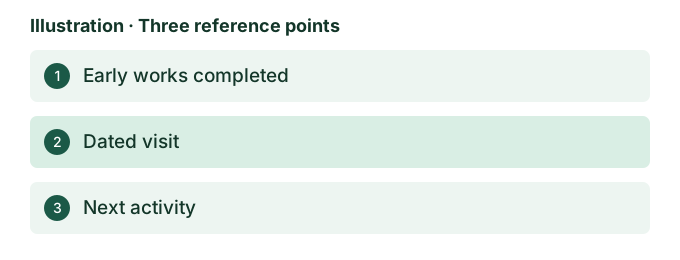
Reconstruct the sequence using dated records
Ask for the actual dates of clearance, vehicle access, demolition, temporary drainage and excavation where relevant. Keep the builder’s planned programme separate from the activities people can confirm took place. Gather earlier photographs with their original dates and locations where available, and note who supplied them. If the report uses an owner’s photo to show an earlier condition, label it as supplied material. An inspector’s observation from the visit should remain clearly identifiable as a separate record.
Name the baseline precisely
Describe the record in relation to the upcoming activity. For example, a condition survey undertaken after demolition but before excavation can give a reference point for comparison after excavation. If a paving crack is visible at that visit, the report can describe and locate it. An earlier absence of the crack cannot be established from a photograph where paving is obscured. Even where the photos are directly comparable, ask separately what information would support an opinion about cause.
Prioritise locations that may change next
Use the planned next activity to scope the visit. If excavation is next, discuss surfaces and structures near the proposed cut, any nearby retaining elements and safe access to both sides of the boundary. If temporary access changes are next, identify the route and existing gateposts, paving edges, drainage covers and other features that may be removed or hidden. Arrange lawful access with the occupants and record where visibility remains limited. Confirm who will hold the photographs and how repeat access can be coordinated.
Keep the evidence usable
Illustrative example. A driveway has been used for light vehicles while a neighbouring site was fenced. The first close-up of the driveway was taken after that activity, and the next stage will use a different route for larger vehicles. The condition report records existing chips, photographs the planned turning point and states that the current images post-date the fencing works. If a later concern is raised, the comparison can focus on what changed after the visit. A question about the fencing period needs other dated material.
Check formal requirements separately
A late condition record may have limited value if a permit, agreement or project process requires something specific before work. Ask the relevant authority or building surveyor which requirements apply. In Victoria, the Building and Plumbing Commission describes the separate process for protecting adjoining property where protection work is required. If the concern relates to noise or vibration from a civil project, EPA Victoria’s reporting guidance helps identify the relevant contact. A condition report does not measure vibration. BPC guidance on protecting adjoining properties. EPA Victoria’s noise reporting guide.
Record different baselines by area
One part of a property may still be untouched while another has already been affected by access or storage. Identify which date and activity each area can be related to. A wide photograph of the front garden might show its present condition before large machinery arrives, while a photo of the side path was taken after contractors removed a temporary barrier. Put that timing on the record beside the location. If an earlier photograph only shows one corner of the path, say so and avoid describing the rest from inference.
Keep a useful audit trail for supplied material
If a resident shares an older photograph, keep the version received and record what can be confirmed about its date and location. An email sent on a certain day can show the photo was supplied by then, while its capture date may be unconfirmed. If a cropped image loses the feature needed to orient the view, ask whether the original is available and can be shared with permission. Record access exclusions and label unconfirmed dates. Should a new concern arise, this gives the next assessor enough information to determine which comparisons are meaningful. Keep project correspondence and monitoring information separate from the condition observations so an assessor can see which type of evidence supports each point.
Build a location-by-location record
Separate the project site, any neighbouring property and access areas used by the work. List each part of the inspection scope beside its current status. A side path may have carried vehicles, while a rear elevation is still accessible and unaffected by the next cut. Ask the inspector to record visible conditions and the relationship of each area to the next activity. Where a prior activity is reported but the date is uncertain, note the source and level of certainty rather than placing it on an exact day.
If the original inspection brief assumed a cleared programme that has since moved, revise the brief before the visit. An inspector asked to record all areas before excavation needs to know if a trench has already been dug along one boundary. That fact affects how the resulting report should be read. Where adjacent properties are inspected on different days, keep the dates and relevant work stages separate. A project-wide date can hide material differences in what had occurred before each property was recorded.
Decide whether older photos answer the same question
Ask where an old photograph was taken, who took it if known and whether the original is available. Compare fixed details such as brick joints, openings and paving patterns. An image taken before early works can give useful context if it shows the relevant surface clearly. If the area is hidden by a parked car, fence or garden planting, note what can actually be seen. A wide photo that shows the wall but gives no detail of a fine crack may establish the location while leaving the earlier condition of the crack uncertain.
Retain the supplied image separately from the photographs taken by the inspector. If someone has added an arrow or caption, keep the unmarked image if available and identify the annotation. Be clear about how the capture date was established. An email date shows when the image was sent. It may give only a latest possible date for the image itself. That distinction matters when a project is trying to understand which works had already occurred.
Brief the follow-up before the work moves on
Ask the builder what the next physical activity will change. If a boundary strip is to be excavated, discuss whether fixed features on the adjoining property will remain visible and how a later observer will locate the same spot. If a path will carry machinery, ask what part can be recorded safely before the route is used. Request contextual photos and closer images of relevant existing damage. Ask whether there are features that will be obscured before the proposed follow-up date.
If you need repeated measurements, vibration monitoring or a structural opinion, state that separately. The person providing that service will need to define the method, timing and scope. A condition inspection captures what can be seen at the time and in the locations agreed. A planned monitoring programme is a different form of evidence. Where a specialist recommends monitoring, agree who will manage it and how the information will be linked to construction events.
Explain limitations to the person receiving the record
Give recipients a short timeline and a scope sketch. Explain that the report captures the observed condition on the visit date and say which activities it post-dates. For example, a report may document two accessible elevations before deeper excavation, while an earlier delivery used the driveway. An image of the driveway from that visit can support later comparisons with the condition on that date. It cannot establish what the driveway looked like before the delivery.
If a change is reported after the visit, ask for the specific location, time first noticed and a comparable photograph if safe. Match the image to the baseline and identify any limitations before discussing possible cause. If the work record or access history is incomplete, state what additional information would help. A clear record is useful even when it cannot settle every question, provided the limits are visible to the people relying on it.
Retain the handover information in one place
Save the report, scope sketch, work dates and supporting correspondence together. Ask the project contact to distinguish the current programme from the dates of work actually completed. If a later assessor needs to compare two areas or properties, give them the relevant photographs and limitations for each one. A record supplied without its date or coverage can be easy to misread. Confirm access and privacy arrangements before sharing photographs taken on adjoining property.
Request a scope with honest dates
Send a description of completed work, the date and nature of the next activity, affected addresses and the available access. Include any older material separately from your description of present condition. If you want an independent comparison later, ask what should be photographed now to make it repeatable. If you need an opinion on responsibility, identify that question before commissioning the report so the necessary evidence and specialist scope can be discussed.