Pre-Purchase Inspections — Flood History and Visible Water Marks
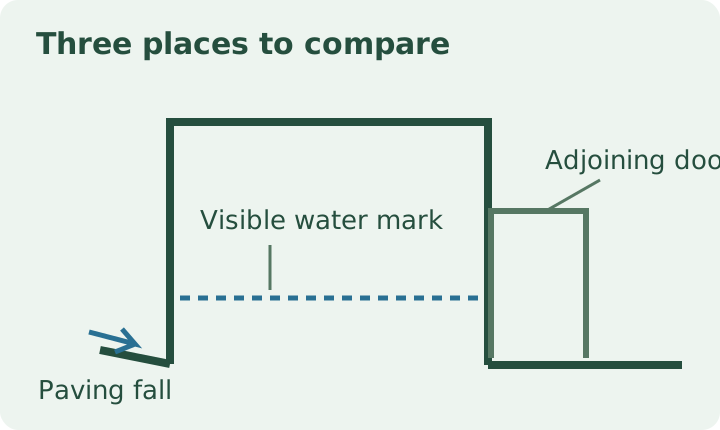
You’re looking at a house after a wet week and notice a faint line running along the garage wall. The agent recalls water in the street a few years ago, but the living rooms look freshly painted. Before you decide what that means for your offer, put the visible marks, the property records and the seller’s account side by side. A water line gives you a height to investigate, while dated records help establish what happened at that address. The useful question is which rooms or building components might have been affected and what evidence you can get before you commit.
Start with the actual address
Get the street number, unit number where relevant and any lot details your conveyancer can confirm. Look at the property outline rather than relying on the nearest street name or the pin in a real estate listing. A low part of the land, the garage floor and the main living floor can occupy quite different positions relative to an outside water path. A photograph of the road tells you something about the street at the time it was taken. You still need to establish which parts of the particular property were reached and whether there is a plausible connection to marks inside.
Melbourne Water provides flood information for property buyers and offers a flood level certificate. Ask for the information available for the address early, particularly if the sale timetable is short. If the certificate or council information refers to a flood level, ask the issuing authority or a suitably qualified adviser how to interpret it. A meaningful comparison to the height of a particular floor can require levels measured on a compatible basis. Keep that question open until the right people have reviewed it. Our Melbourne pre-purchase inspection service can look at accessible building condition while you make those separate enquiries.
Keep the issue tied to the part of the property you are buying. In a unit development, the lowest opening could lead to common parking while the unit sits above it. Ask your conveyancer which documents cover that space and whether the owners corporation holds relevant records. If a basement gate, access ramp or storage area is important to you, mention it when requesting the inspection. Access to a unit does not necessarily include all the areas that make it usable. Confirm which locations can be looked at and whether permission from another person is needed.
Follow the marks from room to room
With the agent’s permission, take a wide photo and a detail photo. Include the end of the wall, an opening or a corner so the location can be found again. Describe where the mark starts and stops, whether it follows the bottom of the wall, and whether the same feature is visible on the other side. A line that appears at roughly the same height across connected spaces gives the inspector a reason to compare those spaces. A single discoloured patch below a laundry fitting gives them a reason to look closely at what sits above and behind it. Different wetting events can leave similar patterns.
Observe the materials on either side of the line. Swollen door bottoms, loose skirting, damaged floor finishes or an abrupt change in paint sheen are worth pointing out. A strip of newer lining may simply be the result of ordinary renovation. Ask when the work was done, what was removed and why. If a ceiling mark is also present, photograph it separately and ask whether it appeared on the same date. Our guide to ceiling stains and repair history explains how to follow up a possible roof-related symptom on its own evidence.
Walk the water path outside
From areas you have permission to access, compare the front entry, garage opening, side passage and lowest accessible door. Follow any obvious change in paving direction. Notice whether an outside surface appears to lead water towards the building and whether a drain sits between that surface and the opening. Photograph a pit with its cover in place and describe where it is. Ask whether the seller has seen water collect there, and on what dates. The available view is a starting point. The pit may serve a different area from the one you expect, and its outlet may be hidden.
A house can receive water from several directions. Runoff approaching down a driveway, a backing-up local drain and a leak from a fixture indoors call for different follow-up. Sometimes more than one happened. Use the buyer’s guide to drainage around the home to prepare observations the inspector can tie to specific locations. If a driveway falls to a garage that opens into the house, ask for separate comments on both thresholds. An accessible driveway channel may appear clear on the day while its performance in heavy rain remains unknown.
Ask for records that explain the repairs
Request any available dated photos from before and during repairs, invoices with itemised scopes, trade reports and close-out information. Start with simple comparisons. Which rooms does the invoice name? Do the affected walls in the pictures match the current room layout? Does the scope describe replacing finishes, investigating the water entry route, or both? A receipt for plaster and painting establishes what that contractor billed for. If there is a separate plumbing, drainage or remediation report, ask to see it so you can understand which parts were assessed and when.
The Victorian Building and Plumbing Commission’s flood advice discusses assessment of building and service safety, potential contamination and drying before repairs. That guidance is useful when framing questions about a disclosed event. Ask what work was carried out on materials that were wet and how the people involved decided the building was ready for reinstatement. Where only a brief summary is available, write down the unanswered points. If mould is visible or there is a persistent musty smell, the buyer’s guide to visible mould can help you describe what you see and decide whether a targeted follow-up is practical before the sale.
Keep the insurance enquiry separate
Give your insurer the exact address and the facts you have, including the extent of any previous event as far as you can confirm it. Ask how the proposed policy treats flood, stormwater or rainwater runoff for the situation you’re concerned about. Read the relevant policy wording and ask for written clarification if you need it. If the insurer asks for building levels or evidence of repairs, find out which document it will accept and who should prepare it. Record the conditions of any quotation while you are still comparing properties.
A seller may be able to tell you they made a claim, that they paid for work themselves, or that no claim was lodged. Ask which it was and whether the repair documentation is available. The account can help establish dates and point to records. The building inspection deals with the accessible parts of the building and the clues visible at the visit. To see how findings and access limitations may appear in a report, look at the ClearScope report examples. Use the different answers together when deciding which outstanding costs or uncertainties you can accept.
Decide what the site visit can settle
A visual inspection may record staining, replacement finishes, apparent ground falls, accessible floor damage and other observations relevant to the question. Access behind fixed cupboards, wall linings and flooring usually depends on further permission and a suitable scope. If the inspector can access the subfloor safely, tell them which rooms sit over the suspect area so they can compare the available views. If the property has recently flooded, follow official safety advice and wait for clearance before entering. During a routine buying visit, keep to the areas the agent or owner makes safely available.
Ask which uncertainty matters most and who can address it. A drainage plumber may be able to trace or inspect an accessible stormwater line by arrangement. A surveyor can advise on suitable level information. Evidence of significant movement or damage may warrant separate engineering advice. Our guide to garage and outbuilding defects for buyers gives further examples of what to note around a detached garage or a low ancillary space. If a specific hidden area matters to your decision, ask how it could be inspected with permission and whether there is enough time to arrange that work.
It can help to write down what would change your decision before you ask for extra reports. If your main concern is whether you can use a low room to store belongings, an explanation of an old wall mark may leave the future drainage question unresolved. If the bigger concern is whether an affected timber floor was repaired, an updated map alone will add little to the material question. Separate those enquiries when asking advisers for their scope so you receive answers you can actually compare before buying.
Make the decision before the deadline
In an illustrative case, a buyer sees a line across two garage walls and newer flooring in a room through the connecting door. The seller supplies dated pictures of water at the garage opening and an invoice for garage wall repairs. Neither item covers the adjoining room. The buyer can ask for a specific comment on the doorway, its floor level relative to the garage, and the available signs around the adjoining flooring. If the underside is inaccessible and the flooring stays in place, the question about previous wetting in that room may remain open even after a well scoped visit.
Keep a short record with a row for each affected room and space for the observation, the seller’s account, supporting documents and any recommended follow-up. Separate evidence of a past event from information about future exposure. Discuss buying deadlines and any proposed conditions with your conveyancer before relying on extra access or an extension. Consumer Affairs Victoria recommends inspecting before buying and explains the value of a professional inspection. When you enquire, send the address, photographs you have permission to share, dates of known water entry and your deadline. Ask for the accessible areas to be checked and for any remaining questions to be clearly identified in the report.
References
Ask ClearScope about your property
Send the property address, your buying deadline and the areas you want checked.
Request an inspection