Pre-Purchase Inspections — Garage and Outbuilding Defects Buyers Often Overlook
The house gets most of the attention at an open inspection. The detached garage, workshop or older shed may receive a quick glance through the doorway. Yet those structures can affect how you use the property and what you may need to repair after buying.
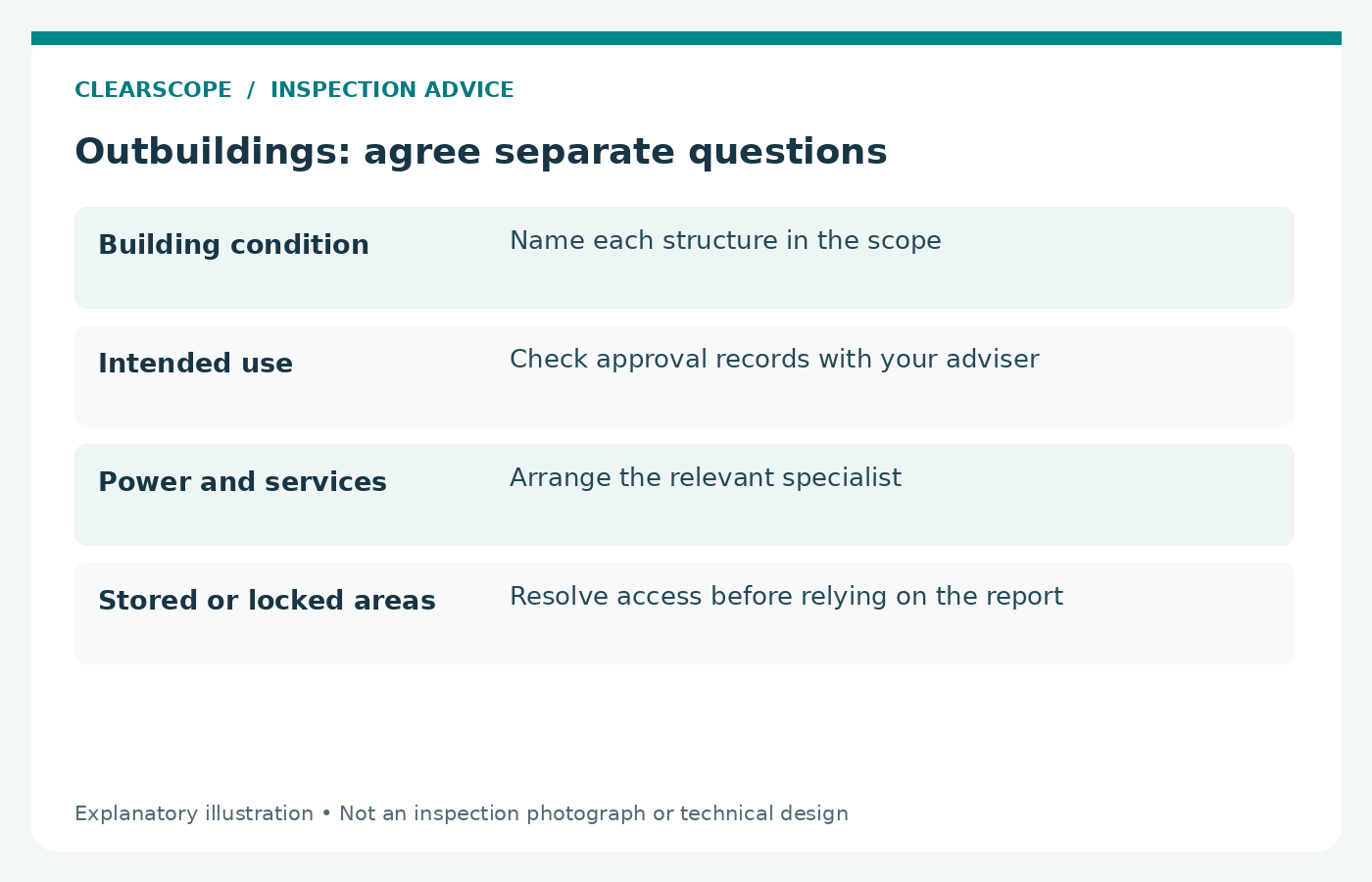
A useful inspection brief names the outbuildings you want considered and explains your intended use. A garage for parking, a workshop for equipment and a room advertised as a studio raise different questions. Do not assume that every structure on the block, every service or every proposed use is automatically included in one inspection.
This guide concerns garages and outbuildings as structures. If a garage has been changed into living accommodation, use our separate converted-garage buying guide for the additional habitability and approval questions.
Make an inventory before booking
List the detached garage, carport, garden shed, workshop, store and any attached lean-to. Include structures behind the main building or along a rear lane. An aerial image may help you identify their locations, but it cannot establish their condition or ownership.
Tell ClearScope which structures matter to the purchase. Confirm their inclusion in the written scope, whether they can be safely accessed and any areas that are excluded. Large sites and several outbuildings may require more time or a different fee.
Ask the seller what remains with the property. A movable shed, shelving or workshop equipment may need separate contract clarification through your conveyancer. A building inspection does not decide whether an item is a fixture or confirm that it belongs to the seller.
Check what the structure is being used for
A shed with plaster walls, a heater and a desk may look like a comfortable office. That appearance does not establish that it was approved or built for occupation. Equally, an older garage should not automatically be assessed as though it were a modern bedroom.
Ask for the available permit and completion records and clarify the described use. Your conveyancer and the relevant council or building surveyor can help with approval questions. The inspector can report visible building concerns and identify questions for follow-up.
The renovation history guide explains why changes should be traced rather than guessed. If you want to convert a garage later, obtain advice about feasibility separately. A condition report is not approval for the proposed conversion.
Look at the roof and the water path
Garage roofs may be partly hidden by vegetation, neighbouring buildings or stored materials. Corrugated sheets, tiles, flashings and gutters each need consideration in the context of the actual structure and safe access.
Visible rust, displaced sheets, damaged flashings and stained internal surfaces may warrant further assessment. A roof that looks dry during the inspection can still have an intermittent problem. Ask about past leaks and whether repairs were made to a specific location.
Also consider where roof water goes. A downpipe that ends beside a wall, water marks at the slab edge or ponding at the vehicle entrance may affect usability. Our buyer’s drainage guide helps frame those enquiries without assuming a visual visit can verify buried pipes.
Consider walls, supports and signs of movement
Look for leaning walls, displaced masonry, deteriorated timber and changes around openings. Their significance depends on the construction, condition and associated findings. A photograph of a crack does not establish whether a wall is structurally adequate.
Some garages have been extended with a lean-to or enclosed carport. The junction between old and new work may deserve attention, particularly where the supporting arrangement is unclear. Ask whether plans or contractor records explain the change.
Our movement guide for older brick buildings explains why patterns and context matter. If a wall appears unstable, restrict access and obtain prompt advice from the relevant qualified professional. Do not push a wall, climb shelving or lean ladders against a questionable structure to test it.
Read slab and floor observations in context
A garage slab may contain cracks, changes in level, surface wear or areas affected by water. The useful question is how those observations affect condition, safety and the intended use. A single crack width cannot answer all of that.
A floor may also have intentional falls or a step at an opening. Ask the inspector to distinguish the observed geometry from a conclusion about movement. The new uneven-floor buyer guide explains why changes in level and changes in support need separate enquiries.
If you plan to install heavy equipment, a hoist or a storage mezzanine, obtain a specific structural assessment. An ordinary pre-purchase inspection does not verify the capacity for equipment that has not been installed or assessed as part of the scope.
Doors deserve ordinary functional checks
A vehicle door that sticks, drops, scrapes or has visible damage can affect daily use. Confirm whether operation is included and whether power and controls will be available. A locked or disconnected door may leave a material limitation.
Do not assume an operational check is a full safety test of an automatic door system. Motors, springs, cables and safety features may require a specialist technician. Repairs to spring-loaded equipment are not a buyer’s DIY inspection task.
Check the pedestrian exit and any internal access door in ordinary use as well. Tell the inspector if a door is essential to your intended use of the building. A note that a structure was inaccessible should lead to a follow-up decision before purchase, not an assumption that it was satisfactory.
Keep electrical and plumbing questions separate
A workshop with several power points, an old switchboard or improvised extension leads calls for appropriate electrical advice. A building inspector may identify visible concerns, but an ordinary building inspection is not an electrical installation certification or load-capacity assessment.
Likewise, a sink, toilet, drain or hot-water unit in a shed raises service and approval questions that may need a licensed plumber. Ask what was installed, who did the work and what records are available. Running water briefly does not demonstrate every concealed connection is correct.
Where equipment is included in the sale, clarify who will assess it. A compressor, heater or extraction system should not disappear into a broad statement that the garage was inspected. Building condition, appliance operation and specialist safety testing are separate tasks.
Treat suspect materials carefully
Older outbuildings may contain materials that need specialist identification before disturbance. A visual inspection cannot reliably confirm whether a sheet, backing board or other product contains asbestos. Do not drill, break or collect samples yourself while inspecting a property.
Our asbestos and pre-purchase inspection guide explains the limits. If planned repairs or demolition could disturb suspect materials, obtain an appropriate assessment and quote before assuming a simple replacement cost.
Timber deterioration and evidence of pests also need clear scope. A building report can describe visible damage but does not replace a separate timber pest assessment. Stored goods, wall linings and inaccessible edges can hide relevant areas in a garage just as they can inside the home.
Boundary walls and shared-looking structures need records
A garage built along a boundary may adjoin a neighbour’s wall, fence or roof. Do not infer ownership, access rights or structural independence from what you can see. Ask your conveyancer to review the title and relevant documents.
Condition matters as well. Can the external wall be inspected lawfully? Is the far side concealed by a neighbouring structure? Are gutters or flashings accessible only from another property? Record those constraints when deciding what follow-up is needed.
If future building work is planned, the knockdown-rebuild neighbour coordination guide explains why existing-condition records and permission matter. A pre-purchase inspection is not a boundary survey or permission to carry out work over adjoining land.
Make the follow-up specific
Imagine an otherwise tidy home with a detached garage full of furniture. The roof is stained internally, one wall is covered by shelving and the automatic door cannot be operated because the controller is missing. “Garage inspected” would leave too much ambiguity.
A useful report identifies the visible staining, inaccessible wall and untested door. The buyer can then ask for repair records, arrange a cleared reinspection and obtain a door technician’s assessment if needed. Each action answers a different question.
Before committing, compare the remaining uncertainty with your intended use. A small garden store may be less important to you than a workshop you need immediately. The inspection supports that judgement without promising a universal pass or fail for every outbuilding.
Common buyer questions
Are sheds always included in a building inspection?
Confirm the written scope. Tell the provider about every structure rather than assuming all detached buildings and their services are included automatically.
Can the report confirm the garage is approved?
Approval and ownership enquiries require records and advice from the relevant authority or adviser. Visible condition findings can help identify questions but do not replace those checks.
Should I inspect an outbuilding that I intend to demolish?
It may still affect immediate safety, access, demolition planning and cost. Explain your intention so the scope addresses the questions that matter instead of focusing only on presentation.
Arrange an inspection that includes the right structures
Send ClearScope the address, buying deadline and a list of the garages, sheds and other structures you want considered. Explain their intended use and any locked or heavily stored areas. We can confirm a suitable pre-purchase inspection scope and identify specialist enquiries to arrange separately.
Ask ClearScope about garages and outbuildings before buying.