Mould at the Skirting After a Plumbing Repair
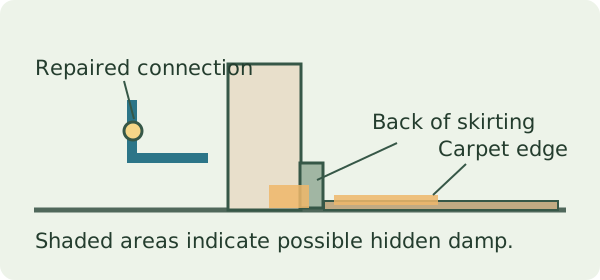
The plumber has repaired the leak, but the skirting still smells musty or has dark marks near the floor. Before the painter returns or the carpet edge goes back down, ask two separate questions. Has the water source been addressed, and what happened to the materials that got wet? A plumbing repair record can answer part of the first question. It may say very little about the back of the skirting, the wall lining behind it or the flooring next door. The repair date is the starting point for checking what stayed damp around the skirting.
Build the timeline around the repair
Find the date you first noticed water or a smell, the date the leak was isolated and the date the repair was completed. If you were away or the property was vacant, use a date range and explain what you know. Ask the plumber to describe the repaired component and whether they checked its operation afterwards. A repair to a supply connection and a repair to a waste fitting call for different questions about when water may have escaped. A photograph of the failed fitting and a short description of where it sits can be more useful than a generic invoice entry saying plumbing repair.
Add what happened to the room after that. Record when standing water was removed, whether floor coverings were lifted by a contractor, whether drying equipment was used and when it was collected. Note when the skirting first swelled or the spots first appeared. If the dampness seems to change when a particular appliance is used, our laundry moisture guide explains how to document that pattern for a plumber. Here the immediate decision is whether the finishes affected by the earlier leak can be left in place or need another inspection before reinstatement.
Map the marks from both rooms
Start with a wide photo taken from the doorway so the plumber or inspector can identify the wall. Add a close photo of the transition from affected to apparently unaffected finish. When it is safe to stand there, look from both rooms that share the wall. A kitchen cabinet may obscure its side of the partition while the hallway side gives a clear view of the skirting. Note the rooms, wall lengths and the position of doors or pipework in a sketch. Take photos before any further cleaning, paint or building work changes the appearance.
Describe what you can see in plain language. You might have paint lifting at the skirting join, a board with a swollen cut end, dark spots at the carpet edge or a mark extending into the next room. Photograph each separately and date them. A patch of discolouration can remain after materials dry, and a finish may retain deformation after the water has gone. A spread of new marks outside the original area or a change that coincides with normal use gives you a different question to raise. Our guide to mould returning after cleaning helps when the history includes repeated cleaning.
Ask what lies behind the finish
Ask what the wall and floor are made of and whether the repair contractor saw their concealed sides. For example, the bathroom side may be tiled while the room next door has plasterboard, a fitted skirting and carpet underlay. Each layer offers a different visible surface and can be affected differently. A repair photo taken while the plumber had a cabinet panel off might show where water pooled. It could still leave the bottom edge of the adjoining wall outside the photograph. Tell the inspector which materials have already been removed and where any original finishes remain.
The Western Australian Department of Health's building guidance discusses damp materials individually and includes the surface under carpet in its advice. That is a useful prompt to ask a restoration contractor which layers they assessed and what the records cover. The guidance describes management options for different materials. The right treatment depends on the water source, the materials and their condition, and the scope agreed with the contractor. Where a tiled wet area shares the wall, our waterproofing inspection information explains why an exposed installation is easier to assess than a finished one.
Separate retained moisture from a new water source
Bring the repair and drying records together. If there is evidence the repaired line was checked and the affected area has been shrinking, residual moisture may still be worth assessing before finishes are replaced. If new dampness appears or readings taken by a contractor are trending upward in a comparable area, ask the plumber or restoration contractor to review the pattern. A second source is possible. Water reaching the same wall from a different route can make separate events look like a single continuing defect.
Check if the timing changed after the repair. New dampness after rain and new dampness after using a fixture give the professionals different starting points. An outside wall with seasonal condensation can also complicate the picture. The Victorian Building and Plumbing Commission describes how moist air can condense on a cold surface and lists visible changes associated with moisture. Use this guidance to help describe the conditions where the mark appears. An inspection still needs to establish which possibilities fit your property. If furniture crowds that wall, our guide to mould behind furniture explains what room layout can add to the picture.
Agree on what the visual inspection can cover
A special-purpose inspection can record the visible condition and compare accessible parts of the affected area with similar material elsewhere. Where appropriate, a moisture instrument can help identify areas that warrant more checking. The reading needs context including the surface material, location and instrument limitations. Finishes, layers and nearby materials can affect the comparison. Ask where readings were taken and whether they are intended as a screening observation or part of a contractor's drying record. A single reading taken at the painted face leaves the back of the board and underlying materials outside that check.
A visual appointment can often clarify where the next person should investigate. Opening the wall, removing bonded floor coverings, testing a pipe or assessing the extent of contamination requires its own scope and suitable access. If the history is unclear, agree who will contact the plumber and restoration contractor before anyone disturbs the finish. Better Health Channel explains that damp conditions support mould growth and provides public health guidance. Questions about symptoms or exposure belong with health professionals. Our report examples show how accessible findings and photos can be documented for handover.
Illustrative example of a dry-out decision
Imagine a plumber replaced a leaking fitting under a vanity. The repair photos show water in the vanity base. Across the wall, the bedroom skirting has swollen near the door and the carpet edge has darkened. The owner has a photo from the day of the repair and a later one taken from the same doorway. The second photo shows the visible stain has faded. There is no record of anyone assessing the carpet underlay or the bottom of the wall from the bedroom side.
The next useful action would be to confirm what the plumber tested, then ask a restoration contractor to assess the bedroom-side finishes before reinstalling the carpet edge. A targeted building inspection can document the visible pattern and identify whether other nearby surfaces deserve attention. If comparable observations show the affected area is changing with ordinary bathroom use, the plumber can use that timing to decide what to test next. If the assessment finds the materials dry and serviceable, the contractor can explain the basis for leaving them in place. The example shows how a faded stain can leave a genuine material question open.
Put the reinstatement decision in writing
Before accepting a quote to replace skirting or repaint, ask the contractor to identify which surfaces were inspected and which remained covered. Ask whether the work includes making good only, or also involves assessing and treating materials affected by the incident. If two contractors are involved, give each the same marked-up photos and the repair timeline. Agree who will tell you the area is ready for reinstatement and what that statement will cover. If your insurer or building manager is involved, keep dated records and check who can authorise opening up or disposing of materials.
If the contractor plans to assess the area in stages, ask what finding would change the next stage. For instance, if the carpet edge looks affected beyond the visibly swollen board, does the scope allow the adjoining edge to be assessed? If the wall remains closed, will the report explain the basis for leaving it closed? Clarifying the decision in advance helps you compare quotes and avoids paying for finish repairs while the extent of the wet area is still uncertain.
For a ClearScope enquiry, provide the suburb, room names and the dates of the initial leak, repair and any drying or cleaning. Attach a wide photo from each affected room and the plumber's description of the work. Include whether the same marks are getting larger, whether another surface has changed and whether someone else controls access. The inspection services overview can help you select a targeted inspection. The Australian Centre for Disease Control also explains the role of fixing moisture sources and addressing water-damaged materials in preventing mould exposure. The practical outcome is a clear record of what was observed, what remains concealed and what information is needed before the finish goes back.
If another professional is already due to attend, tell them which parts of the property were affected before the visit. A pipe behind a cabinet may be accessible to the plumber while the carpet in the adjoining room remains outside their brief. A drying contractor may be able to explain what they checked without returning, provided they recorded the position and material at each observation. Ask for that record before commissioning repeat work. If neither person can say what happened at the adjoining wall, include the wall in your enquiry so it can be dealt with as a specific gap.
A rental or apartment can add an access step. Let the property manager or building manager know which rooms share the affected wall and whether the original leak came from another lot or a shared pipe. Send a copy of the same timeline to everyone arranging attendance. That gives the contractors a way to correlate their observations without relying on different accounts of when the stain first appeared.