Special Purpose Mould Inspections — Mould Inside Wardrobes and Behind Furniture
Need help investigating recurring mould?
Tell us which rooms are affected, when the mould returns and whether you have noticed staining or a leak. Discuss a special purpose mould inspection or see how ClearScope presents findings in the public report examples.
Finding mould inside a wardrobe or behind a bed can be unsettling, especially when the rest of the room looks dry. The hidden location matters: stored clothing and large furniture can limit air movement, while an external wall, plumbing issue or rainwater entry may also contribute to damp conditions. The next step is to investigate the building context rather than assume one cause from the appearance alone.
A special-purpose inspection enquiry can help define the affected areas, visible moisture concerns and appropriate next steps. This is an investigation of an existing problem. It is separate from checking new construction before concealment, laboratory mould analysis, medical assessment or certification that a room is safe to occupy.
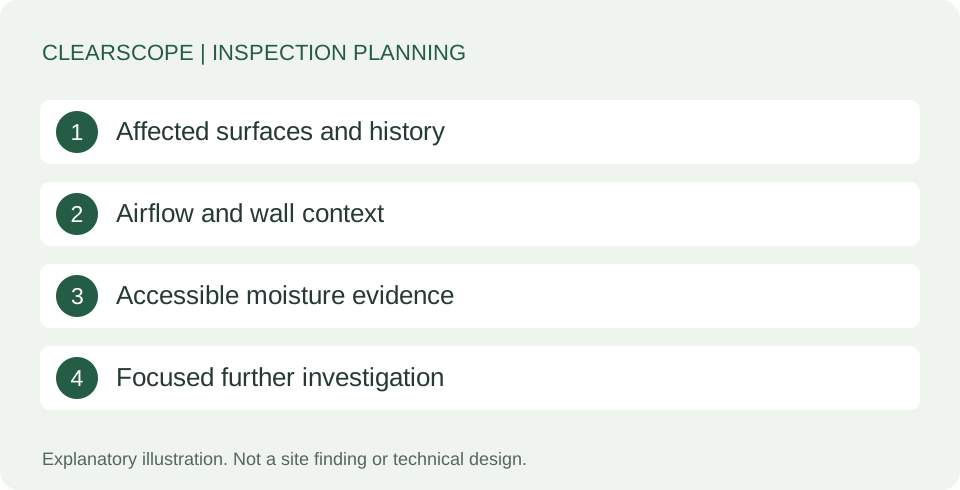
Record the location before changing it
Note which wall is affected, the height of visible growth and whether it is on the wall, furniture, stored items or several surfaces. Photographs taken safely can help show the original arrangement before furniture is moved. Include an overview so the affected patch can be located later, rather than only a close-up without context.
Do not disturb a large affected area or put yourself at risk to obtain a better photograph. Follow current Victorian health guidance and seek appropriate assistance for cleaning or handling contaminated contents. The building inspection concerns moisture and building conditions; questions about symptoms, vulnerability or health effects should go to a qualified health professional.
Consider airflow without assigning blame
A packed wardrobe or furniture close to a cold wall may reduce air circulation. That can be a contributing condition, but it does not prove the occupant caused the problem. Building design, insulation, ventilation, water entry and how a room is used can interact. An investigation should consider these possibilities fairly.
The returning-mould guide explains why cleaning alone may not resolve a moisture problem. Moving furniture can provide access and may support airflow, but it is not a substitute for investigating a leak or a damaged building detail. Avoid accepting an explanation that blames either the building or the household without supporting observations.
Ask whether the wall is external
An outside wall may be cooler than other room surfaces under some conditions. Corners, shaded elevations and areas behind joinery can behave differently from exposed internal walls. These are useful clues to consider with the room's history, but wall location alone does not establish condensation as the cause.
An inspector may assess accessible internal and external details, subject to the agreed scope and safe access. Concealed insulation and wall cavities generally cannot be confirmed without further investigation. The insulation guide explains installation questions during construction; an occupied-home investigation must be clear that those same details may now be hidden and cannot simply be checked visually.
Keep rain and plumbing possibilities open
Ask whether the dampness follows rain, a particular wind direction, use of a nearby bathroom or no obvious event. A wardrobe backing onto a wet area raises different questions from one beneath a roof junction. More than one contributing condition can exist, and a dry inspection does not exclude an intermittent leak.
The window-water-entry guide explains why surrounding building details matter when a symptom appears near an opening. For a wardrobe, relevant areas may include the wall above, adjacent plumbing and accessible roof or external details. A licensed plumber or another specialist may be needed if the evidence points beyond the visual inspection scope.
Gather a simple event history
Record when the problem was first noticed, whether it is seasonal and what changed before it appeared. Useful changes include new furniture, a repaired roof, replacement windows, altered heating or a newly installed wardrobe. These are investigation leads, not proof that the most recent change caused the mould.
Keep cleaning, repair and reappearance dates separate. If a surface was washed or painted before the visit, tell the inspector so the absence of visible growth is understood in context. Earlier photographs can be helpful when their source and date are clear. The inspection report should distinguish supplied history from findings observed on the day.
Understand moisture readings
Where appropriate and included, moisture readings can help compare accessible surfaces and direct further questions. Different materials and instruments respond differently. A reading should be interpreted with the location, visible condition and surrounding construction, rather than converted into a definitive diagnosis on its own.
A dry reading behind a wardrobe on one afternoon does not prove the wall stays dry through winter or heavy rain. An elevated reading does not by itself identify a leaking pipe or prove that mould is active. Ask the report to explain what the measurements support and what remains uncertain. Longer observation or specialist testing may be useful if it answers a defined question.
Agree how furniture will be handled
Safe access needs planning. Large wardrobes, beds and fixed joinery may be too heavy, unstable or vulnerable to move during an inspection. The owner or occupant should agree any preparation with the inspection provider beforehand. Do not assume dismantling cabinetry or moving heavy furniture is included in a non-invasive visit.
If the back of a built-in wardrobe cannot be seen, the report should identify that limitation. A visible patch beside a cabinet does not establish the condition of the whole concealed wall. Further access or opening-up may need a separately agreed method, permission and suitable trades. Keep the value of that investigation tied to the question it is intended to answer.
Separate visible growth from identification
Colour and texture cannot reliably identify mould species or establish a specific health risk. A building report may describe visible mould-like growth or affected surfaces within the agreed scope, but should not make laboratory claims from photographs. Laboratory sampling, if considered necessary, needs a separate purpose, method and appropriately qualified provider.
The pre-purchase mould guide explains another context in which visible findings have limits. For an existing wardrobe problem, focus the building enquiry on moisture conditions, accessible defects and next investigation steps. Do not treat the report as medical advice, an exposure assessment or a certificate that all hidden growth has been found.
Avoid closing the wall question too early
Replacing the wardrobe backing or repainting a wall can improve appearance while leaving the moisture source unresolved. Ask any repair provider to explain how the proposed work relates to the evidence. If further investigation is recommended, understand whether it needs to occur before damaged material is removed or concealed again.
A water-damaged cabinetry guide gives related context about source and repair scope. Remediation, replacement and building repairs may involve different contractors. The inspection can help organise the questions, but it should not promise that one visit will establish a definitive cause, complete repair specification and final clearance unless those services are expressly supported and agreed.
Plan follow-up around the suspected condition
If the initial visit is inconclusive, ask what follow-up would reduce uncertainty. A plumbing investigation may address a nearby supply or waste concern. A targeted building assessment may address an external junction. Monitoring may help identify when moisture conditions occur. The best next step depends on the evidence rather than a standard package applied to every wardrobe.
Keep temporary measures and completed repairs documented. A return visit can assess accessible conditions at that later time, but does not guarantee future performance under every weather or occupancy condition. If growth returns, compare its location and timing with the earlier record rather than assuming the same mechanism is responsible without review.
Send a focused inspection enquiry
Provide ClearScope with the address, affected room, photographs, approximate history and any known leaks or repairs. Explain whether the wardrobe is freestanding or built in and what can safely be accessed. Ask for a scope covering the relevant visible building conditions, moisture assessment where appropriate and a findings report with practical recommendations.
Review report examples and agree any additional investigation separately. The aim is to understand what the building evidence shows, identify important unknowns and choose a sensible next step. It should leave you with a clearer plan for the moisture problem without unsupported promises about health, mould identification or concealed conditions.
Make practical interim steps evidence aware
Ask the inspection provider or relevant remediation specialist what preparation is appropriate before the visit. Safely improving access, retaining earlier photographs and noting room conditions may help, while dismantling joinery or disturbing affected materials can remove useful context or create other risks. Do not delay urgent leak management merely to preserve a photograph; record what action was needed and when it occurred.
If a temporary airflow change appears to help, note the timing and conditions without treating the improvement as proof of a definitive cause. Weather, heating and room use may have changed at the same time. This record can support a later discussion about what should be monitored or investigated. The aim is useful information, not asking occupants to conduct experiments or tolerate an unresolved problem while waiting for perfect evidence.
When requesting recommendations, ask which steps address an observed building concern and which are general moisture-management advice. This makes the findings easier to act on and helps you avoid treating a general ventilation suggestion as proof that a concealed leak has been excluded. Each unresolved question should have a clear next action.