Special-Purpose Building Reports — A Door That Sticks Each Winter
The back door opens normally in summer but starts rubbing after weeks of wet weather. Before trimming the edge again, note where it makes contact and what else changes at the same time. A focused inspection can help narrow which part of the door or surrounding building needs attention.
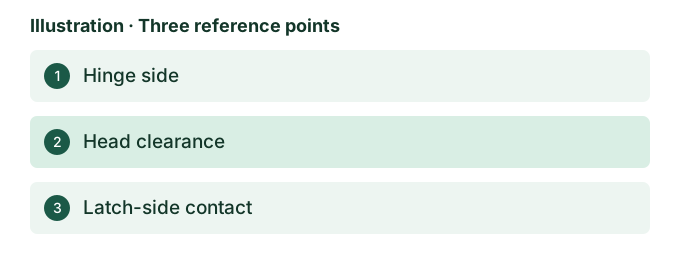
Record the operation before it is adjusted
Photograph where the door rubs and whether the latch is out of line. Note when it began, whether it happens after particular rain events and when it improves. Where a door is difficult to move or there is a concern about safety, leave ordinary operational checks to the appropriate person. Identify previous repairs and whether they changed hinges, latch, seals or the door edge. A useful observation is specific, such as contact at the top latch-side corner during closure, with a date and weather context.
Consider the door, opening and surrounding wall
An inspector can compare the visible gaps, look at accessible hardware and note staining or deformation around the frame. A door leaf can change shape or shift at its hinges. A frame can also move relative to nearby finishes. Check whether adjacent openings have similar problems and whether there are related cracks or floor changes. The combination matters more than any one observation. If the concern is a defect in recent building work, the Building and Plumbing Commission’s dispute guidance outlines the available Victorian process. BPC guidance on domestic building disputes.
Look for sources of repeated wetting
For an external door, note the exposed edge, shelter, threshold and observable drainage. For an internal opening, consider what services, walls or exterior surfaces are nearby. Compare a moisture-related pattern with previous repairs and the timing of changes. A dry visit can document the condition at the time and compare your dated evidence. It may leave intermittent moisture unresolved. Ask a suitable trade to check a suspected water source where the accessible building observations support that next step. Renters can use Consumer Affairs Victoria’s repairs guidance to identify how to notify the rental provider. Consumer Affairs Victoria’s rental repairs guidance.
Test competing explanations with an example
Illustrative example. A timber back door rubs along the lower edge in wet weather and has visible finish deterioration at that edge. Other openings operate normally during the visit and there is no corresponding visible crack in the surrounding finish. The record supports further checking of local wetting and the door condition first. In a second situation, several doors on the same side of the house change at the same time and new cracks appear around nearby openings. That combination raises a broader question and may warrant a structural engineer’s review.
Compare the repeat pattern with earlier adjustments
A door that binds after new flooring is laid has a different starting point from one that clears the floor in summer and rubs in winter. Find the earlier repair date and what the person changed. If a hinge was tightened, check whether the return of the problem is in the same place or elsewhere. If the edge was planed, ask whether the exposed surface was refinished and whether visible wear or wetting is now localised there. Keep the original and latest photographs together so the investigator can see what changed between the two visits.
Decide whether to gather a second observation
A single visit during dry weather can still record the door condition, current clearances and surrounding observations. If no sticking is evident, supply dated material from an event when the symptom was present. If the problem occurs at predictable times, agree whether a second visit in similar conditions or a trade assessment of the exposed edge is the most useful next step. Where movement is suspected, ask the engineer what observations or repeated measurements would be comparable and what else needs to be considered. Agree who should interpret changes before commissioning any monitoring. An appropriately scoped report can help distinguish the immediate door operation issue from a separate concern about the wall or floor.
Check whether the contact point has moved
Record the part of the door that makes contact and the direction of movement when it happens. A door may drag along the floor while opening, touch the head as it closes or latch only when lifted. Each observation gives a different starting point. Take a contextual photo and a closer one showing the relevant edge if you can do so safely. If a trade has already adjusted the hinges or latch, note the date and what changed. Ask whether the contact returned to the same place.
Consider whether new flooring, paint or seals were added around the time the issue began. A change at the opening can be local even when several events happen during the same season. If the door worked immediately after the adjustment and later bound again, record the conditions at both points. An inspector can use that sequence to decide which visible details to compare. The timeline helps the investigator ask a better question without attributing the cause to one change simply because it happened first.
Compare surrounding observations before deciding how wide to investigate
Tell the inspector about nearby openings, cracks or floor changes that appeared at a similar time. Use room names and elevations rather than describing everything as being “at the back”. A gap at a skirting board and a crack at the top of the doorway might provide context if they are in the same part of the building. They may also reflect different repairs or materials. Ask the inspector to record what can be seen and which areas could not be assessed.
Where several doors or windows change together, ask whether the pattern warrants a broader assessment. An engineer may need to determine what measurements, building history and site information are relevant if movement is suspected. A one-time measurement describes the position at that visit. It takes comparable information over time to establish a trend. If there is a possibility that the sticking is caused by local hardware or moisture, identify which observations support a narrower enquiry first.
Check the wetting context without trying to reproduce it yourself
For an exposed external opening, note nearby paving, overhangs and any visible stains at the threshold or frame. Ask when the door was last refinished and whether the bottom or edges show a different condition from the face. For an interior door, ask whether there has been a plumbing incident, changed floor finish or recurring moisture in the room. The building inspection can record accessible conditions and recommend a next enquiry where the evidence supports one. A visual visit does not locate every concealed water path.
If the relevant surface is dry during the visit, show the investigator dated images and ask whether repeat observations or an appropriate trade assessment would add evidence. Avoid altering the door simply to force a result during the inspection. For a door that forms part of a specified assembly, ask the responsible practitioner what requirements apply before any trimming, replacement or hardware alteration is proposed.
Agree what a successful repair would look like
If the proposal is to adjust the hinges, ask what the trade observed and how they will test operation afterwards. If the proposal addresses wetting, ask how they identified the source and what will be checked during a comparable event. A door that operates freely at the end of a dry visit can still need a seasonal follow-up. Keep the repair details and a short dated log so a later specialist can compare the same opening if the problem returns.
Before booking, identify whether the priority is ordinary operation, repeated wetting or a potential movement issue. Tell the inspector if the door is an essential access point or if opening it is unsafe. If the concern affects several rooms, attach a marked floor plan and keep the location of each symptom separate. Agree on any specialist assessment and permission for further access before anyone disturbs finishes. The outcome should give you a clear record of what was observed and what would justify the next step.
Share a short observation log
Give the specialist the door location, date, weather, contact point, any associated wetting and what changed after an adjustment. Use the same landmarks in later images. If the symptoms disappear before the appointment, the log helps the inspector decide which areas to check and what limits to record. Ask whether a follow-up visit is worthwhile and what conditions would make it useful. A new observation is most valuable when it answers a question that the first visit left open.
Keep the decision tied to the finding
If a trade recommends trimming, ask how they assessed the source of the change and whether trimming would affect the door’s performance or any relevant assembly requirements. If movement is suspected, ask what can be measured and compared again and who should interpret it. A building inspection may record observable relationships without revealing hidden fixings, moisture within the wall or footing movement. Send the room and door location, wet and dry weather photos, repair history and any other changes you have noticed. Explain whether you want to decide on a small repair, investigate recurring water entry or understand a broader movement concern.