Pre-Purchase Building Inspections in Bulleen
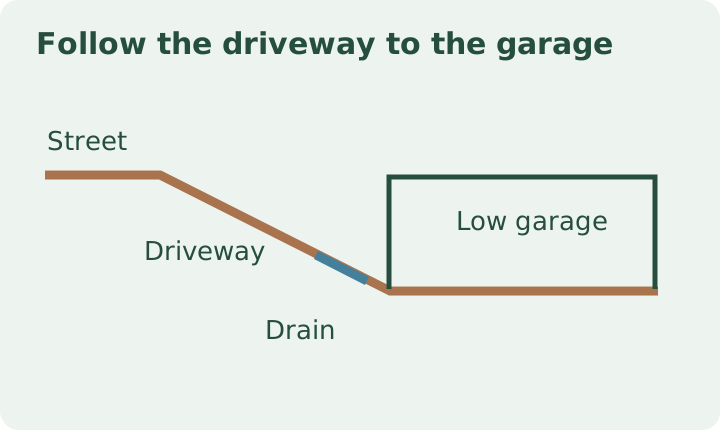
The Bulleen house you are considering has a driveway that slopes down to its garage. A strip drain crosses the entrance, fresh paint covers the lower walls and the selling agent says the garage has always been usable. For a Bulleen home with a low garage, compare the address records with the route water could take from the street. The practical decision is whether you have enough information about the lower level before lodging an offer. Address-specific flood evidence and visible building condition answer different parts of that decision.
Find out what local flood mapping can tell you
Manningham Council’s Amendment C109 technical material describes modelling of local catchments, including Bulleen North, for overland flow. That gives a local reason to ask about the address rather than assuming all water risk in the area relates to the river. The material describes modelling and proposed planning extents at the time of the reports. Check current mapping and controls for the exact property with the relevant authority and your conveyancer. An area reference in a council study cannot tell you whether water has entered an individual garage.
Melbourne Water describes property information statements and flood level certificates. Ask which information is available for the address and what type of flooding it addresses. A map can provide useful context even if the seller has no photographs of a past event. A seller’s account can also help if it can be tied to a year, a particular storm and a distinct location. Ask whether the account refers to water in the street, runoff across the driveway, overflow at the drain or entry into the house. You can then give the inspector a clearer description of what to compare.
Walk the route from the street with permission
Stand where the drive meets the street and look for changes of level before the garage entry. The top of a driveway may have a distinct crest, or the drive may continue in the same direction from the crossover toward the house. A side path could have its own relationship to the footpath, garden or lower room. Those visible details help you formulate a question about where water may go. A casual look cannot replace survey information or predict what happens in a major event.
Look at the drain, the thresholds and the accessible surfaces as separate items. A cover near a door can be photographed and identified without lifting it. An accessible surface might look worn or recently altered around its edge. Ask whether there is a plan or invoice showing what was installed and where it discharges. The guide to drainage around a house before buying explains more about the kinds of visible features that can inform that discussion. A visible grille alone cannot show where a drain runs, whether it is clear or how it would perform in particular weather.
Ask the agent to show the inside counterpart
Work out which room sits behind or beside the garage. If it is a storeroom, the lower wall may be obscured by shelving. If there is a door into the home, ask whether the agent can open it for the inspection and identify any area along the lower wall that can be made accessible. Note whether an earlier finish and a later one meet at a height that could help you locate previous work. A paint change or line on a wall can have many origins and by itself does not establish a flood.
Tell the inspector about any difference between the garage and the adjacent interior. A mark just inside an exterior doorway and a mark on the opposite wall call for different questions. A report can record what was visible and compare adjacent areas where access and conditions allow. The guide to flood history and visible water marks explains why the timing and location of evidence matter. The garage and outbuilding buyer guide is also useful if the garage itself needs wider condition checks.
Separate maintenance, active issues and purchase conditions
Ask what was done if there are signs of a drain replacement, a new driveway surface or repairs to lower linings. Maintenance records might describe cleaning without addressing discharge. A paving invoice might describe new concrete without documenting a change at the top of the driveway. A repair to a finish could have been carried out after ordinary wear or a leak unrelated to stormwater. Tie documents to the exact areas you can see and avoid treating a single invoice as the complete story.
The timing of your decision matters. If the garage is integral to the purchase, an unresolved uncertainty about repeated entry can be more important than minor wear to a finish. If the seller can give access and explain recent work, you may be able to set a clear scope for a visual visit. A separate drainage assessment may still be needed if locating a concealed outlet or checking function could change your decision. Discuss timing and contract questions with your conveyancer. Consumer Affairs Victoria describes professional inspection as one part of buying due diligence.
Read mapped exposure and visible condition together
A professional inspection describes how the accessible property presented at the time of the visit. It can help clarify which concerns deserve further advice and which areas remained out of view. The site may be dry on that day even if runoff has been reported in the past. Conversely, a damp patch can arise from causes outside the scope of a flood inquiry. Think of the address records, seller’s account and building condition as evidence to reconcile, with each retained in its own terms.
If a map indicates that water could affect part of the property, use it as a starting point for a question about which area, entrance or external route is relevant. If current authority information does not identify an issue, you can still investigate site-specific visible concerns without claiming a contradiction. The authority report and the condition inspection can have different scope, dates and purposes. The information needed for insurance or an intended design change may also differ. Bring the questions to the appropriate adviser before making assumptions about cover, responsibility or future building work.
An illustrative Bulleen purchase decision
Imagine a low garage with a cross-drain near the door and a step into a laundry. The driveway is recently resurfaced. In an allowed photograph taken during the open inspection, a narrow section of the wall beside the entry looks discoloured. Storage prevents a view of the remainder. The agent knows the drain was replaced but cannot say if its outlet changed. No records specific to the address have yet been obtained. Those facts set out the things a buyer could investigate without deciding that the property has a water entry history.
For this illustrative buyer, the first move could be to request access to the garage and laundry with the seller’s permission and to ask for the drain invoice. The inspector can compare visible thresholds and the affected wall section. An authority inquiry can address the mapped exposure question. If the condition or documents suggest a need for drainage advice, ask what inspection or investigation can be arranged before your deadline. The ClearScope report examples show how observations and important limits can be explained for follow-up.
Set up the inspection around your decision
Give the Melbourne pre-purchase building inspection service the address, your deadline and a plain description of the garage and adjacent areas. Note whether a door or storage area needs to be made available and whether you have written information about earlier work. Tell the inspector what would matter most to your purchase decision. This gives them a starting point for discussing the accessible scope and where you may need different advice.
Before you commit, write down any question that remains open and who can answer it. For a lower garage it may be the condition of the inside wall, the destination of a drain or how current flood information relates to the property. Prioritise those questions over general assumptions about Bulleen or claims that a newly painted room settles the issue. If a particular opening or wall could not be inspected, ask the inspector to identify the limitation so another professional can locate it if a second visit becomes necessary.
A final check is to compare what was requested with what you actually received. A repair invoice might prove who undertook the work and the date of the appointment, while omitting the reason a repair was done. A map might depict the street and land without explaining how the garage entrance changes the immediate site. A report might identify an important observation without being able to see the concealed pipe. Ask what evidence would resolve the question with the least disruption, and leave enough time for the relevant adviser to consider it before you make your decision.
If you are comparing two homes with similar garages, list the same questions for both. Record who confirmed the documents, what the inspector could see and whether any issue needs a further visit. Do not assume the street layout gives both properties the same exposure. A single street can contain entrances at different levels, each with its own relationship to nearby land and possible flow routes. Compare the specific access and records for each place. If important exterior evidence is obscured by vegetation or stored belongings, allow time for the seller to respond to your request.
The ClearScope inspection approach gives context for how a visible finding can form part of a wider buying decision. If the condition at the drive and garage appears ordinary, the address still merits its own records checks according to your adviser’s recommendations. If there is a visible concern, ask how it changes the buyer’s next action before requesting a broad menu of investigations. In either case, you want a clear distinction between the question you started with and the evidence that actually answered it.
References
Ask ClearScope about your property
Send the property address, your buying deadline and the areas you want checked.
Request an inspection