Underground Drains Before Neighbouring Excavation: When to Add CCTV to a Dilapidation Baseline
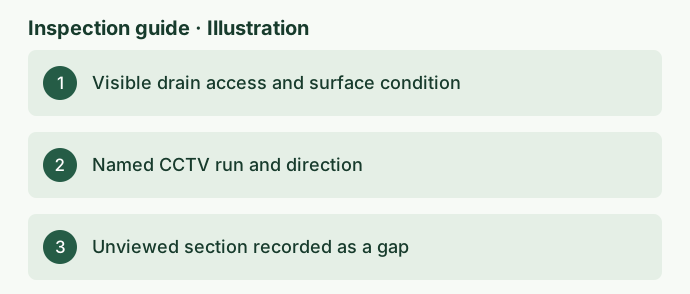
Start with the line you might need to compare
When excavation is planned next door, you might be able to photograph the fence, paving and brickwork while the ground is still intact. The drain below that paving is a different matter. If it backs up later, those surface photos may help place the trench or show changes at a pit, but they will tell you very little about the earlier condition inside the pipe. The choice is whether to add a separate drain inspection now, while there is a chance to make a useful baseline.
Start with a specific question rather than a request to film every drain. Is there a private sewer running towards the boundary, a stormwater line under a shared driveway, or a pit close to the planned trench? Which branch would need to be revisited if a problem arose? An independent dilapidation inspection and report can document accessible surface condition. A suitably scoped specialist drain inspection can add evidence from inside the nominated line. Keeping both in the same job record helps later readers understand which observations came from which method.
Give the inspector and plumber any available drainage drawings and the current works plan. Include changes to excavation locations, vehicle routes and temporary access if the work has already been revised. A drain shown as crossing a quiet garden on an early drawing may sit below the revised access route. Conversely, the branch people are worried about might turn away from the work altogether. Treat any uncertain route as a question to resolve with the appropriate specialist or asset owner before deciding how far the baseline needs to extend.
Separate ownership, location and condition
Identify the drainage system before commissioning a camera visit. A downpipe and garden grate suggest stormwater collection, while a sewer inspection point relates to a different system. Older alterations, shared lines and missing drawings can make ownership and route unclear. Ask for the relevant water corporation or council information where available, then ask the plumber to explain which line the proposed access point actually reaches. Give the survey a plain label such as “rear private stormwater line from grated pit towards front outlet” so the request can be checked against what was filmed.
Ownership matters when permission or approval is needed. A pipe can pass near the site without forming part of the adjoining owner's private drainage. Melbourne Water describes a separate approval process for work affecting its assets. Yarra Valley Water distinguishes responsibility for internal or combined drains from faults in its network. Use the guidance for the operator and location involved, and ask for confirmation where responsibility is unclear. A camera recording and an asset owner's permission are separate records with different purposes.
Likewise, a plan may help identify a line while leaving its physical condition unknown. A camera may show an internal feature while leaving its exact surface position uncertain. Record what each item supports. If matching footage to the work area depends on a location, ask the specialist what locating method they used and how they marked their reference points. If a mark is temporary, have a wide photo taken that relates it to a fixed feature such as a wall return or pit lid. This way a later reader can retrace the reference without relying on a mark that might have washed away.
Build a record someone else can repeat
On the surface, record the visible inlet, outlet or inspection point from a safe, permitted position. A wide photograph locates the feature, a closer image records condition, and a sketch or labelled plan ties it to the proposed excavation. Note observable features such as a settled lid, broken grate, open joint in surrounding paving or existing staining. Keep these as observations. A depressed grate might reflect a problem in the surface construction, or it might warrant investigation of the surrounding ground. The photograph alone rarely settles that question.
Ask for a camera record with a date, named start point, direction of travel, footage and accompanying notes. The notes should distinguish what the operator saw from their interpretation and state where the run ended. If a branch could not be entered or a section was obscured, include that limitation in the deliverable. A file called “drain inspection” without an identified line can be difficult to match to a property with several near-identical pits. Example inspection reports can help you recognise how labelled views and location notes work together in a wider property record.
If the camera can see only to a bend, ask what decision remains open. The unviewed stretch may lie beyond the proposed works and be low priority for this baseline. If it lies directly beneath the area of concern, ask whether a different permitted access point or a different specialist method would be suitable. Document the decision even where the survey cannot be extended. This prevents a later reader from assuming the full line was assessed simply because one continuous video file exists.
Use the footage to describe what is visible
A root-like obstruction, debris, a joint that appears offset or water sitting across part of the view can all be useful observations. Explain where the camera was when the feature appeared, what could be seen around it, and whether the view was clear enough to revisit. Ask for stills keyed to the original footage when the feature is important. Retain the original file. A screenshot can be handy for correspondence but cuts out how the camera approached the feature and how clear the view was on either side.
It is also worth recording what happened immediately before the survey. If a line was cleared or flushed so the camera could pass, note the order of events and ask the plumber to preserve the earlier observations where possible. The resulting footage may be a sound baseline for the condition after cleaning. The same footage is weaker evidence about what was in the line before cleaning. If there was a history of blockages, keep the earlier callout records and the household's account separately from the inspector's findings.
Ask the specialist to identify any recommendation that needs action now, independent of the construction. A plumber might advise investigating a recurring blockage before work starts. Another feature might only need to be recorded for future comparison. The scope of a visual dilapidation inspection does not cover a diagnosis of every pipe. Where symptoms already exist, state them plainly when organising the job so the diagnostic request can be scoped alongside the evidence record.
Book around the first activity that changes the reference
Work backwards from the earliest ground disturbance near the line. Strip-out can be followed by service disconnections, breaking up concrete, fence removal, tree removal or temporary access work, all before the main excavation. If a pit is going to be removed or covered, get the surface identification and any specialist recording arranged while access remains available. For context on what can be recovered when preparations have already started, see the guide to a baseline after enabling works.
Illustrative scenario. A neighbour plans an extension beside a paved side path. The owner has previously noticed slow drainage after rain. The plumber identifies the private stormwater run from a grated inlet and records sediment before the camera stops at a bend. The site plan places the bend near the edge of the proposed work, but the stretch beyond it is unviewed. A practical next step is to ask the plumber whether another permitted entry can show that stretch and to retain the earlier slow-drainage history alongside the partial survey.
Access can determine the value of the record as much as equipment. Confirm who can provide entry, which pits or cleanouts can be used and whether the intended time falls before the contractor restricts access. A shared line can involve more than one property, so make contact early and keep any permissions with the scope. Where an owner declines access, the guide to limited or refused neighbour access explains how to record the gap without implying the inaccessible area was inspected.
Compare like with like after a change
If the drain develops symptoms during or after the works, write down when they were first observed, which fixtures or pits were involved, the weather where relevant and whether anyone has already cleared or repaired the line. Ask the plumber to use the same access point and direction where practicable, and to explain any difference in method or visibility. Matching reference points makes the comparison stronger. Separate the condition of the exposed surface, the condition seen in the pipe and the timing of nearby activity.
A useful comparison might show that a feature visible in both recordings looks similar, or that a section previously traversed can no longer be passed. Neither finding settles every question. Water level, access, cleaning and different camera angles can alter what a recording shows. If the second camera stops earlier, document where it stopped and what the specialist observed rather than guessing at the exact condition beyond the obstruction. The principles in our guide to comparison inspections after building work also apply to matching photographs of pits and adjacent paving.
For a job near a council drain or a project with civil works, clarify which records the contractor or authority is obtaining. The guide to dilapidation reports for roadworks and civil excavation helps explain the broader record. If emergency repairs need to happen, give the attending plumber the earlier reference material and ask what they can safely document as work proceeds. Keep the repair account separate from the baseline and note which parts became unavailable for comparison after replacement.
Put the request in writing before booking
Send the address, the work drawing or a marked sketch, the date of the first relevant work and any known drainage history. Identify the visible items to document, the line you are considering for specialist CCTV and the party arranging the access. Ask how the report will record unviewed stretches and what files you will receive. Name the contact who should be told if the survey identifies a problem needing separate investigation. If the schedule changes, send an updated drawing and access time instead of relying on the original booking details.
A good briefing question is whether someone returning later could identify the same line, stand at the same surface reference and tell which stretch the camera actually covered. If the answer is unclear, fix the labels and access arrangements while the reference points remain available. Tell ClearScope which visible areas need a dilapidation baseline and whether a plumber or asset owner is already involved, so the surface inspection can be scoped to complement the specialist record.
References
Ask ClearScope about your property
Send the address, proposed work, expected start date and any access arrangements you already have.
Request an inspection