Pre-Purchase Inspections — Carport and House Roof Junctions
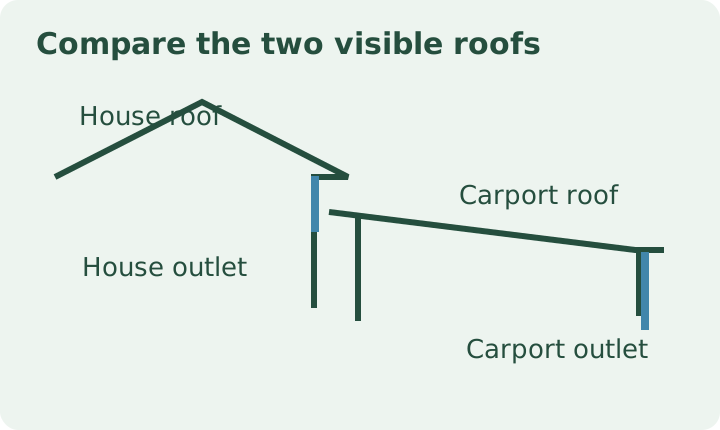
The carport at a property you want to buy sits close to the house, and from the driveway it is difficult to tell how the two roofs meet. A dark patch marks the eaves at the corner, and the seller describes the carport as an addition. At a carport and house roof junction, compare the two visible drainage routes before asking what the stain means. The useful question is which surfaces can be checked safely, where the two structures interact and what further advice you would need before relying on the space.
Work out the relationship between the roofs
Start with an overview from accessible ground. Is the carport clearly separated from the house by a gap, or does part of its roof disappear behind a fascia or gutter? A carport can look detached from outside even when one roof edge overlaps the other visually. The same corner may also contain a separate brace or piece of trim that makes the relationship look different. Give each observation its own description so the inspector can locate it without having to interpret a close photograph in isolation.
Walk further back, if permitted, and identify which side of the carport faces the house. Look at where the roof edge rises or falls and which part you cannot see. Avoid reaching for a gutter or climbing to inspect its upper edge. Tell your inspector about any concern that could require specific access. The Melbourne pre-purchase inspection service can discuss whether the carport forms part of the accessible scope and what limitations might apply. Give the intended use of the carport if it matters to the purchase decision.
Follow each visible gutter and outlet separately
Look for the carport gutter and then locate the visible gutter on the house. Runoff may be collected independently, or you may see an outlet or discharge point that appears to direct water toward another roof or area. Record what you can actually see. A pipe that disappears behind the cladding or below ground cannot be traced by following its visible face alone. Building and Plumbing Commission guidance explains that stormwater includes runoff and overflows from roof guttering. It provides background for a discussion about what the visible drainage system serves.
The guide to site drainage before purchase helps if the concern continues along the driveway, path or ground beside the house. For example, a wet patch at the carport corner may be remote from the outlet you have identified. Ask about other drainage points that might serve the location. A visible pipe, a dark mark and a damp patch are three observations. Their proximity can suggest a question to ask, while their appearance alone does not establish a single fault.
Read the underside at the point where they meet
From the carport, see whether the underside of the house eaves looks consistent along its length. Record whether a patch is confined to one corner, whether the finish changes beside the carport roof and whether more distant sections look similar. Old and new paint can look quite different under cover. Water staining, accumulated dirt and a previous repair line also need to be considered separately. If you notice a concern in the plaster or another lining inside the house, identify the room and where it sits in relation to the outside evidence.
Ask the agent whether the house has been repainted or repaired in that area. A new coating under the eaves can have been applied during ordinary maintenance. It could also conceal the earlier extent of a condition you want to understand. Ask whether there are earlier photographs or whether the owner noticed anything after rain. The guide to roof leak clues and repair history explains why old stains, recent weather and repair documents are worth considering together. Compare dates and locations before assuming two reports describe the same incident.
Use the seller’s records to identify the addition
Ask if the seller can provide documents for the carport and any changes to the house roof or gutter at its edge. Drawings can give context for what was intended, while invoices may describe work undertaken at a particular time. A sheet replacement may leave the relationship between the house gutter and carport unchanged. A roof plumbing invoice might describe a specific outlet without covering the connection under the ground. Read what the document actually says and ask about anything the description leaves unresolved.
Consumer Affairs Victoria advises buyers to make enquiries about previous renovation work and consider arranging a professional building inspection. If records are material to the intended use or purchase, discuss them with your conveyancer. The buyer guide to garages and outbuildings covers wider matters that might affect the assessment. A visible condition report on an addition cannot establish approvals or determine whether the paperwork covers its present configuration. The inspection can help identify the parts of the property for which you need the records.
Keep the junction and structure questions separate
If a flashing or cover is visible, ask how far it can be followed from the available view. A neat edge facing the driveway may say little about its underside or rear. An inaccessible join may need a targeted visit by a roof plumbing practitioner to examine it more closely. The Building and Plumbing Commission’s industry guide describes roof coverings, flashings and drainage as elements within the roof stormwater work scope. It is useful when deciding who can answer a practical follow-up question. It does not tell you whether the carport meets any particular requirement.
If an accessible post, connection or framed member appears displaced, describe that observation independently from the mark at the eaves. A different specialist may be needed to answer a question about support. Avoid asking a person to diagnose both issues solely on the strength of a photograph. Ask the inspector what is visible, what would require permission or improved access, and what information the next examiner would need. In the ClearScope report examples, the difference between an observation and a recommendation is useful background for reading this kind of finding.
An illustrative decision at a house with a later carport
Imagine a carport with a separate downpipe at its front and a roof edge that disappears from view next to the house gutter. A small patch under the eaves looks darker than the lining a few metres away. The driveway has been resurfaced, and two short pieces of pipe are visible below the carport edge, but you cannot see where either goes. The agent has a quote for painting the fascia and remembers seeing a roofing contractor, while the scope of the other work remains unclear.
In that illustrative case, ask for access to the areas on both sides of the corner and for documents that distinguish painting from roof work. An inspector can compare accessible drainage components and the location of the dark patch. Where the join remains out of sight, the report can explain the limit. If a hidden water pathway would affect your decision, ask a roof plumbing specialist what access they need and what their visit can establish. A cosmetic quote might be enough for a distinct finish issue once the concern has been properly separated from continuing water entry.
Make the next request specific
Give the agent and inspector the address, your purchase deadline and a sentence describing the junction. Say where you saw the condition and whether the property has recently been painted or resurfaced. Ask who can provide access to the house side and carport side. If you have permission to send a photograph, include a wider image that shows both roofs and where the mark sits. This gives the inspector a better starting point than an instruction to check for leaks throughout the property.
If the inspection identifies an accessible water entry concern, ask whether recurring symptoms or additional rain history would help frame the specialist visit. The guide to recurring window water entry offers a related example of documenting timing and paths, especially if there is a window close to the junction. The actual focus for this carport can remain the roof and eaves. Keeping the location precise helps the trade avoid treating an unrelated wall mark as evidence about the carport.
Make a list of the questions you can close before the deadline, and those that require a later decision. If a tradesperson quotes for gutter work, ask whether the quote covers the carport gutter, house gutter or both, and whether it assumes a concealed connection is functional. If the inspector identifies a separate support concern, ask what documents or specialist scope could help with that. If the seller cannot provide enough access, record which location remains unresolved and consider with your advisers whether that uncertainty matters to your purchase. The goal is to know which area has actually been assessed and what evidence is still needed.
For a carport used daily, also ask whether the observed condition affects how you would use it immediately. A wet patch near a vehicle door may be an inconvenience after rain, while an unresolved concern above an occupied path or next to an interior room might call for earlier advice. Write down the consequence you want clarified. If you plan to enclose or extend the carport, take that question to your adviser separately. A condition inspection of the current open space cannot establish how later work would change demand on the drainage, the structure or the applicable approvals.
When you review the report, look at the photographs and limitations beside the finding. Check that the finding identifies the house edge, carport edge or the location where the view stopped. Ask the inspector to clarify any uncertainty about which gutter or outlet was visible. Giving that information to the next adviser can help avoid a quote based on the wrong roof. It can also help you decide whether a repeat visit would add enough information before the purchase deadline.
References
Ask ClearScope about your property
Send the property address, your buying deadline and the areas you want checked.
Request an inspection