Pre-Purchase Inspections — Cracked and Displaced Roof Tiles
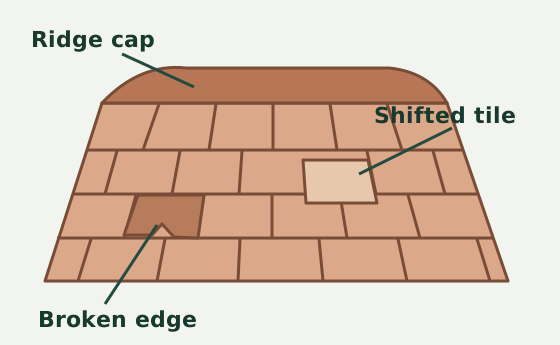
You can see a break in the rows of roof tiles from the driveway, but the ceiling underneath looks clean. Before you decide how much to allow for roof work, find out where the break is, how many roof faces have been seen and what the tiler would need to verify. A broken tile, a shifted tile and a cracked ridge joint can each need a different follow-up. A Melbourne pre-purchase inspection can give you a record of the visible condition and help you decide whether to ask for a separate roofing quote before committing.
Work out what has actually changed
Take in the roof face as a whole from a safe place. Look for a regular pattern in the rows, then note where the line changes. A missing corner can expose an edge that the neighbouring tile normally covers. A tile that appears to have slipped may interrupt the rows without an obvious fracture. A small line near a ridge can be in the pointing around the ridge cap or in the cap itself. Note which roof face you are looking at and use the chimney, valley or other fixed landmark to describe the location. Ask the agent before taking photos. A wide image gives the location and a closer view from the same safe position helps communicate the concern.
Look at the surface around the anomaly. Replacement tiles can be a different shade even if their profile fits the existing covering. Lichen, shadow, dirt or an old finish can also change the appearance of a tile from a distance. If the edge shape or overlap is hard to see, record what you can and let the inspector describe the view available. Where the line of the whole roof dips or appears to have changed shape, include that in the brief. Our buyer’s guide to a sagging roof explains why a change in the roof line calls for different questions about the underlying support.
Read the position and pattern together
A gap beside a valley has a different context from a chipped corner in the middle of an open roof face. A valley collects water from adjoining slopes, while the ridge and hip caps cover the meeting points higher up. A tile beside a vent or an extension roof also sits next to another part of the weathering detail. When several items are visible, ask the inspector to record their positions individually. A photo labelled “rear roof” may be too broad for a roofer to locate the exact row, especially if there are multiple extensions or one section can only be seen from the side.
An isolated tile beside a recently fitted aerial or solar array can suggest a place to start asking about previous roof access. Several irregular tiles across separate roof faces give the roofer a reason to look more broadly at the covering and its support. Their position alone cannot establish who caused the damage or when it occurred. Heritage Victoria’s maintenance guidance identifies slipped, cracked or broken slate and terracotta tiles and damaged bedding around capping as items worth recording. Its checklist was developed for heritage places. Use it to recognise the visible features on those roofs and get property-specific advice about material and repair. If your concern is a particular opening, see our guide to skylight staining for the separate questions that apply there.
Compare roof covering and indoor evidence
Ask what can be seen from the roof space as well as outside. Where the inspector can safely reach a useful viewpoint, staining on a visible timber, local marks on the underside of a covering or evidence of past repairs may help locate the next area for a roofer to check. Roof geometry and obstructions can make it difficult to line a ceiling mark up with an outside tile. A mark can also be downstream from the point where water first entered. Document which room or access hatch the inspector used and which part of the roof the view actually covered.
A dry ceiling at the open shows the condition at that visit. Water may have been diverted by an underlay where present, a leak may depend on wind direction, or the damage may be recent enough that there is no visible indoor effect. Equally, a stain below a broken tile can have a separate explanation, such as an old flashing repair. Ask for dates, room locations and invoices where a leak has been reported. The roof leaks and repair history guide gives a practical way to tie each claim about previous work back to a roof area and an indoor symptom.
Set the access brief before booking
At many inspections the best available exterior view is from the ground or another safe position. A tall rear elevation, steep slope, overhead hazards or the condition of the covering can reduce what can be examined. Inside, low clearance, insulation, stored belongings and the position of the access hatch can restrict the view. Tell the agent what access the inspector has requested and ask whether there is a locked side gate, enclosed extension or ceiling hatch in a cupboard. Plan for a second inspection if important parts cannot be seen and there is enough time to arrange one.
At the open, stay off the roof and leave tiles and patches alone. An old coating, suspected brittle roof material or a temporary cover is a reason to explain the condition to the person who will assess it. Keep clear of areas where material may fall and let the agent know if something looks loose above a path or entry. An independent pre-purchase building inspection can record accessible observations. A separate roofer’s visit can address the repair method, access arrangements and likely scope. Our guide to roof space and subfloor access explains how to read the limitations in a buyer’s report.
Ask for comparable repair scopes
For a localised break, ask a roofer whether a matching tile profile is available and what surrounding materials need to be checked before the replacement can be scoped. Fit at the overlap matters alongside appearance. If defects are repeated, ask whether the quote covers the affected roof face, ridge and hip caps, adjacent flashing and anything else the roofer considers necessary to make the repair work. Ask which work depends on seeing what is underneath and how a change in scope would be priced. If the house has a heritage listing, ask the relevant authority and a suitably experienced roofer about constraints on changing visible roofing materials before allowing for a replacement.
Compare which roof areas the proposed work covers and whether scaffold, access and any restoration of disturbed fittings are included. A quote for changing individual tiles may be useful for one roof face and say little about older patches elsewhere. Ask for the work location in writing so you can match it against the inspection photos. Consumer Affairs Victoria advises buyers to consider a professional inspection before signing and identifies broken tiles as a possible source of costly work. Its guidance helps decide when to obtain an independent assessment. It does not provide a pricing schedule or a repair method. For the gutter side of the question, the roof gutter drainage guide explains why a gutter symptom can warrant its own check.
Illustrative example of a buying decision
Imagine the front roof face has a visibly chipped tile beside the hip. The agent provides a roof restoration invoice from two years ago. The description covers cleaning and painting the front and side faces, plus ridge work. It gives no tile replacement locations. The inspector can see the chipped edge and some repaired ridge pointing from ground level, but the rear roof remains out of sight and the interior view does not extend to that corner. A useful follow-up is a targeted quote for the damaged area and an explicit check of the rear face, with the invoice supplied so the roofer can distinguish listed work from work still to be assessed.
Suppose the roofer can identify the tile profile and give a clear price for local repair, but reports that several tiles are displaced across the rear slope and needs better access to determine why. Keep those two findings separate in your decision. The front item now has a more defined repair scope. The rear item still has an access dependency and could involve more than individual tiles. If you are working to a contract deadline, ask your conveyancer what time you have to investigate the outstanding issue and whether the contract wording allows a further visit. A copy of the inspection report and a dated roof plan or marked photograph will make it easier to explain the difference.
Give the inspector a useful question
Send the property address, the deadline and your best location description. Say what is visible, which sides of the house could be seen, whether the agent has supplied any roof repair records and whether you have noticed stains near the affected area. If the previous work was described as a restoration, find out whether it involved washing and coating, tile replacement, re-bedding or other work. Where an extension has a different covering or pitch, include that in the brief so the inspector can describe the roofs individually. Our example inspection reports show how observations and follow-up items can be recorded.
Ask the inspector to identify the views they used, any sections they could not assess and the next trade assessment the evidence supports. If rain is forecast, retain any photos the owner agrees to provide from before and after rain with dates and roof locations. The NSW SES storm-preparation guidance highlights repair of loose roof tiles and the separate need to keep drainage clear. That gives you two maintenance questions to ask about. For the buying decision, use the observed extent of the tile issue, the evidence of any related water entry and the limits on access to decide what still needs a quote or further inspection.
If a report uses a broad phrase such as “general roof maintenance”, ask which photos or observations sit behind it. A location-specific note can help a roofer plan the visit and avoid quoting from a single street photo. Ask the roofer to identify any areas they still could not inspect and to name the assumptions in the price. That gives you something concrete to discuss if the seller offers to arrange the repair before settlement.
References
Ask ClearScope about your inspection
Send the property address, buying deadline and the roof areas you want checked.
Request an inspection