Pre-Purchase Inspections — Stains Around a Skylight
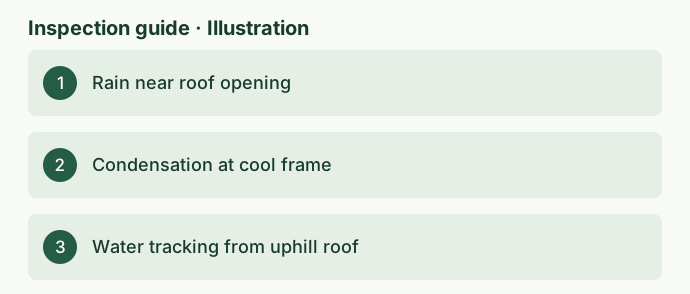
There is a brown line down the side of the skylight shaft in the house you are buying. At the open it feels dry, and the agent says the ceiling was recently painted. Before you treat it as a decorating job or price a new roof, establish where the mark starts, when it was first noticed and how much of the area an inspector can actually see. A skylight stain can point to water around the roof opening, moisture forming on a cold surface or water arriving from another part of the roof. The next step depends on which of those paths the evidence supports.
Work out which opening you are looking at
Start with a photo from the room, with the owner's or agent's permission. Take one wide view that shows where the skylight sits relative to the room and a closer one showing the visible mark. A roof window often gives you a view of the glazing. A tubular daylight device may have a ceiling diffuser that hides the roof-level part of the unit. A deep plaster-lined shaft may connect a conventional ceiling to the opening. The closer photograph helps the inspector locate the symptom. The wider view helps identify where access to the shaft or roof space might be available.
Australian Government guidance from YourHome describes roof windows and the light wells commonly used where a room has a flat ceiling. It also explains that some uninsulated frame materials can be prone to condensation in cooler conditions. Those details are useful for describing what you see. If you can identify the frame, diffuser or shaft from the room, say so when booking. Leave the model or installation method open until someone can read the product label or find the invoice. Two openings can look similar from below and still require different follow-up.
Read the shape and location of the mark
Look at where the mark starts. A tide line that starts at one upper corner and runs down the shaft gives you a location to compare with the edge of the opening and the roof above it. Dots or small streaks along several sides of a cold frame give the inspector a different pattern to consider. A broader patch across the ceiling outside the shaft is worth photographing too. Record the colour, finish change and the materials affected. The appearance helps the inspector frame a question about how water moved, although different causes can leave similar-looking marks after the surfaces dry.
Notice what is fresh and what can be compared. A second skylight in the same house may have a similar frame in a room with different use, or the light well may have been repainted on one side only. Compare the two from the same viewpoint if you can. Ask when the painting was done and which surfaces were repaired before painting. If the general ceiling finish is new, take a wider view of the shaft and surrounding room so the inspector can record where comparison with original paint is possible. Our guide to roof stains and repair history covers the wider questions if marks also appear away from the skylight.
Keep three possible moisture paths in view
First, consider outside water passing near the opening. The National Emergency Management Agency explains the purpose of flashing around roof penetrations, including skylights. The arrangement you can see depends on the roof and the skylight. Ask the inspector whether there are accessible views of the uphill side, the edges and the surface below. Visible disturbance, a lifted part or localised previous patching may identify the next area for a roofing specialist to inspect. The visible portion of a flashing rarely shows the whole assembly, particularly where components overlap or run beneath roof coverings.
Second, consider condensation. If the seller recalls droplets on the inside of the frame on cold mornings, ask whether they were visible before rain and whether the same thing happened after cooking, showering or leaving a room closed overnight. The frame, glass, shaft lining and concealed surfaces can be at different temperatures. The place where a drip lands can be below the point where it forms. A room with a roof window and another with a shaft may offer different views of the affected surfaces, so note exactly where the droplets or marks were reportedly seen.
Third, consider water reaching the shaft from elsewhere. If there is a valley, a change in roof plane, a nearby vent or another roof feature above it, ask which of those areas can be seen safely. Water can leave a visible mark once it reaches an edge or joint even where the point of entry is some distance away. A broad roof concern may call for the specialist to check more than the skylight. If the house has a roof with little usable space above the ceiling, the buyer guide to flat and low-pitched roofs explains how that construction can affect what you can establish before buying.
Build a short timeline before deciding what to test
Ask for the date when the mark was first noticed, what the weather had been doing and whether it happened again after any work. A dated seller photo with droplets at the frame and a dated photo of a ceiling patch after a storm are two different clues. An invoice that simply says “skylight repair” leaves the scope open. Ask whether the work covered the outer flashing, the unit itself, internal finishes or another roof junction. If the seller has records, match the room and opening to the address, especially if there is more than one skylight.
Compare the dates to the conditions you can establish at the visit. The inspector might record a visibly damaged lining on a dry day with no moisture apparent at the surfaces checked. That finding leaves a useful distinction between damage observed and activity confirmed. If someone reports only one event, ask whether there have been comparable weather or indoor conditions since. A clear period after repair may be more informative when the opening has been exposed to the same kind of conditions that triggered the original symptom.
Keep the response to the seller practical. Request any dated photos, the invoice or scope for the specific opening and the owner's consent for any specialist access you want before deciding. Give the inspector those items before the appointment. They can then focus the visual examination and explain how the documents line up with the conditions on site. The sample inspection reports show how a photographed observation and its stated limits can be recorded for later discussion.
Understand what a pre-purchase visit can establish
A pre-purchase building inspection can document accessible surfaces, any pattern of deterioration and other observations that bear on the likely next step. The room side may be straightforward to view while the relevant side of the shaft is behind lining or insulation. The roof surface may also be out of safe reach or unsuitable to access in the conditions on the day. Ask the inspector which side of the opening was visible and whether there was a line of sight to the section that matters, using our access limitations guide to help you frame the question.
Discuss specialist testing separately with the owner and your adviser if the cause matters to your offer. A building or roofing specialist can advise whether a closer examination, a targeted moisture assessment or inspection of adjacent roofing is practical. Any opening-up requires the owner's consent and a clear plan for making good. Tell the specialist whether the stain has reportedly appeared during rainfall, on cold dry mornings or in both circumstances. That history may affect which part of the installation they prioritise. Avoid climbing on the roof or operating unfamiliar fittings yourself at an open.
Illustrative example of a buyer decision
Imagine a house with a skylight above the kitchen and a brown streak at one corner of the shaft. The seller provides a roof repair invoice from the previous winter, but the invoice describes work over a rear extension. The kitchen sits in the original part of the house. The inspector confirms the streak and sees no similar mark around the second skylight. The uphill side of the kitchen opening remains out of view. Ask the seller to clarify which opening was repaired. If the job was elsewhere, the invoice offers little evidence about the kitchen, even though it documents useful roof maintenance at the property.
Now imagine the seller produces a dated photograph showing droplets along the inside of the kitchen skylight frame on a cold morning, plus a separate photo of the streak after a storm. Keep both items in the brief. The droplets make indoor condensation worth investigating, while the timing of the streak keeps an outside route open. You might ask for a targeted specialist assessment if you need to know the likely repair scope before making an offer. See the roof-space condensation investigation guide if repeat moisture in dry weather is the part you need to clarify.
Turn the finding into a clear enquiry
Give the inspector the property address, the room and the position of the affected corner, with any dated photos or invoices. Mention whether the seller reports rain-related staining, droplets on the room side or a repair at a different location. If a fitted diffuser hides the opening, or the roof access appears restricted, include that in the brief. Ask the inspector to document the visible condition, identify the practical access limit and describe the most relevant next check. Give your conveyancer or adviser time to review the unresolved issue before you commit, especially if you are working to an auction or contract deadline.
References
Ask ClearScope about your property
Send the property address, your buying deadline and the areas you want checked.
Request an inspection