Pre-Purchase Inspections — Rainwater Tank Overflow
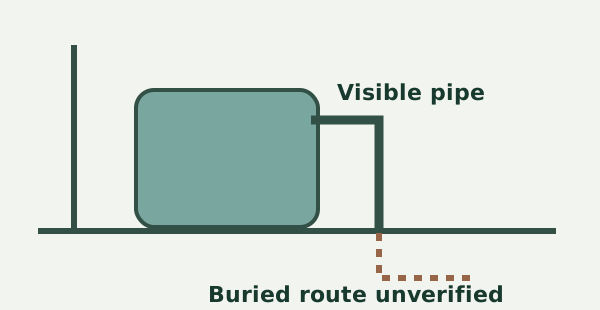
The house you want to buy has a rainwater tank beside a narrow path. The tank looks full, but after rain there is a wet patch near the wall and the agent cannot tell you where the overflow ends. You may want to keep the tank in service, or you may simply want to know whether there is an unresolved drainage concern before committing. A full tank tells you little about where the next roof runoff will go. Record what can be seen, ask how the plumbing was arranged and keep the condition of the tank separate from the condition of the property’s stormwater system.
Identify the tank and its intended use
Start by asking what the tank supplies. The seller may say it is for the garden, but there may also be records showing it was intended to supply toilets or other fixtures. A nearby hose tap or pump provides a clue and is worth identifying in your notes. The location of that equipment does not show which fixtures it currently serves or whether the connections are still the same as when it was installed. Describe the use as reported until a relevant record or trade assessment establishes it.
Look for dates as well as descriptions. A tank may sit alongside an extension, a recently relaid path or a garden bed with fresh edging. Those items may have been installed separately. If an old drawing shows an overflow line in a different location, ask whether pipework was altered and who did the work. The guide to buried stormwater records explains how documents assist a buyer when much of a system is below ground. Here the starting point is the particular outlet at the tank and the spaces nearby that might be affected.
Follow what is visible from normal access
From a stable accessible position, look for the visible path from the roof drainage to the tank and from the tank overflow towards its destination. Record whether the pipe enters the ground, disappears behind another structure, or is visibly disconnected. Distinguish a pipe that is seen continuing underground from a pipe assumed to connect to a particular outlet or drain. If you took photos with permission, include the corner of the house or another landmark so an inspector can find the location. There may be fittings or pipework beside the tank that serve other purposes, so keep uncertain connections described as uncertain.
You can make observations even if the tank sits too close to the fence for its far side to be seen. Note the area that was inaccessible and whether a photo taken by the seller could assist with locating the outlet. A photo offers a record of whatever was visible when it was taken. It does not show the condition of the line inside the soil. Our buyer’s guide to drainage around a home gives context for keeping roof runoff, ground water and the building perimeter in the same conversation without treating every wet patch as the same problem.
Distinguish overflow from other possible water paths
A damp patch below a high outlet may make an overflow problem worth considering. Other possibilities include a nearby downpipe, a leak from visible fittings, surface water travelling across the path or a garden tap. Compare the location of the wet patch with the positions of those features. Ask when it appeared and how long it lasted. A stain marking the edge of a recurring wet area can be useful to report, but it cannot settle which of several water paths was active. A recent irrigation change or a high garden bed beside the path may change the relevance of the observation.
Keep the notes separate if you see two possible paths. For example, “tank overflow pipe disappears below the path” describes a visible limitation. “Standing water at wall near the pump after last night’s rain” describes a different observation, if the timing was known. An inspector may be able to document both without seeing a direct link between them. If the property also has a lower room with staining on the inside wall, mention it when booking a pre-purchase inspection in Melbourne. The condition of that room and possible external sources can then be considered within the agreed visual scope.
Ask where overflow is intended to go
The City of Monash directs owners in its area to route tank overflow to the stormwater system at the legal point of discharge within the property. That guidance shows why the destination is worth identifying. For a property elsewhere, confirm the applicable advice with the relevant council and have a licensed plumber identify the installation. A council record may describe the lawful discharge arrangement without showing the connection as it exists today. Ask whether there is an installation record with the relevant address, a diagram or a clear description. Records are especially useful if the seller is unsure what changed when landscaping was completed.
The Building and Plumbing Commission’s stormwater guidance distinguishes stormwater from water intended for other purposes. A licensed plumber can advise which line is carrying which water, whether a visible section corresponds to the available records and what further investigation is needed. Do not cap an unidentified pipe, operate an unfamiliar valve, enter the tank or try to fill it to reproduce overflow during a private viewing. The questions for the seller are about history and access. Testing, diagnosis and any work to the installation need to be arranged with the relevant professional and the owner’s permission.
Assess general condition within the agreed scope
Look at the accessible exterior and surrounding ground. A discoloured support area, a damp connection or vegetation hiding one side can be documented as found. Ask whether the base, path or fence has changed since installation. If the surrounding surface has settled, the tank’s support and nearby pipe runs may need their own checks. Do not assume the presence of surface movement establishes the condition of a tank base beneath the equipment. A visual report can explain which sides were visible and where access limited the assessment.
The Victorian Department of Health discusses purpose and maintenance when describing domestic rainwater, including keeping tanks free of mosquitoes. If you can see a damaged cover or a visible opening that appears to have no screen, ask the seller about maintenance records and let the appropriate specialist assess the fitting. The view of a cover or screen does not establish the quality of the stored water or the cleanliness of parts that are hidden. Arrange separate advice about the intended use of the water. The general aims are to work out which parts you can observe and which questions require testing or access beyond a building inspection.
An illustrative decision before purchase
Imagine a house where the tank sits beside a back door on a side path. The agent says the tank supplies a garden tap, and the seller has a pump invoice. After rain you see a wet patch at the nearby wall. The pump invoice says nothing about the overflow. The inspector can see a pipe descending beside the tank but cannot follow it through the paving. A wide view also shows a downpipe a short distance away. The useful building report separates those observations and does not attribute the wet patch to a particular pipe.
Ask whether the tank or paving was added first and whether any records describe where the overflow and downpipe discharge. Ask the seller if the wet area recurs in particular weather. If the records are inconclusive and drainage matters to your decision, obtain permission for a licensed plumber to identify the lines and advise on further testing. Compare that advice with the building inspection’s record of accessible exterior and internal conditions. The examples of inspection findings show how to read the observation, limitation and follow-up together instead of expecting a conclusion from one photo.
Plan the visual inspection and any trade checks
Send the property address, buying deadline, position of the tank and what you noticed. Include a safe photo if available. Mention whether you are concerned about water near a wall, operating equipment or the future use of the tank. If you also saw staining around the roof or ceiling after rain, the guide to roof stains and repair history outlines the separate value of earlier repairs and dated observations. The agreed building scope can identify safe views and note what cannot be verified, including buried lines and concealed tank supports.
If you want to keep the system in service, ask the plumber what a practical assessment would include and what equipment they need access to. If the buyer intends to remove a tank instead, establish whether it connects to building fixtures or receives roof drainage before assuming it can simply be taken away. Any proposed change should take account of where the roof runoff will go once the system is different. Ask for written trade advice that identifies the parts observed and the records relied on, so the work can be scoped without relying on recollection.
If the concern involves storm runoff and there has been no recent rain, ask the owner if they have records that can be considered now. Our guide to water marks and flood history explains why timing and location matter when visible evidence may have more than one cause. If a particular discharge point remains unknown, tell your conveyancer about any inspection time constraints where those affect the purchase. That lets you decide how much uncertainty is acceptable before making a commitment.
Before you compare quotes, ask each contractor to identify which portion of work they are pricing. A visit to assess the pump might leave the discharge route outside the scope. A drainage investigation could identify the outfall without commenting on the pump or suitability for a particular use. If the inspector has noted staining at the wall, retain that observation as a separate item so it can be compared with any later trade findings. Once the route is identified, ask how much of it was actually seen and whether any assumptions remain. A written scope with clear location notes and exclusions is useful even if the issue turns out to be straightforward.
References
Ask ClearScope about your inspection
Send the property address, buying deadline and the tank and affected areas.
Request an inspection