Pre-Purchase Inspections — Loose Brick Window Sills
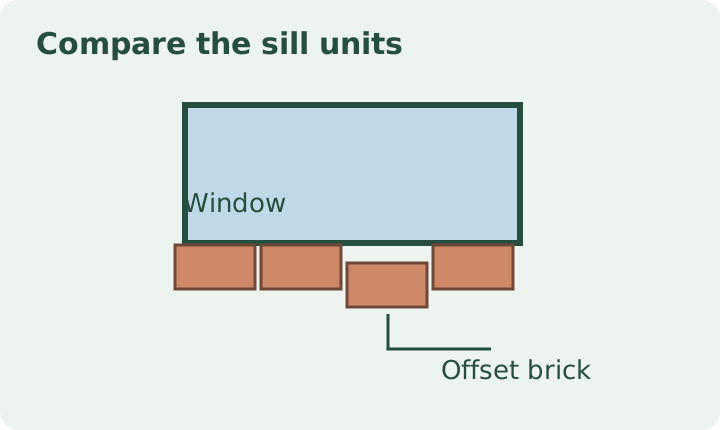
A row of bricks sits beneath the window of a house you are thinking about buying. One brick projects farther than the others, and the joint beside it looks open. Inside, the wall has recently been painted. Before deciding it needs a dab of mortar or that the entire window has failed, find out which materials are affected and whether the condition continues beyond that sill. A displaced brick sill raises separate questions about loose masonry, water entry and what can be checked before purchase. The answers help you choose between a maintenance quote and a focused follow-up.
Record the shape and position first
From a safe position, identify which opening you are looking at and whether it has a brick sill, a rendered surface or another finish. Describe how many bricks appear displaced, whether a joint has lost material and where the change begins. One unit can have a chipped edge while the row remains aligned. A group can look uneven relative to the frame even if no loose unit is visible. The buyer and inspector can use the same location if you include a wide view as well as any permitted close photograph.
Do not press on a brick or stand below a visibly unstable piece. Tell the agent if a unit looks liable to fall, particularly where a door or shared path is below it. Ask for an alternative safe viewing position. The Melbourne pre-purchase building inspection service assesses accessible condition within the arranged scope. Elevated masonry may need separate safe access. A report can identify the visible concern and limits without anyone trying to prove the brick is loose by handling it.
Look at the joints around the sill
Compare the mortar beneath the row with its vertical joints and the wall immediately underneath. A gap at one corner is a different observation from a series of joints losing material along the sill and down the wall. Note faint changes in mortar colour separately from cracks and missing mortar. Colour differences could reflect previous work or differences in how the surface has weathered. Consumer Affairs Victoria lists fretting mortar among the conditions worth investigating when buying. Its guide does not diagnose what has happened to a particular sill.
The buyer’s guide to cracked brickwork helps if the crack continues through courses away from the opening. Photograph or describe the route it takes rather than giving only a measurement or judging the cause by one close view. Include the corners of the opening, nearby wall returns and any visible differences between levels. Ask whether the inspector can view the corresponding area inside. An isolated mortar loss leaves a different set of follow-up questions from a wider pattern of cracking or displaced bricks.
Keep the timber, masonry and frame in view
A timber frame or timber sill can have its own paint breakdown or decay. A window may instead have an aluminium frame sitting behind the external brick detail. Keep each material separate in your notes. The brick row is visible outside and the area your hand rests on inside may be another component altogether. If deterioration appears confined to painted timber, the buyer guide to decayed timber sills gives a more relevant set of checks. If the masonry is displaced as well, identify it as another observation.
Check whether the window was replaced and ask what work was included at the bottom of the opening. A new frame can meet an earlier brick row. An invoice that names the product and describes the work might help an inspector understand the sequence. It generally tells you more than a vague claim that the windows were upgraded. Ask for any photographs taken before the work or during installation, especially if sealant or paint now conceals the edges where materials meet. An inspector can consider those records where available without treating them as proof that everything hidden was done correctly.
Compare outside condition with indoor clues
On the room side, locate the bottom corners and wall below the same opening. Note marks, blistering paint or changes to skirting in the area. Check whether furniture or window furnishings prevent a clear view, and ask permission before moving anything. A mark can be old and inactive or reflect another moisture source. Its location matters more than assuming every discoloured patch started under the brick sill. The guide to recurring window water entry describes the kind of history that can help a focused investigation if the seller confirms the issue returns.
The Australian Glass and Window Association installation guide shows examples of how masonry, window flashing and drainage features interact. Use its diagrams as background for why the whole opening matters. Existing dwellings use different window and wall arrangements. A visible line of mortar or sealant cannot establish the presence, condition or continuity of a concealed flashing. A typical illustration also cannot tell you where water entered on this property. An inspector can compare visible clues and explain what would require records, further access or an appropriately scoped specialist visit.
Compare openings with similar exposure
Where several similar windows face the same direction and can be viewed safely, compare the pattern at each. Ask whether the concern occurs only under a later replacement window, only at one end of the property or across several openings. A different material or projection may be part of the original design. Differences in age, shelter and maintenance can produce different conditions on the same wall. A comparison does not provide a diagnosis, but it helps you decide whether one photograph captures the whole issue.
Look at what sits above and beside the opening, too. A veranda may shelter one sill while another is exposed. A wall feature can attract water or concentrate runoff nearby. A recently repaired patch might cross the boundary between the frame and the masonry. Record those features separately. If the outside finish is rendered and you cannot tell whether the crack is in the coating or behind it, see the buyer guide to cracked external render. Where the view is blocked, ask the agent about access and keep the limitation visible in your notes.
An illustrative decision before making an offer
Imagine the rear bedroom has two matching windows. Under one, a single brick projects farther than its neighbours and the joint at the right end appears open. The other sill looks more even. Indoors, both walls have fresh paint. The seller provides an invoice for replacement glazing but the paperwork does not describe sill masonry or concealed work. You now have observations about both openings and one document describing part of the history. The invoice gives you a useful starting point for a question about when the sill first looked different.
In that illustrative situation, an inspector might be able to see the affected unit and its immediate surroundings from ground level. If the report also records a stain beneath the same opening, ask whether dated photographs, rain history or an account of previous repairs can help scope further advice. If the inspector records deterioration confined to accessible sill joints and no related visible signs, a suitably qualified trade can discuss a repair scope and flag what it assumes. The examples of written inspection findings show how a report can give the location, what was observed and what further advice might be appropriate.
Give the inspector a useful starting point
Send the address, your offer or auction deadline and a description of the affected opening. Say whether it faces a path, deck or roof area and whether you can see it from ground level. Mention cracks that extend into nearby masonry or a reported history of recurring staining. If possible, point to the corresponding room and supply any approved photos or records. A question like “Can you compare the sill beneath the rear bedroom window with the wall below it?” is easier to act on than “Can you check the bricks?”
You may need separate advice if loose units appear to present a falling risk, cracks extend beyond the opening or the suspected moisture path remains hidden. Make the deadline clear so you can decide whether further access or a specialist visit can be arranged in time. Ask your conveyancer about any contract questions. If a quote is appropriate, ask the trade to describe the specific area, whether access is included and which conclusions depend on seeing concealed work. You can then weigh that advice against the visible condition and the remaining uncertainty before buying.
If the window appears recently altered, bring two questions to the agent. Ask whether the installer did work to the surrounding wall and whether anyone has returned to address a concern since installation. A response about the glass alone leaves the masonry question open. Equally, an invoice for pointing may describe work to the joints without explaining whether staining indoors was investigated. Make a note of those distinctions. A collection of paperwork becomes more useful when each document can be matched to the opening, the symptoms and the work actually described.
After the inspection, separate the next actions by what you still need to establish. A safety concern should be communicated promptly to the person managing the property. For a maintenance decision, a suitable trade can scope the accessible work and identify access costs or uncertainties. If the report records a broader pattern of movement, discuss whether an engineer should review that pattern before you commit. Where the question is recurring water entry, arrange the appropriate further investigation rather than relying on the shape of an open joint. Those options can have different timing and access needs, so check early what the seller will allow.
A report remains useful even if the exact cause cannot be confirmed in the available time. Compare the visible features and documented limits against the practical consequence for you. For a high window above a public path, access and safety may be the immediate concern. In a room with a history of recurring stains, the unresolved water pathway may have more bearing on the purchase. Decide which question must be closed before you are comfortable proceeding.
References
Ask ClearScope about your property
Send the property address, your buying deadline and the areas you want checked.
Request an inspection