Pre-Purchase Inspections — Peeling Paint on Timber Windows
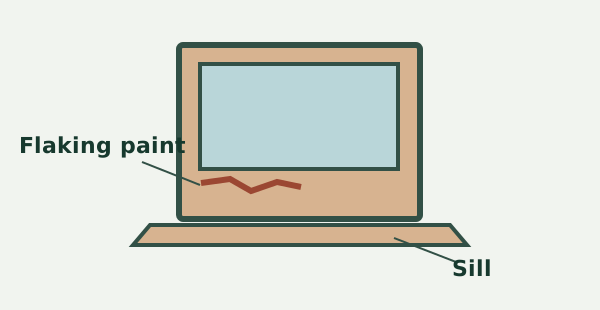
The photos in the listing make the front windows look tidy, but at the open home you can see flakes along the lower sash and several layers of paint at the corners. You may already be budgeting for a repaint. Before treating that as a simple weekend job, separate three questions: what is happening to the coating, whether the timber or surrounding opening has deteriorated, and whether the work you have in mind needs a specialist because older paint may contain lead. Peeling paint on a window can be visible long before its composition or the condition beneath it is known. Each answer can change what a buyer should allow for.
Describe the finish before interpreting the defect
Look at the visible pattern from a position you can access without reaching out or disturbing the coating. A patch on a lower rail, a cracked line near a joint and missing paint on a rubbing surface are different observations. The exterior face may look much rougher than the room side. One window may be affected while its neighbour is intact. If the owner permits photographs, record one wide view identifying the room and one showing the visible deterioration. Use wording such as “flaking layers at the bottom edge of the front bedroom sash” rather than guessing a cause or compound.
The shape of a flake does not tell you whether it contains lead. Queensland’s workplace safety regulator notes that appearance cannot identify lead-based paint, and the NSW Government’s renovation guidance identifies chipping near windows and doors as relevant even before renovation starts. That guidance helps explain why the subject deserves separate attention. It does not provide a finding about any Melbourne property. A building inspector can record the visible finish and any obvious adjacent issues within scope, while the question about composition belongs with a suitable hazardous materials specialist or testing service.
Check how the window fits the rest of the wall
Stand back and look at whether there is also a mark on the wall beneath the window, a stain at an internal junction or a visible change in the line of the sill. Ask whether the same pattern appears on windows on other sides of the house. A worn coating and rain exposure can coexist with a distinct problem at a joint or at the interface with the wall. If the visible timber is damaged, the guide to decayed timber window sills gives additional context for comparing the exposed condition of several openings.
Avoid assuming that any discolouration beneath the opening proves regular leakage. A visibly affected surface is a starting point. Painting history and the direction from which the window is exposed may help interpret what you see, but a short visit without rain gives only a snapshot. If a stain below the opening comes and goes with particular weather, ask the seller if there are records or photos. Our guide to recurring window water entry explains how dates and locations help distinguish a repeat symptom from a one-off observation. Keep that investigation separate from confirming whether an older coating contains lead.
Work out what is original and what has changed
The apparent age of a house is a clue about what might have been used when it was built. It does not tell you when a particular sash or coating was installed. An older frame might have been repainted many times. A modern insert might sit inside an original frame. Some windows may have been replaced as part of an extension, and the rest retained. A builder’s invoice that says windows were upgraded may refer only to one elevation. Ask which openings were changed, what was retained and whether there are photos or invoices that identify each room.
YourHome’s indoor air quality guidance highlights older homes in its discussion of lead paint. It is useful context for deciding which records or professional advice to seek. A seller might have a previous assessment and be able to explain exactly where it was done. Match the locations named in it to the windows you intend to keep or alter. A document covering a front room does not automatically resolve what was used at the rear. If a previous test report is available, ask a specialist whether the assessed components and coatings are relevant to your intended work.
Separate a building opinion from a paint assessment
A pre-purchase building inspection can describe accessible, visible conditions in the agreed scope. An inspector may see failed paint, staining, distorted frames, open joints or an area where visibility is poor. An intact finish can cover earlier layers or obscure underlying timber. Visual observations also provide limited evidence about concealed fixings or the full extent of damage. Ask for window-specific reporting if these openings matter to your buying decision, including notes on anything the inspector cannot safely see or where access is restricted. Specific records are more useful than a blanket statement saying the windows look old.
A specialist assessment answers a different question. Ask what surfaces and layers it will cover, whether it includes any sampling or laboratory analysis, and how findings are tied back to individual openings. Confirm that you have the owner’s permission before any specialist carries out work involving sampling or disturbing a surface. Do not scrape a sample yourself at an open home or assume a contractor can safely sand an existing coating just because it looks recent. If loose flakes or dust are visible, describe their location and avoid disturbing them. If you have concerns about possible exposure, seek appropriate professional health advice separately.
Decide what kind of work you might actually need
There is a material difference between maintaining a sound opening, repairing part of a frame and replacing a window. The potential paint hazard can also change how a proposed job is scoped, even if the sash otherwise appears usable. Ask a painter or repair contractor what their proposal covers and which checks or specialist advice they need first. If the proposal covers replacement, ask whether it includes the surrounding finishes and how anything retained will be handled. Get the scope stated in writing so you can compare offers that include the same preparation, repair and reinstatement.
A quick budget may also overlook whether there is an adjacent building defect. A window quote may address the sash and glass but exclude a damaged sill or water entry from a junction above. A broader repair quote may include work outside the affected opening. Ask which observations justify each item and what assumptions remain until the work area is accessible. The guide to comparing inspection costs is useful for the same reason: separate exclusions, scope and reporting before comparing headline prices. The relevant contractors can provide repair costs separately.
An illustrative decision before auction
Imagine an older house with four timber windows at the front and new aluminium windows in the rear extension. In two front bedrooms, paint is visibly peeling along the lower edge of the opening. One sill shows a dark patch that the inspector can see but cannot fully assess from the available access. The agent supplies a recent invoice labelled “painting and minor repairs”, with a photo showing only the extension. The invoice may be accurate and still leave the front rooms unresolved. In this case the issue is the mismatch between the locations in the paperwork and the areas you want to maintain.
Set the questions out in order. First ask whether any separate front-window work or paint assessment was undertaken. Then ask the building inspector to identify what was visible and how the dark patch and paint condition were recorded. If the windows will be disturbed shortly after purchase, ask a specialist how the older coatings can be assessed within the timetable. If a quote is possible, ask it to distinguish repair of the opening from any separate work informed by that assessment. The examples of inspection findings show how observations can sit alongside limits and recommended follow-up. Your conveyancer can advise on the purchase deadline and any available options if results cannot be obtained in time.
Send the property details and the decision you face
Tell ClearScope the address, purchase deadline, which openings concern you and whether you are planning to repair, repaint or replace them. Send any records you have with the seller’s permission and note which rooms they appear to cover. If you also noticed misting, the guide to fogging between double-glazed panes looks at a separate problem and explains why the location of moisture matters. Keep these observations distinguishable so a useful visual scope can be arranged.
Ask at booking what access is required, whether both sides of the affected openings are likely to be viewable and how inaccessible surfaces will be reported. If you have a clear photo of the room and a second of the affected paint taken with permission, share them to identify location rather than asking the inspector to diagnose from the image. Knowledge of your intended work also matters. A buyer who plans to preserve the frames may ask different follow-up questions from someone whose plans involve disturbing multiple layers of paint. When an older coating remains uncertain, keep the material assessment as a separate task so it can be planned with the appropriate person.
A practical way to organise the information is to make one entry per opening. For each, write down the room, which face was visible, what condition was observed and what evidence is missing. Use the same room names in your quote requests and on photographs. If a concern affects only one face of the house, say so. A short list makes it easier to tell which items a contractor has included and which need a later visit.
If the seller has limited access before the auction, check what can be arranged now and what would have to wait. A visual report can still describe the accessible window and its surroundings, with the constraint clearly recorded. You can then decide whether the remaining uncertainty is acceptable in your situation. If a records request or further visit takes longer than expected, speak to your conveyancer early about timing before relying on any assumption about the purchase process.
Where specialist attendance is already planned, share the visual report so the scope can identify which parts of the opening still need an answer.
References
Ask ClearScope about your inspection
Send the property address, buying deadline and the openings you want checked.
Request an inspection