Pre-Purchase Inspections — Roof Condition Under Solar Panels
There is a big solar array on the roof of the place you want to buy. The agent can show you an inverter display and a recent power bill. But from the driveway you can only see the outer edge of the roof, and there is a mark on the ceiling below. Do you need a roof inspection, a solar service, or both? The solar panels can be working while the roof underneath still needs a separate answer. Start by finding out what can be seen safely and which records explain the work already done. That gives you a way to decide what to follow up before your purchase deadline.
Give the roof and the solar system separate questions
The roof covering is there to shed weather. The panels collect daylight and send power through electrical equipment. Their supports, fixing points and cable paths bring the two systems together in places. If a buyer asks whether the solar is good, an answer about generation alone leaves the roof question open. If a building report identifies damaged tiles near the array, that finding leaves the electrical question open. Give each person you engage a description of the part you need checked and be clear about which findings would affect your next decision.
YourHome’s guidance on buying an existing house recommends checking the specifications of installed solar equipment. Ask for the inverter make and model, the installation date and any changes to the array or battery. Separately, ask what roofing work took place before, during and after installation. The seller may remember a roof restoration and the installer may have completion photographs, but the date of the panels on its own does not date the roof repairs. An invoice that says “install solar” can help match equipment to the house and still tell you little about the condition of the tiles beneath it.
Work out how much of the roof is actually visible
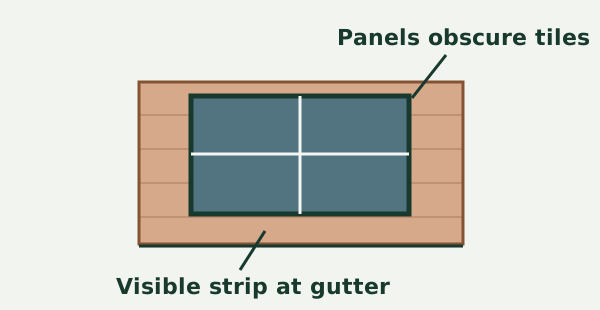
Start at ground level. Note which roof faces carry panels and whether they are visible from more than one lawful vantage point. A wide photograph with the owner’s permission can help an inspector identify which face you mean. A strip of visible tiles between an array and the gutter can show a change in colour or an uneven line. That strip cannot tell you how every tile beneath the array sits. With a metal roof, a clear view of the sheet edges does not reveal every fixing or junction concealed by the installation. Access can differ considerably between the street side and the rear.
Ask which faces could be assessed from safe positions and what, if anything, was visible inside the roof space. The pitch, weather and access points all matter, as do fragile surfaces and proximity to electrical equipment. Avoid trying to see beneath panels by climbing onto the roof, reaching around exposed components or asking someone to lift a panel casually. A professional may recommend a separate specialist visit when the hidden area is material to your decision. ClearScope’s guide to roof-space and subfloor access limits explains how accessible areas are distinguished from areas that could not be inspected.
Describe visible clues by location
Look at whether a stain is beneath the same roof face as the panels, under a junction, closer to a gutter, or apparently nowhere near them. The position helps people ask better questions, although water can travel along framing or coverings before it reaches a ceiling. An old stain could remain after a successful repair. Recent paint can hide an older boundary, making it difficult to compare. If the covering is tiled, the guide to cracked and displaced roof tiles describes the wider clues a buyer can report. If you notice an unusual line in the roof itself, the guide to checking a visibly sagging roof helps explain when to seek further assessment.
A discoloured ceiling beneath an array is a useful observation. “The solar brackets are leaking” is a conclusion that needs more evidence. Depending on what is visible, a roof specialist might distinguish an issue at a panel fixing from water getting in at a separate roof feature, damaged covering or drainage junction. The electrician may be needed to coordinate a safe inspection or any temporary removal. A recent storm, previous repairs or a second mark in the next room all change the questions worth asking. Put the date and weather in your notes instead of trying to reproduce water entry yourself.
Ask for the records that match the concern
Ask about roofing invoices, photos taken before the panels went on and any later reports concerning water entry. Check whether those records identify the right face of the roof. An invoice for replacing tiles is useful, but it matters whether the repair was near the stain, over the garage or well away from the array. Photographs showing a whole roof and its landmarks are usually more useful for this purpose than tightly cropped close-ups of individual brackets. An older image can establish what was visible at a known time if you can connect it to the location.
For the electrical side, ask whether there is a recent service report and what that report actually covers. Energy Safe Victoria distinguishes servicing by a licensed electrician from cleaning panels. An electrician can advise what they need to check on the equipment, wiring and condition of the system. Ask them what information they need from the installer or seller and whether a separate visit is appropriate. If the roof has already been repaired, ask who attended each trade’s part of the work and whether a roof and solar specialist coordinated responsibility for the work that overlapped.
Set aside the right questions for the right people
A visual Melbourne pre-purchase building inspection can document accessible roof and building conditions within the agreed scope. Ask the inspector to state which roof faces were seen, which areas were obstructed and what indoor evidence was available. A roofer or roof plumber can advise on the covering and likely follow-up work. An electrician can assess the electrical equipment and advise on safe coordination. An engineer may be needed if there is a question about structural capacity or changes to the roof framing. The particular follow-up depends on the finding and may require permission from the owner.
Solar Victoria describes electrical maintenance as a job for a licensed electrician. A building inspection does not test output, electrical integrity or how the system has been wired. A solar service likewise has a defined scope and should not be read as a complete roof-condition report unless that work was separately agreed. Confirm what is included before booking several visits. If the house needs work soon, ask a roofing contractor to give you a defined written scope and to identify any provision for a coordinated visit with a solar electrician. That makes quotes easier to compare.
Work through an illustrative buyer decision
Imagine a tiled home where panels cover most of the rear face. In bright weather, the inverter is displaying generation. At the open inspection you notice a brown ceiling mark near a hallway junction. The seller supplies a two-year-old roof invoice, but it describes the front face. The building inspector can see the rear gutter line and adjacent covering but cannot see the covered tile field from an accessible position. From a safe roof-space inspection point, the area directly above the ceiling mark is also obscured. These are observations and limits, so they can be reported with the material that supports them.
If you still want to proceed, ask the seller whether the hallway mark has been investigated and ask which rooms were affected by the older repair. Request permission for a roofer to consider targeted work and ask whether separate solar assistance would be needed if access requires panel removal. Ask the electrician what an assessment would cover if the service interval and condition are unclear. The decision may depend on whether you can get meaningful answers before the deadline, which a conveyancer can help you discuss in the context of your purchase. The guide to stains and previous roof repairs outlines how to interpret the old invoice alongside current visible clues.
Decide which uncertainty matters before committing
If the roof was recently replaced, the work is documented and the areas of concern are visible, you may be able to organise a targeted follow-up rather than assuming the whole roof needs attention. Where there is no service record, widespread obstruction or unresolved water entry, the useful next step is to define who can check which area and how much access they need. A plan can be staged without guessing that a visible stain is recent or a panel array has caused damage. Use the inspection findings examples to see how a report records accessible evidence and places limits around an observation.
Send ClearScope the property address, your buying deadline, the type of roof if known and the locations you want checked. Mention the solar array and any available roof repair or electrical service records. If you already have a photo of the roof taken safely from the ground, point out the position of the mark inside so the inspector can relate the two. Ask us what the normal visual inspection can cover and what would need a separate appointment. If the contract timing or access limits are unclear, get those settled alongside your inspection booking.
There is one other useful distinction when a seller has provided a record of an earlier inspection: check what work changed after that visit. A panel extension, new cable path or replaced inverter may mean a document describes only the original system. A photograph may be accurate for one stage and incomplete for another. By putting paperwork in order of date and matching it to the visible roof faces, you can ask a specialist to target the gaps. If dates remain uncertain, say so when asking for a quote so that unresolved assumptions are clear.
If the roof is scheduled for replacement in the near future, ask whether the roofer’s price assumes the array is already removed. If it does, ask the solar contractor to clarify the separate scope for the equipment and subsequent reinstatement. A roofing quote and a solar quote may cover different dates and different responsibilities. Putting both side by side can show whether anyone has allowed for coordination, site access and the inspection of the covering while it is exposed.
References
Ask ClearScope about your inspection
Send the property address, buying deadline and the roof areas you want checked.
Request an inspection