Why Your New Home Door Frame Looks Crooked (And When It’s Actually a Defect)

Updated: Apr 11
It’s one of those things homeowners notice straight away. You walk through your brand new home, glance at a doorway, and something just feels off. Your new home door frame looks crooked, the door doesn’t sit right, or the frame itself appears slightly bowed.
In areas like Tarneit, Cranbourne East and Thornhill Park where large volumes of homes are being built quickly, this is a surprisingly common concern. But what most people don’t realise is that a “crooked” door frame isn’t always a simple defect. Sometimes it’s a symptom of something deeper in the build.
To properly understand what you’re seeing, it helps to look at how homes are actually constructed and inspected over time. Articles like How a New Home Is Built in Australia — From Slab to Handover, New Build Stage Inspections in Melbourne — A Complete Guide to Every Inspection Stage, and Why Independent Inspections Are Carried Out at Multiple Stages of a New Build, And How It Adds Value break down how issues like this can develop across different stages.
This article will walk you through what bowed or out-of-square door frames really mean, why they happen, when they should be picked up, and how inspectors actually assess whether it’s a defect worth raising.

Why Your New Home Door Frame Looks Crooked (And When It’s Actually a Defect)
When people say a door frame is “bowed” or “out of square”, they’re usually describing one of three things:
The vertical sides (jambs) are not straight
The opening is not perfectly square (top corners are slightly off)
The frame is plumb, but surrounding finishes make it look uneven
In reality, the frame itself is only one part of the equation. The way it interacts with walls, floors, doors and architraves all contributes to how noticeable the issue becomes.
Issues like this are often easiest to understand during construction rather than after completion. For homeowners building in Melbourne’s west, seeing how these alignment issues relate to timing can be helpful, particularly when looking at how stage inspections are approached in areas like Thornhill Park, Woodstock and Weir Views where builds move quickly.
Why This Happens in New Homes
Door frame issues rarely occur in isolation. They are usually linked to earlier construction stages.
Framing Irregularities
If the wall framing is slightly out of plumb or not perfectly square, the door opening will follow that shape. This is why frame stage inspections are so critical. Articles like Frame Defects: Out-of-Level Studs and Poor Workmanship — What Inspectors Look For explain how small inaccuracies early on can carry through the entire build.
Installation Pressures at Fix Stage
By the time doors and frames are installed, trades are often working quickly to meet deadlines.
Even minor adjustments during installation can lead to:
Twisting of the frame
Uneven packing behind jambs
Doors sitting incorrectly within the opening
Settlement and Movement
In growth areas such as Cranbourne East, reactive soil conditions can lead to minor movement as the home settles. This doesn’t always mean structural failure, but it can affect alignment.
Finishes Highlighting the Issue
Sometimes the frame is acceptable, but finishes make it look worse. Examples include:
Skirting boards not lining through
Architraves highlighting uneven gaps
Flooring transitions exaggerating the angle
This is similar to what’s explained in Why Your New Home Walls or Skirting Look Uneven and When It May Be a Defect, where visual alignment plays a big role in perception.
When Is It Actually a Defect?
Function Always Comes First
Inspectors don’t just look at whether something appears straight. They assess how it performs.
A door frame may be considered a defect if:
The door doesn’t latch properly
It swings open or closed on its own
There are excessive or inconsistent gaps
The frame visibly twists or bows beyond acceptable tolerances
If the door operates correctly and the variation is minor, it may fall within acceptable building tolerances.
Tolerances and Real-World Assessment
The Victorian Guide to Standards and Tolerances doesn’t expect absolute perfection. Instead, it allows for small variations that don’t impact performance or overall appearance.
This is where experience matters. A trained inspector will consider:
Visibility from normal viewing positions
Severity of the misalignment
Whether it affects usability
Whether it indicates a broader issue
This is also why articles like Construction Stage Inspections in Melbourne — What They Are, What They Check And Why They Matter emphasise assessing defects in context, not isolation.
Why Your New Home Door Frame Looks Crooked (And How It Is Picked Up)
When Should This Be Picked Up?
One of the biggest mistakes homeowners make is only looking for issues at handover.
Frame Stage
This is where alignment issues start. If the opening is out of square here, everything that follows is affected.
Lock-Up Stage
At this stage, external walls, windows and doors are installed. It’s the first time alignment becomes more visible.
For more on this phase, see Lock Up Stage Defects in New Homes: What Inspectors Commonly Find Before Internal Works Begin.
Fix Stage
This is where door frames, doors, architraves and skirting are installed. Many visible issues appear here.
The article Fix Stage Inspection in Melbourne — What Inspectors Check Before Handover explains why this is one of the most important stages for identifying alignment problems.
PCI / Handover
By this point, rectification becomes more cosmetic and less structural. That’s why relying only on PCI can limit your options.
What Inspectors Actually Look For
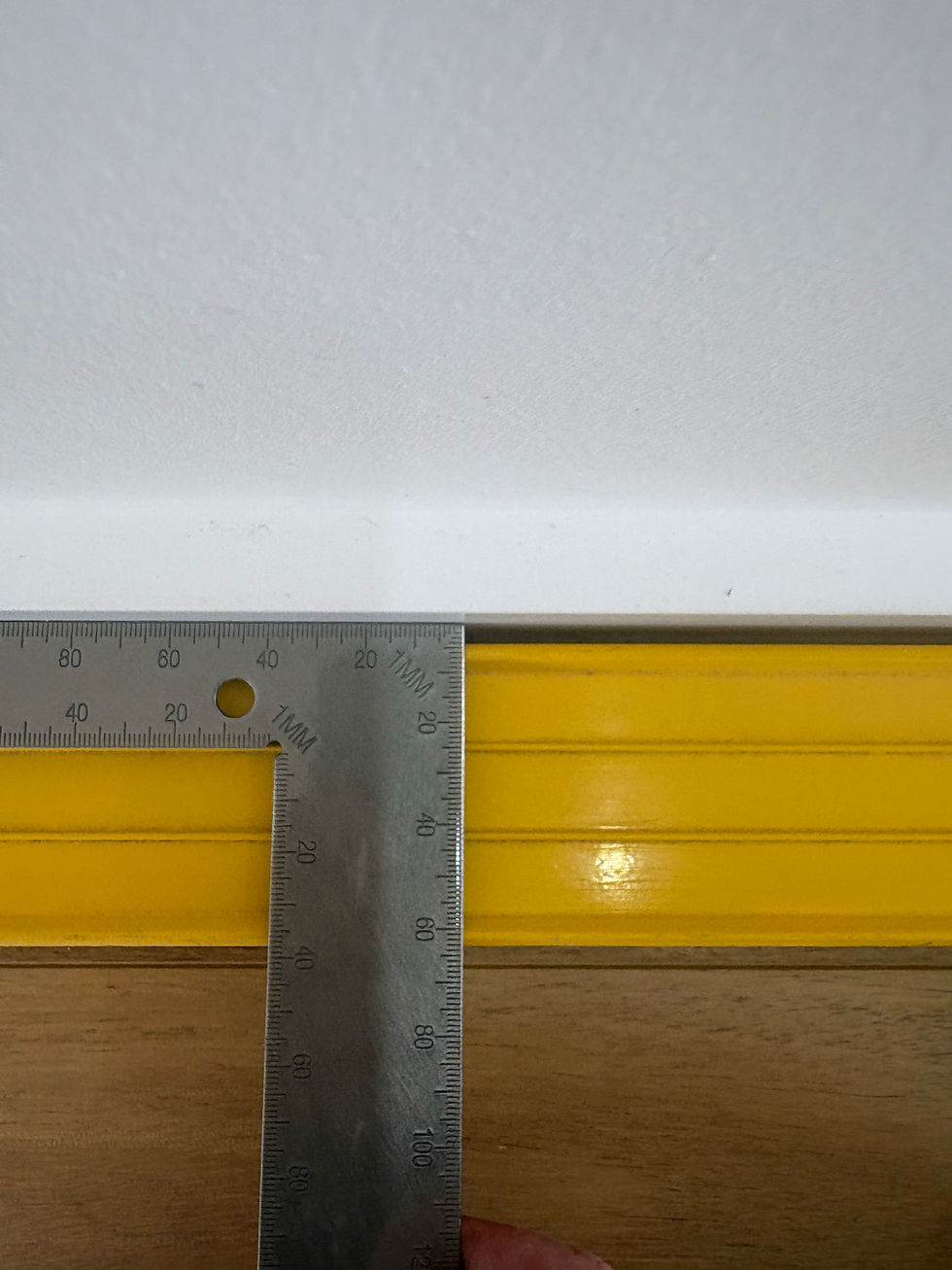
When assessing a door frame, inspectors are not just eyeballing it. They are looking at:
Plumb (vertical straightness)
Square (corner accuracy)
Door operation and latch engagement
Consistency of gaps around the door
Relationship to adjacent finishes
They also consider whether the issue is isolated or part of a broader pattern across the home.
For example, if multiple door frames show similar issues, it may point back to framing accuracy rather than installation.
Why Early Stage Inspections Matter
A bowed door frame is often the result of something that happened much earlier.
If picked up at frame stage:
The fix is usually straightforward
If picked up at fix stage:
It may require removal and reinstallation
If picked up at PCI:
It often becomes a compromise between appearance and practicality
This is why structured guidance like When Is the Right Time to Book Each Stage Inspection for a New Home? is so important for homeowners.
What Homeowners Should Do
If you notice a door frame that looks out of square:
Check how the door operates first
Look at gaps and consistency rather than just visual lines
Compare with other doors in the home
Raise it early if possible, not just at handover
Most importantly, understand that not every visual imperfection is a defect, but some are early indicators of bigger issues.

Conclusion
A door frame that looks bowed or out of square is one of those issues that sits right on the line between cosmetic concern and genuine defect.
The key is not just what it looks like, but:
How it performs
When it could have been identified
Whether it points to a larger construction issue
When viewed in the context of how homes are built and inspected in stages, these issues become much clearer to assess and manage. What seems like a small alignment issue at handover can often be traced back to decisions made much earlier in the build.
FAQs
Is a bowed door frame a defect in a new home?
It depends on severity and function. If the door operates correctly and variation is minor, it may be within tolerance.
How do you tell if a door frame is out of square?
Look for uneven gaps, poor latch engagement, or doors swinging on their own.
Can settlement cause door frames to go out of square?
Yes, minor settlement can affect alignment, especially in reactive soil areas.
Should this be picked up at frame stage?
Ideally yes. Early detection leads to easier rectification.
Why does my door look crooked but still works fine?
Visual perception can be influenced by surrounding finishes even if the frame is acceptable.
Are uneven door gaps a defect?
Only if they exceed tolerances or affect operation.
Can a door frame be fixed after installation?
Yes, but it becomes more complex later in the build.
Is this common in new estates?
Yes, particularly in high-volume build areas.
Do all homes have slightly out-of-square frames?
Minor variation is common and often acceptable.
Should I raise this at PCI?
Yes, but earlier is always better.
What causes door frames to bow?
Framing issues, installation pressure, or movement.
Can flooring make door frames look uneven?
Yes, transitions can exaggerate visual misalignment.
Do inspectors measure door frames?
They assess both visually and functionally.
Is it worth fixing if the door works fine?
Depends on severity and personal expectations.
Can multiple crooked frames indicate a bigger issue?
Yes, it may point back to framing accuracy.
What stage is best to fix this?
Frame or fix stage.
Are door frame defects covered under warranty?
Usually, if outside tolerances or affecting function.
Why do new homes have these issues?
Speed of construction and trade sequencing.
Can humidity affect door frames?
It can influence timber movement slightly.
Should I compare all doors in the house?
Yes, patterns help identify root cause.


Comments