Paint Defects in New Homes: What Should Be Fixed Before Handover in Melbourne?

Updated: Apr 17
Paintwork is one of the final stages in the construction of a new home, and it plays a major role in how the finished product is perceived at handover. While structural elements are often hidden, paint defects in new homes are immediately visible and can significantly impact the overall presentation of the property.
During a Practical Completion Inspection (PCI), paintwork is one of the most closely reviewed elements. It is also one of the most common areas where defects are identified. Issues such as uneven coverage, visible roller marks, poor preparation, and inconsistent finishes are regularly found across new builds throughout Melbourne, including areas like Armstrong Creek, Charlemont, Berwick, Pakenham and Mickleham.
These defects are not simply cosmetic in many cases. They often reflect rushed workmanship, incomplete preparation, or inadequate quality control toward the end of the build. As outlined in the Practical Completion Inspection Checklist – What Inspectors Look For Before Handover, paintwork forms a key part of assessing whether a home is ready for handover. It also sits within the broader inspection process explained in New Build Stage Inspections in Melbourne — A Complete Guide to Every Inspection Stage.
Understanding what should be fixed, what is considered acceptable, and how these issues are identified can help homeowners approach handover with confidence.
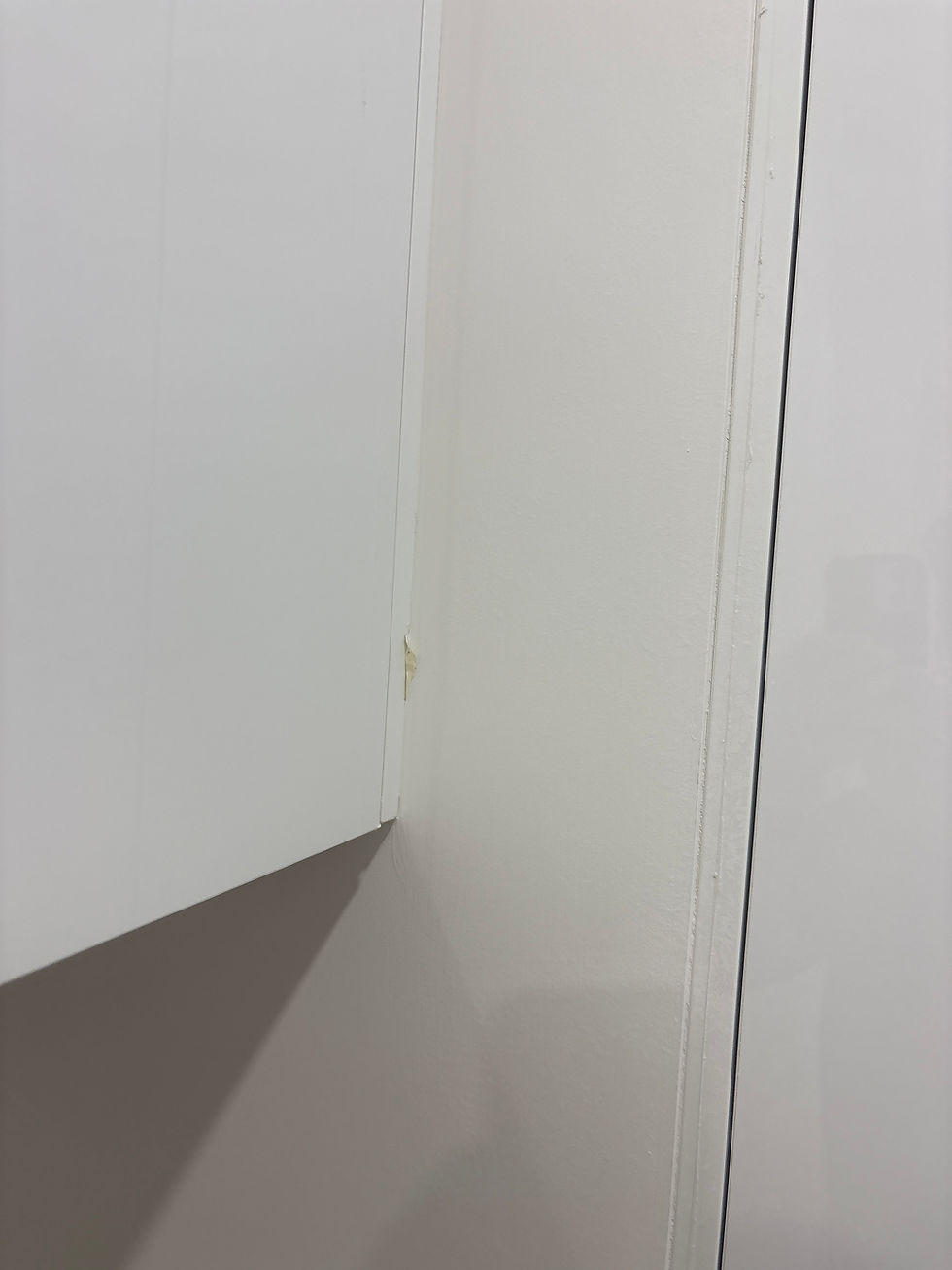
What Are Considered Paint Defects in New Homes?
Paint defects refer to issues where the finish of painted surfaces does not meet a reasonable and consistent standard when viewed under normal conditions.
This does not mean every minor imperfection is a defect. The assessment is based on whether the issue is visible and impacts the overall finish when viewed from a typical distance under natural lighting conditions.
In Victoria, this is generally guided by the Guide to Standards and Tolerances, which sets expectations for workmanship without requiring a perfect, showroom-level finish.
From an inspection perspective, we are not looking for perfection. We are assessing whether the finish is consistent, properly prepared, and free from clearly visible defects that detract from the final presentation of the home.
Most Common Paint Defects Found at Handover
Roller Marks and Uneven Sheen
One of the most frequently identified issues at PCI stage is inconsistency in sheen level across walls. This often appears as patchy areas where light reflects differently across the surface.
In practical terms, this usually results from:
Inconsistent roller pressure
Inadequate paint loading
Partial drying between coats
These issues are particularly noticeable in large open-plan living areas where natural light highlights inconsistencies across long wall runs.
Missed Areas and Incomplete Coverage
Despite being a final trade, painters are often working around installed fixtures, cabinetry, and final fittings. This can lead to areas being missed or inadequately coated.
Common locations include:
Behind doors and wardrobes
Inside robes and cupboards
High wall junctions near ceilings
Behind services or fittings
These areas may not be immediately obvious but are routinely identified during systematic inspections.
Paint Drips, Runs and Overspray
Paint drips and runs typically occur when paint is applied too heavily or when excess material is not properly worked into the surface.
Overspray can also affect:
Window frames
Door hardware
Tiles and flooring
External brickwork
These defects are usually straightforward to identify and are considered avoidable with proper care during application.
Poor Cutting-In and Edge Definition
Cutting-in refers to the clean transition between surfaces, such as where walls meet ceilings or trims.
At PCI stage, poor cutting-in often presents as:
Wavy or inconsistent lines
Paint overlap onto adjacent surfaces
Visible gaps between paint lines
This is one of the clearest indicators of workmanship quality and is often a focal point in inspection reports.
Patchy Touch-Ups and Flashing
Touch-ups are commonly carried out late in the build after minor damage or defects are repaired. However, these touch-ups can stand out due to differences in application method or drying conditions.
This is known as “flashing” and is particularly visible when:
Different paint batches are used
Brush touch-ups are applied over rolled surfaces
Paint is applied over partially cured coatings
We regularly see this issue in hallways and main living areas where lighting conditions amplify inconsistencies.
Surface Preparation Defects Showing Through Paint
Paint does not hide defects, it often highlights them.
Poor preparation can result in:
Visible plaster joins or sanding marks
Dents or surface irregularities
Nail pops or patch repairs
Uneven substrate surfaces
These issues are among the most important to identify, as they often require more than just repainting to rectify properly.
In some cases, cracking may originate from underlying issues such as those covered in Are Your Articulation Joints Bridged? A Common Brickwork & Render Defect in Melbourne New Builds.

What Is Acceptable vs Defective Under Victorian Standards?
A key principle when assessing paintwork is how it appears under normal conditions.
Surfaces are typically assessed:
From approximately 1.5 metres away
Under natural or diffuse lighting
Without harsh artificial lighting or extreme angles
Minor imperfections that are not visible under these conditions are generally considered acceptable. However, defects that are clearly visible in standard viewing conditions, particularly in prominent areas such as living rooms, kitchens, and hallways, should be addressed before handover.
This is consistent with what homeowners experience during inspections, as discussed in Is It Normal To Find Issues During a New Home Build Inspection?
Not all visible defects are equal. Some can be addressed with minor touch-ups, while others affect the underlying material. Water-related cabinet damage falls into the latter category, as explained in Water Damaged Melamine Panels in New Homes: Why Replacement Is Usually the Only Proper Fix.
Why Paint Defects Are Common at PCI Stage
Paint defects are rarely the result of a single issue. They are typically the outcome of how the final stage of construction is managed.
Key contributing factors include:
End-of-Build Time Pressure
Painters are often scheduled toward the very end of the program, where delays from earlier trades compress available time.
Ongoing Trade Activity
Final trades such as electricians, plumbers, and cabinet installers may still be working after painting is completed, leading to damage and subsequent touch-ups.
Cleaning and Handover Preparation
Final cleaning can expose defects or create new ones, requiring last-minute fixes that may not match the original finish.
Builder QA Limitations
While builders carry out internal quality checks, these are not always as detailed or systematic as an independent inspection.
Why Identifying Paint Defects Before Handover Matters
The timing of defect identification is critical.
Before handover:
Builders are still actively engaged on site
Rectification can be coordinated quickly
There is clear leverage to ensure completion
After handover:
Works are typically handled through warranty processes
Timeframes can be extended
Access and scheduling can become more difficult
This is why PCI inspections are such an important part of the process outlined in Construction Stage Inspections in Melbourne — What They Are And Why They Matter
How a Pre-Handover Inspection Identifies Paint Issues
A thorough PCI inspection involves a structured and methodical approach to reviewing paintwork across all accessible areas.
From an inspector’s perspective, this includes:
Walking all rooms under natural light conditions
Viewing surfaces from multiple angles
Checking consistency across entire wall planes
Inspecting junctions, trims, and edges closely
Identifying areas of touch-up or repair
In many cases, defects are not immediately obvious until viewed from the right angle or under specific lighting conditions.
This approach reflects the broader methodology explained in Why Melbourne Independent Inspections Are Carried Out at Multiple Stages of a New Build
What Happens If Paint Defects Are Found?
When paint defects are identified during a PCI:
They are documented clearly in a structured report
Each item is described in practical, easy-to-understand terms
The report is provided to the builder for action
Builders will typically:
Review the report
Arrange rectification works
Confirm completion prior to handover
In some situations, particularly where defects are widespread or complex, a follow-up inspection may be recommended to confirm that rectification has been completed appropriately.
Where disagreements arise, homeowners can refer to guidance such as What Are My Options If My Builder Does Not Agree To Fix Items?
Real Inspection Insights: What We Commonly See Across Melbourne Homes
From a practical inspection standpoint, several recurring patterns emerge across different builders and suburbs:
Large open-plan homes often show sheen inconsistency across long wall runs
Townhouses frequently present tight cutting-in issues around stair voids and bulkheads
Homes nearing rapid completion often show heavy reliance on touch-ups rather than full re-coating
Dark or feature walls tend to highlight application inconsistencies more clearly than lighter colours
In suburbs like Geelong, Werribee and Officer, we regularly observe that lighting conditions play a significant role in how defects are perceived, particularly in north-facing living areas.
These are not isolated issues, they are consistent patterns that reinforce the value of independent inspection.
Not all finish issues are equal, and understanding the difference is key at handover. While some defects are purely cosmetic, others affect performance and longevity, as outlined in Kitchen Cabinet Defects in New Homes: What’s Normal and What’s Not.

FAQ SECTION
Are paint defects normal in new homes?
Yes, minor imperfections can occur, but clearly visible defects should be rectified before handover.
What paint defects should be fixed before handover?
Any defects visible from normal viewing distance, including uneven finishes, drips, and poor cutting-in, should be addressed.
Can I ask my builder to fix paint issues?
Yes, defects identified before handover should be rectified as part of the completion process.
What is considered acceptable paint finish in Australia?
Assessment is typically based on viewing from 1.5 metres in natural light, where only visible defects are considered.
Do inspectors check paint at PCI stage?
Yes, paintwork is a key part of all practical completion inspections.
Final Thoughts: Getting the Finish You Paid For
Paintwork is one of the most visible elements of your new home, and it sets the tone for the entire handover experience.
While minor imperfections can occur, clearly visible defects should not be accepted as part of the finished product. Identifying these issues before handover ensures they can be addressed efficiently and to an acceptable standard.
If you are approaching handover, understanding When Is the Right Time to Book Each Stage Inspection for a New Build? can help ensure your inspection is carried out at the right time, giving you the best opportunity to have defects properly rectified.
A professional PCI inspection provides clarity, confidence, and peace of mind that your home has been completed to the standard you expect.


Comments