Practical Completion Inspection (PCI) Defects in New Homes — What Inspectors Commonly Find Before Handover

Updated: Apr 27
Building a new home involves a series of construction stages that gradually transform a site into a finished dwelling. One of the final and most important of these milestones is the Practical Completion Inspection (PCI), sometimes referred to as a pre-handover inspection.
By the time a home reaches PCI stage, the structure is largely complete and the house is approaching the point where the builder considers it ready to be handed over to the homeowner. At this stage, Practical Completion Inspection (PCI) Defects in New Homes are identified and the client, builder and supervisors work together to finalise these items prior to handover.
Many issues identified during the Lock Up Stage Defects in New Homes: What Inspectors Commonly Find Before Internal Works Begin article can carry through to later stages. These are often picked up again during practical completion inspections if not addressed earlier.
During this stage, inspectors typically review the overall quality of workmanship, finishes, fixtures and installations throughout the home. While the structural elements of the house have already been completed during earlier construction stages, the PCI inspection focuses on identifying items that may require adjustment, repair or completion before handover.
Across Melbourne’s expanding residential areas, from Point Cook and Tarneit through to Craigieburn, Greenvale, Berwick and Sunbury, many homeowners choose to arrange independent inspections at this stage to gain a final overview of the home before moving in.
Homeowners wanting to understand how PCI inspections fit within the broader building process can also read: New Build Stage Inspections in Melbourne — A Complete Guide to Every Inspection Stage. This guide explains the typical inspection sequence across the entire construction timeline.
What Are Practical Completion Inspection (PCI) Defects in New Homes?
A Practical Completion Inspection occurs near the end of a new home build, once construction has reached a stage where the builder considers the home substantially complete.
At this point:
walls, ceilings and floors are finished
cabinetry and fixtures are installed
bathrooms and kitchens are complete
lighting and services are connected
doors, windows and hardware are installed
The purpose of a PCI inspection is to identify items that may require attention before handover occurs. In most cases, the home is very close to finished. However, small installation details or finishing items may still need adjustment. A PCI inspection provides a structured opportunity for these observations to be documented before settlement.
Not all issues at handover are major. For example, unsealed melamine cut outs inside cabinets are a common minor item that still reflects overall completion quality.
Homeowners looking to understand the broader role of stage inspections during construction may also find this article helpful: Construction Stage Inspections in Melbourne — What They Are And Why They Matter

Why PCI Inspections Are One of the Most Valuable Inspections
Many homeowners assume the most important inspections occur early in construction when structural elements are being installed. While early inspections are certainly important, PCI inspections often provide significant value because they focus on the overall quality and finish of the completed home.
Key reasons PCI inspections are valuable include:
Final opportunity to review workmanship
The inspection allows the finished home to be reviewed in detail before handover.
Documentation of items before settlement
Any observations can be documented before ownership transfers to the homeowner.
Opportunity for builders to address issues before move-in
Builders are typically given the opportunity to review the report and address items prior to settlement.
Unlike earlier construction inspections, PCI inspections usually focus on finish quality rather than structural elements.
By PCI, the home is fully finished, which makes smaller details stand out more clearly. Items that may not have been noticeable earlier, such as gaps around trims, become easier to identify at this stage. This is particularly relevant in Unsealed Architraves Around External Doors and Windows: Why It Matters in New Homes, where these finishing details are often assessed.
Common Defects Found During PCI Inspections
During PCI inspections, inspectors typically observe a range of finish-related or installation-related issues. Most of these observations are relatively minor and often involve adjustments or cosmetic corrections. The following are some of the most commonly documented PCI observations during independent inspections.
Paint defects and surface finish issues
Paintwork is one of the most visible finishing elements in a new home.
During PCI inspections, inspectors sometimes observe:
uneven paint coverage
roller marks
paint splatter on surfaces
missed areas behind fixtures
inconsistent finish between walls
These observations can occur because painting is usually completed toward the end of construction when multiple trades are still moving through the home.
A deeper explanation of this topic can be found in:
Drummy or hollow sounding tiles
Tiles occasionally produce a hollow sound when lightly tapped. This condition, often referred to as drummy tiles, can occur when tile adhesive coverage beneath the tile is inconsistent. Inspectors may document these observations so the builder can review the installation.
This topic is explained in more detail in: Drummy Tiles in New Homes — Are They a Defect?
Tile lippage and uneven tiles
Tile lippage occurs when adjacent tiles sit at slightly different heights.
Inspectors may observe:
edges of tiles sitting unevenly
variations across larger tiled areas
inconsistencies near tile transitions
Tile installation tolerances are often assessed against the Victorian Guide to Standards and Tolerances.
You can read more in: Tile Lipping in New Homes — When Tiles Sit Uneven
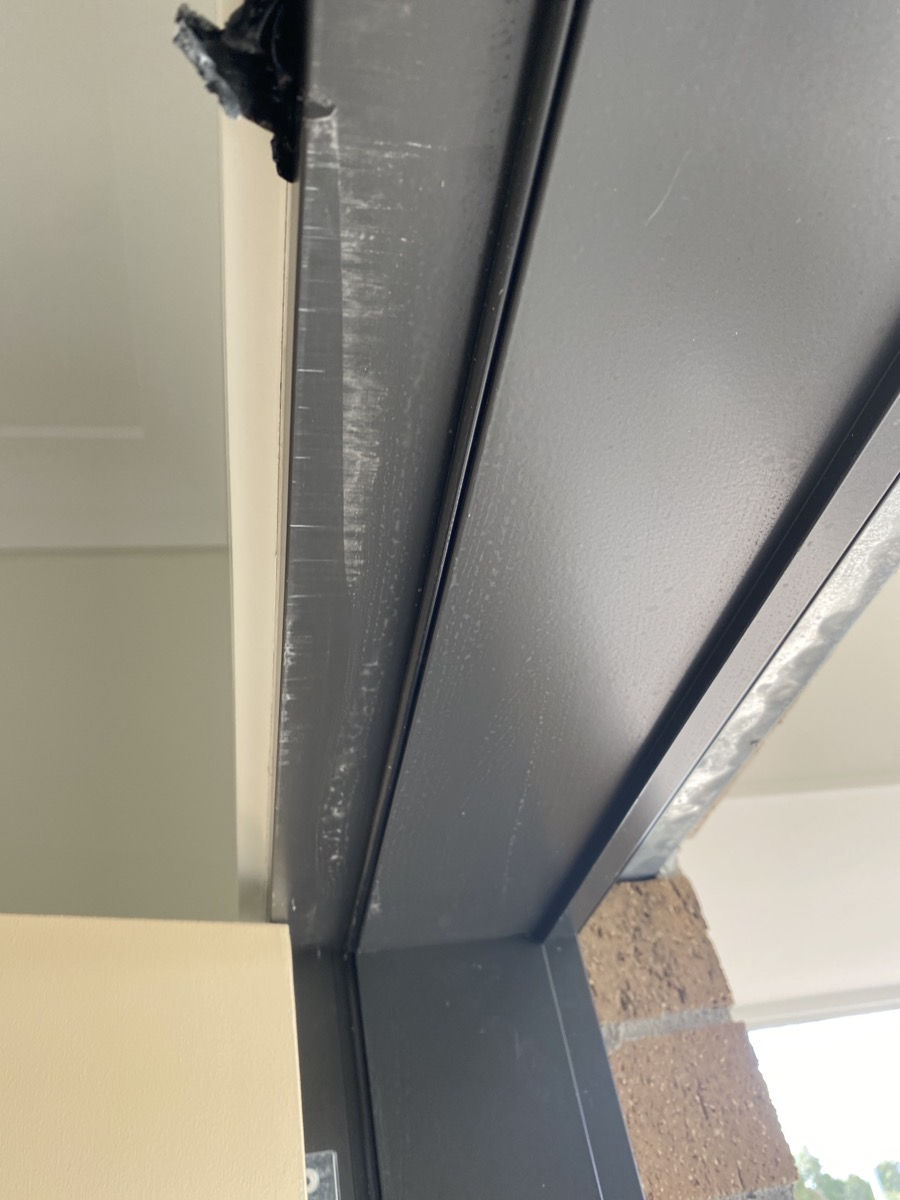
Scratches or marks on aluminium window frames
Window frames are installed earlier in construction, but final cleaning and finishing typically occur toward the end of the build.
Inspectors occasionally observe:
scratches on aluminium frames
construction residue on glass
minor marks caused during installation
These observations are usually straightforward for builders to review and address.
Inspectors will also review window installations closely, including any visible gaps around frames that may affect finish or sealing. A deeper explanation of these issues can be found in Gaps Around Window Frames In New Homes – What Melbourne Building Inspectors Look For, including how they are assessed during inspections.
Cabinetry and joinery alignment issues
Cabinetry is installed during the fixing stage and often receives final adjustments closer to handover.
Handover is where many finish issues become visible, but not all of them are defects. Kitchen Cabinet Defects in New Homes: What’s Normal and What’s Not helps clarify what should and should not be accepted during PCI.
Inspectors may observe:
cupboard doors misaligned
drawers requiring adjustment
soft-close mechanisms needing tuning
In most cases these items can be adjusted relatively easily.
Bowed walls or uneven skirting can stand out at PCI once lighting and finishes are complete. See full guide in the article Why Your New Home Walls or Skirting Look Uneven and When It May Be a Defect
Laundry cabinetry frequently appears on final defect lists. Laundry Cabinet Defects in New Homes: What’s Normal and What’s Not outlines what inspectors typically identify before handover.
Silicone and sealant finishing issues
Silicone sealants are commonly used around wet areas such as:
showers
basins
kitchen splashbacks
Inspectors sometimes observe:
uneven silicone application
gaps in sealant lines
inconsistent finish
These issues are typically cosmetic but may still require attention.
Finishing items such as sealant application are also carefully assessed at handover, as poor workmanship in these areas can impact both presentation and performance. Issues like uneven or missing sealant are explored in more detail in Silicone Sealant Poorly Applied in New Homes — A Small Detail That Can Cause Big Problems, where inspectors commonly identify these defects during PCI inspections.
Not all wet area defects are visible at handover. Some issues relate to areas that cannot be directly inspected once fixtures are installed. As explained in Missing Silicone Behind Baths and Basins: A Hidden Waterproofing Risk in New Homes, sealing behind baths and basins is one example where missing work may not present immediately but can lead to problems after occupancy.
Flooring defects and transition issues
Flooring is one of the final installation stages in many new homes.
During PCI inspections, inspectors may observe:
minor surface marks
uneven floor transitions
misaligned trim pieces
Flooring observations are usually reviewed against installation tolerances.
During PCI inspections inspectors also check how laminate or floating floors behave under normal foot traffic. Occasionally homeowners notice creaking or squeaking in certain areas of the home. Our guide Laminate Floorboards Squeaking or Creaking in New Homes — Is It a Defect? explains why this occurs and when it may indicate an installation issue.
Door alignment and latch adjustments
Doors are frequently adjusted during final stages of construction.
Inspectors sometimes observe:
doors rubbing on frames
latch alignment issues
hinges requiring adjustment
These items are generally minor adjustments but can affect the usability of the home if left unresolved.
Our guide Gaps Around Door Frames in New Homes — Are They a Defect? explains how gaps around door frames occur and when they should be corrected before handover.
By PCI, the home is complete and small inconsistencies become easier to detect. Subtle air movement is often identified at this stage, as outlined in How Air Leaks Show Up in New Homes (And What Inspectors Look For).

Waterproofing-related observations
Waterproofing itself is installed earlier in construction before tiling occurs. However, symptoms of waterproofing issues can sometimes become visible later in construction.
Inspectors may observe:
inconsistent silicone finishing
minor moisture indicators around fixtures
shower screen sealing issues
More information on waterproofing inspections can be found here: Waterproofing Failures in New Builds — What Inspectors Look For Before Tiling
What Inspectors Actually Check During a PCI Inspection
A PCI inspection usually involves a systematic walkthrough of the completed home, reviewing both interior and exterior elements.
Typical inspection areas include:
Interior areas
wall and ceiling finishes
paintwork
cabinetry
flooring
doors and hardware
Paintwork defects are among the most commonly identified issues at handover, particularly where final finishes have been rushed or incomplete. These can include uneven coverage, visible roller marks, poor cutting-in, and patchy touch-ups, all of which are assessed during the final inspection stage. For a detailed breakdown of what should be rectified, see Paint Defects in New Homes: What Should Be Fixed Before Handover in Melbourne.
Bathrooms and wet areas
tile installation
silicone finishing
plumbing fixtures
shower screens
Exterior areas
brickwork finish
external sealants
driveway and paths
site drainage fall
Movement-related defects can also appear at this stage, including issues explained in Are Your Articulation Joints Bridged? A Common Brickwork & Render Defect in Melbourne New Builds.
Services and fixtures
lighting and switches
plumbing fixtures
appliances
heating and cooling systems
Final inspections often identify smaller finishing issues that were missed earlier. This includes gaps around electrical fixtures, which are explained in Gaps Around Lights and Electrical Fittings? What It Means in a New Build.
The inspection does not involve destructive testing. Instead, inspectors review the installation and document visible observations.
Roof drainage defects such as rainheads are often identified at this stage, particularly where installation issues may not be obvious until the system is assessed as a whole. These types of defects are explored further in Are Rainheads Installed Incorrectly? Common Roof Drainage Defects Found in Melbourne New Builds, where improper installation can lead to internal water damage.
Why PCI Defects Are Often Cosmetic Rather Than Structural
By the time construction reaches PCI stage, the structural elements of the home have already been completed.
Earlier inspections during construction may review:
slab preparation
frame installation
lock-up stage components
internal wall preparation
For example, frame stage inspections often identify structural alignment issues such as those explained in: Top 5 Frame Defects Identified in 2026 – Insights from ClearScope Reports. Because structural stages are completed earlier, PCI observations usually relate to finish quality rather than structural integrity.
Why PCI Inspections Are Particularly Useful in Melbourne Growth Areas
Many new homes are currently being built across Melbourne’s expanding suburbs.
Areas such as:
Melton South
Mickleham
Greenvale
have experienced significant residential development in recent years.
Large residential estates often involve many homes being built simultaneously.
Builders typically coordinate multiple trades working across different sites under tight construction schedules. Within these environments, small finishing details can occasionally be missed or require adjustment before handover.
Homeowners building in these areas sometimes choose to arrange independent inspections to obtain an additional overview before settlement.
Suburb-specific inspection information can also be found in:
New Build Stage Inspections in Mount Duneed, Victoria
New Build Stage Inspections in Lara, Victoria
New Build Stage Inspections in Sunbury, Victoria
What Happens After a PCI Inspection
Once the inspection has been completed, the inspector typically provides a written report outlining the observations made during the walkthrough. The homeowner can then provide the report to the builder for review.
The builder may:
review the listed observations
schedule adjustments or repairs
address items before settlement
In many cases, the PCI inspection forms part of the final preparation before handover occurs.
How PCI Fits Into the Overall Stage Inspection Process
PCI inspections are typically the final inspection within the construction process.
The full sequence of inspections may include:
Each stage focuses on different elements of the build as construction progresses.
Homeowners wanting to understand when each inspection usually occurs can read:

FAQ
What is a PCI inspection in a new home build?
A Practical Completion Inspection (PCI) is the final inspection conducted before a new home is handed over to the homeowner.
What does a PCI inspection check?
PCI inspections review workmanship, finishes, fixtures and installations throughout the completed home.
Are defects normal during PCI inspections?
Most homes have some minor observations during PCI inspections. These often involve cosmetic adjustments or finishing details.
Can builders fix PCI defects before handover?
Yes. Builders typically review inspection observations and address items before settlement where appropriate.
Do PCI inspections delay settlement?
In most cases they do not. PCI inspections are usually scheduled shortly before handover within the construction timeline.
Should homeowners attend the PCI inspection?
Some homeowners choose to attend so they can better understand the observations documented during the inspection.
Conclusion
The Practical Completion Inspection (PCI) is one of the final milestones in a new home build and provides homeowners with an opportunity to review the finished property before handover occurs. By this stage, the structural elements of the home have already been completed and the focus shifts to the quality of workmanship, installation of fixtures, and overall finishing details throughout the house.
During PCI inspections, it is not uncommon for inspectors to identify a range of minor items such as paint touch ups, tile alignment adjustments, door hardware tuning, or small finishing details. In most cases these observations are relatively straightforward for builders to review and address before settlement.
Across Melbourne’s growing residential areas such as Point Cook, Caroline Springs, Berwick, Sunbury, Mickleham and Pakenham, construction schedules often move quickly as projects approach completion. A PCI inspection provides a structured way to document the final condition of the home and ensure any remaining items are clearly identified before the keys are handed over.
Importantly, the purpose of a PCI inspection is not to criticise workmanship. Instead, it helps provide homeowners with clarity around the finished product and allows the builder an opportunity to review any remaining items before settlement.
For homeowners building a new property, understanding what inspectors typically review during the Practical Completion Inspection can make the final stages of construction feel more transparent and predictable, helping the handover process proceed with greater confidence as the home is prepared for occupancy.


Comments