Unsealed Architraves Around External Doors and Windows: Why It Matters in New Homes

Walk through enough new homes in growth areas like Werribee and you start to notice the same small detail popping up again and again. It is not structural, it is not immediately obvious from across the room, but once you see it, you cannot unsee it. Small gaps, shadow lines or unfinished edges around architraves where external doors and windows meet the wall.
This is exactly where Unsealed Architraves Around External Doors and Windows: Why It Matters in New Homes becomes relevant. It is a detail most homeowners only notice late in the build, often around handover, but in reality it ties back to how multiple stages have come together.
If you have already read New Build Stage Inspections in Melbourne — A Complete Guide to Every Inspection Stage, or When Is the Right Time to Book Each Stage Inspection for a New Build?, you will know that what shows up at the end is usually the result of earlier work.
The same applies here. It also closely overlaps with issues discussed in Gaps Around Window Frames In New Homes – What Melbourne Building Inspectors Look For, where junctions between different materials start to reveal inconsistencies.

Why Unsealed Architraves Around External Doors and Windows: Why It Matters in New Homes Isn’t Just About Appearance
At first glance, architraves are just trims. They cover the junction between plasterboard and window or door frames. From a distance, they finish off the opening and make it look clean.
But when those trims sit around external doors and windows, they are sitting right on the edge of the building envelope. That means they are part of the transition between inside and outside conditions.
When architraves are left unsealed or poorly finished:
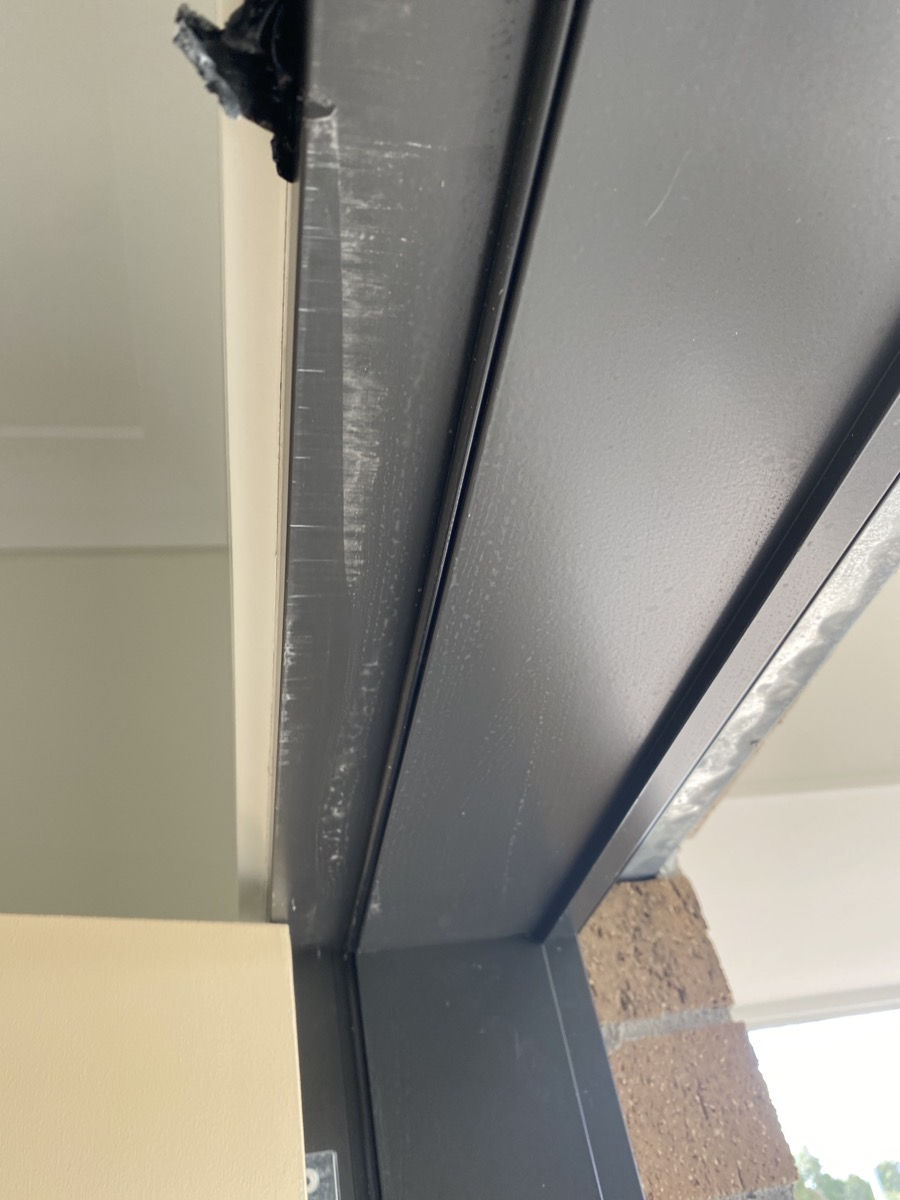
You may see visible gaps where the trim meets the wall or frame
Light or shadow lines become noticeable
The finish can look incomplete, even if everything else appears well done
More importantly, it can indicate that the junction between materials has not been fully completed. This is where it shifts from a cosmetic detail to something worth properly understanding.
How Small Gaps Around Doors and Windows Can Affect Comfort and Efficiency
A helpful way to think about this is the concept of the building envelope. In simple terms, this is the outer shell of the home that separates inside from outside. It includes walls, windows, doors, ceilings and floors.
Wherever different materials meet, there is potential for small gaps. Around windows and doors, these junctions are particularly important.
In newer estates around Armstrong Creek, where homes are built quickly and consistently, even minor inconsistencies in finishing can lead to:
Subtle air movement around frames
Draughts near doors or windows
Reduced comfort in certain rooms
This does not mean every small gap is a major energy issue. But it does explain why inspectors pay attention to how these junctions are finished.
If you compare this with Gaps Around Door Frames in New Homes — Are They a Defect?, you will see the same principle. It is not just the presence of a gap, but what that gap represents in terms of overall workmanship and sealing.
Where These Gaps Typically Show Up On Site
On inspection, unsealed or poorly finished architraves tend to appear in predictable locations.
Sliding doors are a common one. The larger the opening, the more movement and tolerance stacking you tend to see. Entry doors are another area, especially where different trades have worked in sequence.
Window surrounds also frequently show minor inconsistencies. This can be influenced by plaster alignment, frame installation or trimming.
It is rarely just one element. Often, it is the interaction between:
Window or door installation
Plasterboard setting
Architrave fixing
Final caulking and paint
This is why related issues often appear alongside it, such as those covered in Why Your New Home Walls or Skirting Look Uneven and When It May Be a Defect or Poor Silicone Sealant in New Homes — A Small Detail That Can Cause Big Problems.
Unsealed Architraves Around External Doors and Windows: Why It Matters in New Homes Across Lock Up, Fix and PCI
To understand why this shows up, you need to look at timing.
At lock up stage inspection, windows and external doors are installed. This is where the home becomes weather resistant. At this point, the focus is on structure and enclosure, as explained in Lock Up Stage Defects in New Homes: What Inspectors Commonly Find Before Internal Works Begin.
At fix stage inspection, internal trims like architraves are installed. This is where alignment, fixing and initial finish come into play.
By the time you reach Practical Completion Inspection (PCI) Defects in New Homes — What Inspectors Commonly Find Before Handover, everything is visible. Any gaps that were hidden earlier now stand out against painted surfaces.
This sequencing is also covered well in How a New Home Is Built in Australia — From Slab to Handover, where you can see how each stage builds on the previous one.
How This Relates to Workmanship Expectations and Tolerances
From a practical point of view, homeowners are entitled to a finished product that meets reasonable expectations of workmanship.
That does not mean every fine line or junction will be perfectly invisible. But where architraves:
Do not sit flush
Have visible gaps
Lack appropriate finishing or sealing
it can fall outside what most would consider an acceptable finish.
The key point is consistency. A single minor gap may not be an issue. But repeated gaps across multiple windows or doors often point to a broader finishing problem.
Where architraves are not fully sealed or fitted tightly, they can contribute to subtle air movement around external openings. This is part of a broader pattern explained in How Air Leaks Show Up in New Homes (And What Inspectors Look For), where multiple small gaps combine to affect overall comfort.
Why It’s Easier to Address Before Handover
By the time you reach handover, most of the work is complete. But small finishing items like this are still relatively straightforward to fix.
In areas like Lara, where many builds are moving quickly through to completion, these details can sometimes be missed until late.
The advantage of raising them before handover is simple:
Trades are still on site
Paint and caulking can be adjusted
The builder can address it as part of completion
After handover, the same fix may require additional coordination and time.
What Inspectors Actually Look For
When inspecting architraves around external openings, the focus is not just on
appearance.
We look at:
Whether trims sit tight to adjoining surfaces
Whether there are consistent gaps or irregular spacing
Whether sealant has been applied where expected
Whether there is visible movement or flexibility
Whether the finish aligns with the rest of the home
It is a combination of visual inspection and experience. The aim is to identify whether something stands out as inconsistent with the overall quality of the build.

When It’s Worth Raising With Your Builder
Not every gap needs to be escalated. Homes are built from multiple materials, and slight variation is normal.
However, it is worth raising when:
Gaps are clearly visible without close inspection
The issue appears across multiple openings
There is a noticeable draught
The finish looks incomplete compared to surrounding areas
If you are unsure, this is where independent inspections help provide context. Articles like Is It Normal to Find Issues During a New Home Inspection? explain how common it is to identify and resolve these items before handover.
Final Thoughts on Unsealed Architraves Around External Doors and Windows: Why It Matters in New Homes
When you step back, Unsealed Architraves Around External Doors and Windows: Why It Matters in New Homes is not about one small detail. It is about how well different parts of the home have come together.
It ties into:
Installation at lock up
Finishing at fix stage
Final presentation at PCI
And more broadly, it reflects the overall attention to detail in the build.
For homeowners, the takeaway is simple. If something looks unfinished, it is worth asking the question. In most cases, it is a straightforward fix when addressed at the right time.
FAQs
Are unsealed architraves around external doors a defect in a new home?
They can be, particularly if gaps are visible or the finish appears incomplete compared to surrounding areas.
Do gaps around window architraves affect energy efficiency?
They can contribute to minor air movement, especially if part of a broader sealing issue.
Should external door architraves be sealed before handover?
Yes, they are generally expected to be finished and presented consistently at handover.
Can unsealed architraves cause draughts?
In some cases, yes, particularly around larger openings.
Are architrave gaps covered by building standards and tolerances?
They can be considered under general workmanship expectations.
When should unsealed architraves be picked up during a new build?
Usually at fix stage or PCI when finishes are visible.
Is this a lock up defect or PCI defect?
It can originate earlier but is typically identified at PCI.
Can my builder fix gaps around architraves before handover?
Yes, these are usually straightforward finishing items.
What causes gaps around external door architraves?
Alignment issues, installation sequencing or incomplete finishing.
What causes gaps around window architraves?
Similar causes including plaster alignment and trim installation.
Are small shadow lines around architraves normal?
Minor lines can be normal, but larger or inconsistent gaps may not be.
What is the difference between cosmetic gaps and performance gaps?
Cosmetic gaps affect appearance, performance gaps may allow air movement.
Can air leaks around windows increase heating and cooling costs?
Over time, they can contribute to reduced efficiency.
Should architraves around sliding doors be sealed?
Yes, particularly due to their size and exposure.
Do building inspectors check architraves during PCI?
Yes, as part of overall finish assessment.
Why are external doors and windows important for energy efficiency?
They are key parts of the building envelope.
Can poor plaster alignment cause architrave gaps?
Yes, it is a common contributing factor.
Should I raise unsealed architraves in my inspection report?
If they are visible or widespread, yes.
Are unsealed architraves common in new builds?
They are not uncommon, especially in high volume builds.
What should homeowners do if they notice draughts around trims?
Raise it before handover for easier rectification.


Comments