Tile Lipping in New Homes — When Tiles Sit Uneven

Updated: Apr 9
Building a new home involves hundreds of individual trades and installation steps, all coming together toward the final stages of construction. By the time tiling is completed in bathrooms, laundries, kitchens and living areas, many homeowners begin paying close attention to the finishing details.
One observation that sometimes raises questions during handover or Practical Completion Inspection (PCI) is tile lipping, where one tile edge sits slightly higher than the neighbouring tile.
For homeowners building across Melbourne growth corridors such as Tarneit, Truganina, Wyndham Vale, Clyde North, Officer, Donnybrook, Beveridge and Manor Lakes, this is a fairly common topic that arises during new build inspections.
In many cases, tile variation is minor and sits within normal building tolerances. Understanding what tile lipping is, why it occurs, and how inspectors assess it can help homeowners interpret inspection observations with greater clarity.
This article explains how tile lipping occurs in new homes, how inspectors assess uneven tiles during stage inspections or PCI, and when the variation may fall within accepted tolerances.
Uneven tiles are often first noticed during the Practical Completion Inspection when flooring is fully visible. Our article Practical Completion Inspection (PCI) Defects in New Homes — What Inspectors Commonly Find Before Handover explains the most common issues inspectors identify during final handover inspections.
What Is Tile Lipping?
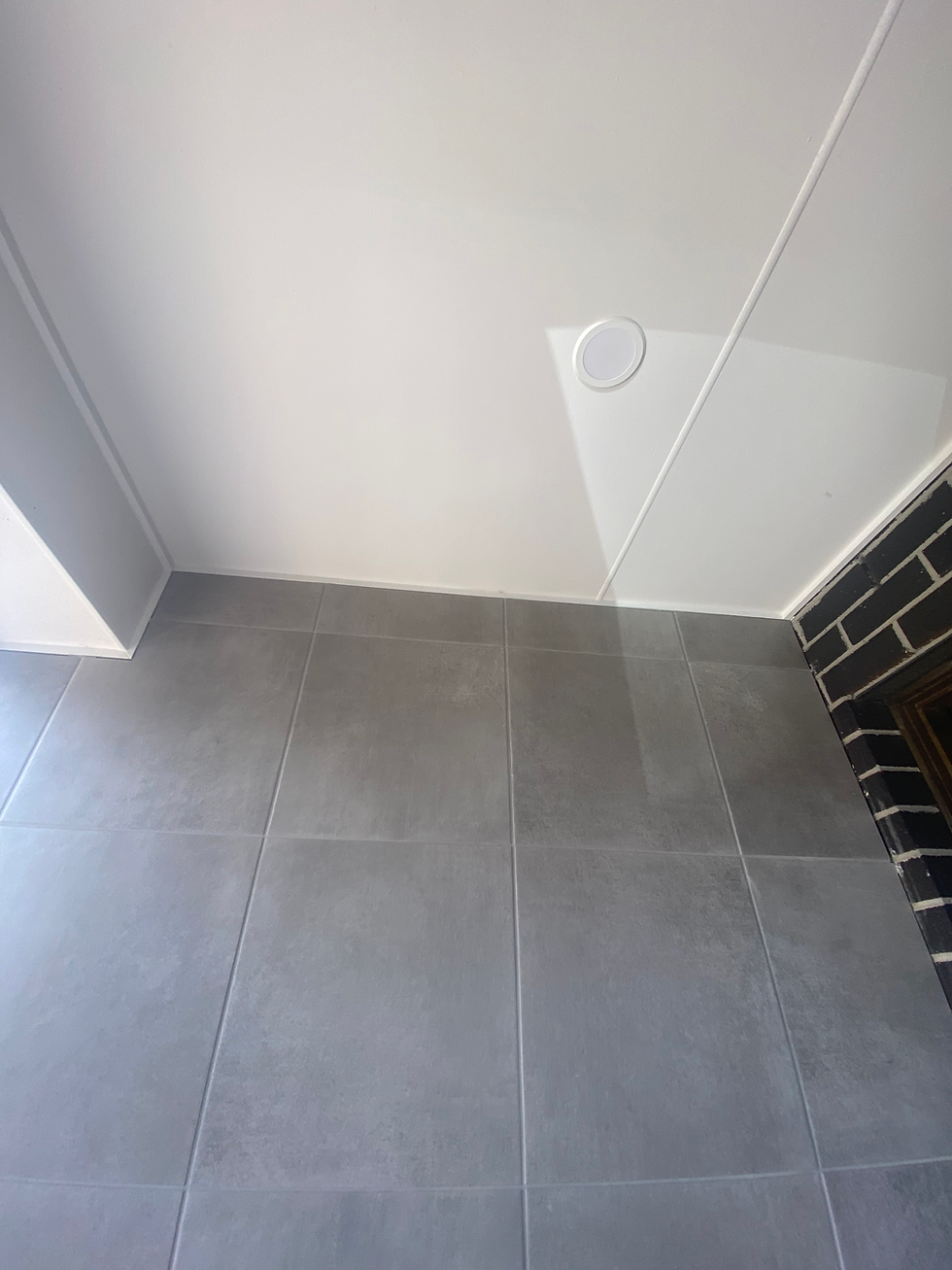
Tile lipping occurs when the edge of one tile sits slightly higher or lower than the adjacent tile. Rather than a perfectly flat transition across the tiled surface, there is a small vertical height difference between neighbouring tiles.
This variation can appear more noticeable depending on:
lighting direction
tile size
tile finish (matte vs gloss)
viewing angle across the floor
Tiling occurs during the interior finishing stages of a new home build, after structural and service work has already been completed. For homeowners wanting a clear overview of how these stages progress, see How a New Home Is Built in Australia — From Slab to Handover, which explains the complete building timeline.
Large format tiles commonly used in modern homes can sometimes highlight this effect because longer tile edges create longer reflective surfaces. Homeowners often notice tile lipping during the final stages of construction when the home is cleaned, lighting is installed, and surfaces become easier to inspect visually.
Many finishing items like this are reviewed during the final construction stages, which is why independent inspectors often explain the concept of tolerances when assessing workmanship observations. Our article What Does “Within Tolerance” Actually Mean in a New Home Inspection? explains how inspectors interpret acceptable construction variation across many building elements.

Why Tile Lipping Happens in New Home Construction
Tile installation is a skilled process, but like many construction activities it involves multiple variables. Even with careful installation, small variations can sometimes occur.
Some of the most common causes of tile lipping include:
Substrate preparation
Tiles are installed on a prepared surface such as a concrete slab or screed layer. If that surface contains slight variation, installers may need to adjust adhesive thickness during installation. Minor substrate irregularities can therefore influence final tile alignment.
Tile manufacturing tolerances
Tiles themselves are not perfectly identical. Manufacturing processes allow for small dimensional variations, which means some tiles may have slight warping or thickness differences. These variations can sometimes contribute to small differences in tile height.
Adhesive bed thickness
Tiles are typically installed using a notched adhesive bed. Adjustments in adhesive thickness during installation can sometimes create minor variation between tiles.
Uneven tile edges are not the only installation issue homeowners sometimes notice during inspections. In some cases, tiles may also produce a hollow or “drummy” sound when tapped. Our article Drummy Tiles in New Homes — Are They a Defect? explains what causes hollow sounding tiles and how inspectors determine whether they require attention.
Large format tiles
Modern homes frequently use larger tiles, particularly in living areas and bathrooms.
While these create a modern appearance, longer tile edges can highlight small differences more easily when viewed across light reflections.
Installation sequencing
In large housing developments across suburbs like Tarneit, Donnybrook and Clyde North, tiling is often completed across multiple rooms in sequence.
Maintaining consistent tile height across large areas can sometimes involve small adjustments during installation. Because of these variables, tile surfaces are typically assessed against tolerances rather than absolute perfection.
Uneven tile edges are not the only tiling issue occasionally identified during new home inspections. Inspectors may also notice tiles that sound hollow when tapped. Our article Loose or Hollow Tiles in New Homes — What They Mean During a Building Inspection explains why this occurs and when it may require attention.
Tile height variation can sometimes be mistaken for incorrect floor slope. Our guide Uneven Shower Floor in New Homes — Is This a Defect? explains how shower falls differ from tile lipping.
How Inspectors Assess Tile Lippage During Inspections
When inspecting tiled areas during construction stage inspections or PCI, inspectors assess tile installation using several methods.
These typically include:
Visual inspection
Inspectors first examine tile surfaces across the room, looking at the alignment of tile edges and grout joints. Light reflection across tiles can help identify areas where variation appears more noticeable.
Straight edge checks
A straight edge or similar measuring tool may be placed across tile surfaces to determine whether adjacent tiles sit at noticeably different heights.
Uneven tile edges are often easier to understand when the construction process is viewed as a whole. Our guide New Build Stage Inspections in Charlemont, Victoria explains how independent inspections review workmanship during key construction stages across the Geelong south-west growth corridor.
Grout joint alignment
Inspectors often review grout lines to ensure they remain consistent and properly aligned. Inconsistent grout width can sometimes highlight uneven tile surfaces.
Comparison across larger areas
Rather than focusing on a single tile, inspectors often review tile surfaces across an entire room to assess whether variation appears isolated or widespread.
Importantly, inspectors interpret these observations in the context of construction tolerances. As explained in What Does “Within Tolerance” Actually Mean in a New Home Inspection?, many building elements are assessed against allowable variation rather than exact uniformity.
Finishing items like tile installation are often reviewed during later stages of construction. Our article New Build Stage Inspections in Armstrong Creek, Victoria explains how inspectors observe workmanship across multiple construction stages in new homes throughout the Geelong south-west growth corridor.
When Tile Lipping Is Considered Within Tolerance
In many new homes, small tile height differences fall within accepted building tolerances.
This means the variation is considered a cosmetic observation rather than a construction defect.
Several factors influence this assessment:
Tile manufacturing variation
Tiles themselves may have slight warping or thickness differences due to the manufacturing process.
Installation environment
Tiles installed across larger areas sometimes require minor adjustments to maintain overall alignment.
Lighting conditions
Certain lighting angles can exaggerate small differences that are otherwise difficult to notice during normal use.
Surface reflections
Gloss tiles or polished tiles can highlight minor height changes when light reflects across the surface.
During final handover inspections, inspectors often explain that finishing items are assessed within the context of Practical Completion. Our article What Does ‘Practical Completion’ Actually Mean in a New Home Build? explains how construction completion is assessed across multiple finishing elements.
When Uneven Tiles May Require Further Attention
While many tile variations are cosmetic, there are situations where uneven tiles may require closer review.
Examples can include:
Noticeable height differences
If the height difference between tiles becomes visually significant across multiple tiles, further assessment may be appropriate.
Trip hazards
Where tile height differences create a potential trip point in walkways or doorways, it may warrant further attention.
Sharp tile edges
In some cases, raised tile edges can create sharper transitions which may not be desirable in high traffic areas.
Inconsistent grout alignment
Grout lines that vary significantly in width may indicate uneven tile placement.
Larger areas of uneven surfaces
Where tile variation appears across larger sections of flooring, it may indicate substrate preparation issues. In most inspection reports, observations are documented for homeowner awareness, rather than directing specific repair methods.
Why Tile Issues Are Often Identified at PCI Inspections
Tile installation occurs relatively late in the construction sequence.
By the time tiling is completed, several other trades have already finished their work including:
plastering
waterproofing
cabinetry
painting
Because tiles are installed close to handover, many observations related to tile alignment or grout finishes are identified during Practical Completion Inspection (PCI).
During this stage, inspectors review the overall workmanship and finishing quality of the home. Our article Construction Stage Inspections in Melbourne — What They Are And Why They Matter explains how different inspection stages help homeowners understand the progress of their build.
Finish-related issues are some of the most noticeable at handover. Uneven tiles, inconsistent grout lines or hollow-sounding tiles can affect both appearance and durability. While these are often assumed to be minor cosmetic concerns, they can reflect how earlier stages were set out and prepared. Many of these issues are identified during New Build Stage Inspections Strathtulloh prior to handover, allowing them to be addressed before completion.
Many homeowners across Melbourne estates organise independent PCI inspections to obtain a professional overview of the home's finishing work before settlement.
How Stage Inspections Help Identify Issues Before Completion
Although tile installation itself occurs late in construction, earlier stage inspections can sometimes identify conditions that influence the final tile result.
For example, inspections completed during waterproofing or pre-plaster stages may identify issues such as:
incorrect floor falls
substrate preparation concerns
waterproofing irregularities
framing alignment affecting wall surfaces
Addressing these earlier factors can help support better tile installation outcomes later.
Our article Waterproofing Failures in New Builds — What Inspectors Look For Before Tiling explains how early waterproofing inspections help identify preparation issues before tiles are installed.
Homeowners can also learn more about the full construction inspection sequence in New Build Stage Inspections in Melbourne — A Complete Guide to Every Inspection Stage.
Tile Lipping vs Other Tiling Observations
Tile lipping is only one of several tiling observations that may appear during a new build inspection.
Other common tiling items inspectors sometimes review include:
Grout cracking
Small grout cracks may appear due to minor building movement or shrinkage during early stages of occupancy.
Silicone joints
Silicone sealant around showers, sinks and corners is checked for proper sealing and neat application.
Shower floor falls
Inspectors often confirm that shower floors slope correctly toward the drain.
Each of these observations is assessed individually within the context of construction tolerances and normal building practice.
Interestingly, many finishing observations across different trades follow similar principles. For example, brickwork alignment can also involve tolerance considerations, which is discussed in our article Holes in Brick Mortar — Are Brickwork Voids a Problem in New Homes.

FAQ
What is tile lipping in a new home?
Tile lipping occurs when the edge of one tile sits slightly higher than the neighbouring tile. This can create a small vertical height difference between adjacent tiles.
Is tile lippage considered a defect?
In many cases tile lippage falls within acceptable construction tolerances. Inspectors assess the extent of the variation before determining whether it is considered a cosmetic observation or something requiring further attention.
How much tile lippage is acceptable?
Acceptable variation depends on tile size, installation method and relevant building tolerances. Inspectors often compare the variation against recognised tolerance guidelines.
Can tile lipping be fixed after installation?
In some situations uneven tiles may be corrected by removing and reinstalling tiles. However the approach depends on the severity of the variation and the specific installation conditions.
Why does tile lippage appear worse in certain lighting?
Lighting angles can cast shadows across tile edges, making small height differences appear more noticeable than they are during normal use.
Do building inspectors check tile lippage during PCI?
Yes. Tile surfaces are typically reviewed during Practical Completion Inspections, where inspectors assess the overall finishing quality of the home.
Final Thoughts — Tile Lipping in New Homes
Tile lipping is a fairly common observation in new homes, particularly where large format tiles are installed across bathrooms, kitchens or living areas. In many situations, the variation is minor and falls within acceptable building tolerances.
Understanding how tile installation works and how inspectors assess these surfaces can help homeowners interpret inspection observations with greater clarity.
Across Melbourne's expanding suburbs such as Tarneit, Wyndham Vale, Clyde North, Officer and Donnybrook, independent stage inspections and PCI inspections provide homeowners with a structured way to review construction workmanship before moving into their new home.
When homeowners understand the difference between cosmetic variation and genuine construction concerns, they can approach their building journey with greater confidence and realistic expectations.


Comments