Common Defects Found at Slab Stage in Melbourne

Updated: Mar 22
Building a new home involves a series of construction stages, each building on the work completed before it. One of the earliest and most important of these milestones is the slab stage, where the concrete foundation of the home is prepared and poured. During this stage, inspectors sometimes observe a range of installation details — and understanding the common defects found at slab stage can help homeowners better understand why this early inspection is so important.
For many homeowners building across Melbourne growth corridors such as Tarneit, Truganina, Clyde North, Officer, Donnybrook and Beveridge, the slab stage represents the moment where the home first becomes physically anchored to the site.
However, what many people do not realise is that many critical structural elements are installed before the concrete is poured.
Reinforcement steel, plumbing penetrations, slab set-out, vapour barriers and sub-base preparation are all installed during this stage. Once the concrete is poured, these elements become permanently embedded in the structure and are extremely difficult to change.
Because of this, independent inspectors are often engaged to conduct a slab stage inspection before the concrete pour, allowing visible construction elements to be reviewed while they are still accessible.
Homeowners wanting to understand how slab stage fits into the overall building process can also refer to our guide, New Build Stage Inspections in Melbourne — A Complete Guide to Every Inspection Stage. This guide explains the full sequence of inspections typically arranged during construction.
What Happens at Slab Stage During a New Home Build
Before a slab is poured, several preparation steps take place on site. These early construction activities ensure the foundation of the home is properly set out and structurally prepared.
Typical slab stage preparation includes:
site cut and preparation
installation of slab edge formwork
placement of plumbing penetrations
installation of reinforcement mesh and bars
installation of a moisture barrier (vapour barrier)
pouring and finishing the concrete slab
Each of these components plays an important role in the long-term performance of the structure. The slab forms the structural base of the home, supporting walls, framing and roof loads. Because all later stages build on top of this foundation, accuracy during slab preparation is extremely important.
Subfloor flatness can also affect flooring finishes installed later in the construction process. Our guide Laminate Floorboards Squeaking or Creaking in New Homes — Is It a Defect? explains how uneven subfloors can sometimes lead to movement or creaking laminate floors.
During a slab stage inspection, an independent inspector reviews visible installation elements to ensure they appear consistent with expected construction practices before concrete is placed.
Many homeowners also learn about the broader inspection process through:
Construction Stage Inspections in Melbourne — What They Are And Why They Matter. This article explains how inspections help identify issues early across the construction timeline.

Why Slab Stage Inspections Matter
Slab stage inspections are often considered one of the most valuable inspections during the build process. The primary reason is simple: once concrete is poured, many construction elements are permanently concealed. By reviewing the slab preparation before the pour, inspectors can observe installation details that will no longer be visible later.
Key benefits of slab stage inspections include:
Early structural review
Structural reinforcement and slab preparation can be visually assessed while accessible.
Correcting layout issues early
Small set-out discrepancies or penetration locations can often be adjusted before concrete placement.
Avoiding expensive structural corrections later
Issues discovered after the slab is poured can be far more complex to resolve.
Construction timelines also move quickly during early build stages. Once a slab is poured, the project often progresses rapidly into framing and lock-up.
Homeowners wanting to understand when inspections are typically scheduled can also read: When Is the Right Time to Book Each Stage Inspection for a New Build?
Common Defects Found at Slab Stage in Melbourne
While many slab installations proceed smoothly, inspectors sometimes identify issues during slab preparation across Melbourne building sites. The following observations are among the most commonly documented slab stage issues during independent inspections.
Incorrect reinforcement placement
Reinforcement steel helps strengthen the concrete slab and control cracking.
Inspectors sometimes observe reinforcement mesh or bars placed incorrectly, including:
mesh sitting too low or too high within the slab profile
reinforcement displaced during site preparation
reinforcement not properly supported on bar chairs
Incorrect reinforcement positioning can reduce the effectiveness of the steel within the concrete. During slab stage inspections, inspectors typically review reinforcement placement visually to ensure it appears appropriately supported prior to the pour.
One issue inspectors occasionally identify before concrete placement is damage to the vapour barrier beneath the slab. Our article Vapour Barrier Problems Under Concrete Slabs in New Homes explains why this membrane is important for moisture protection.
Missing reinforcement bars or mesh overlap
Reinforcement mesh sheets normally overlap to ensure continuous structural performance.
Occasionally inspectors observe areas where:
mesh sheets do not overlap sufficiently
reinforcement bars are missing in localised areas
reinforcement placement differs from typical slab installation practices
When identified before concrete placement, these issues are usually straightforward for the builder to adjust.
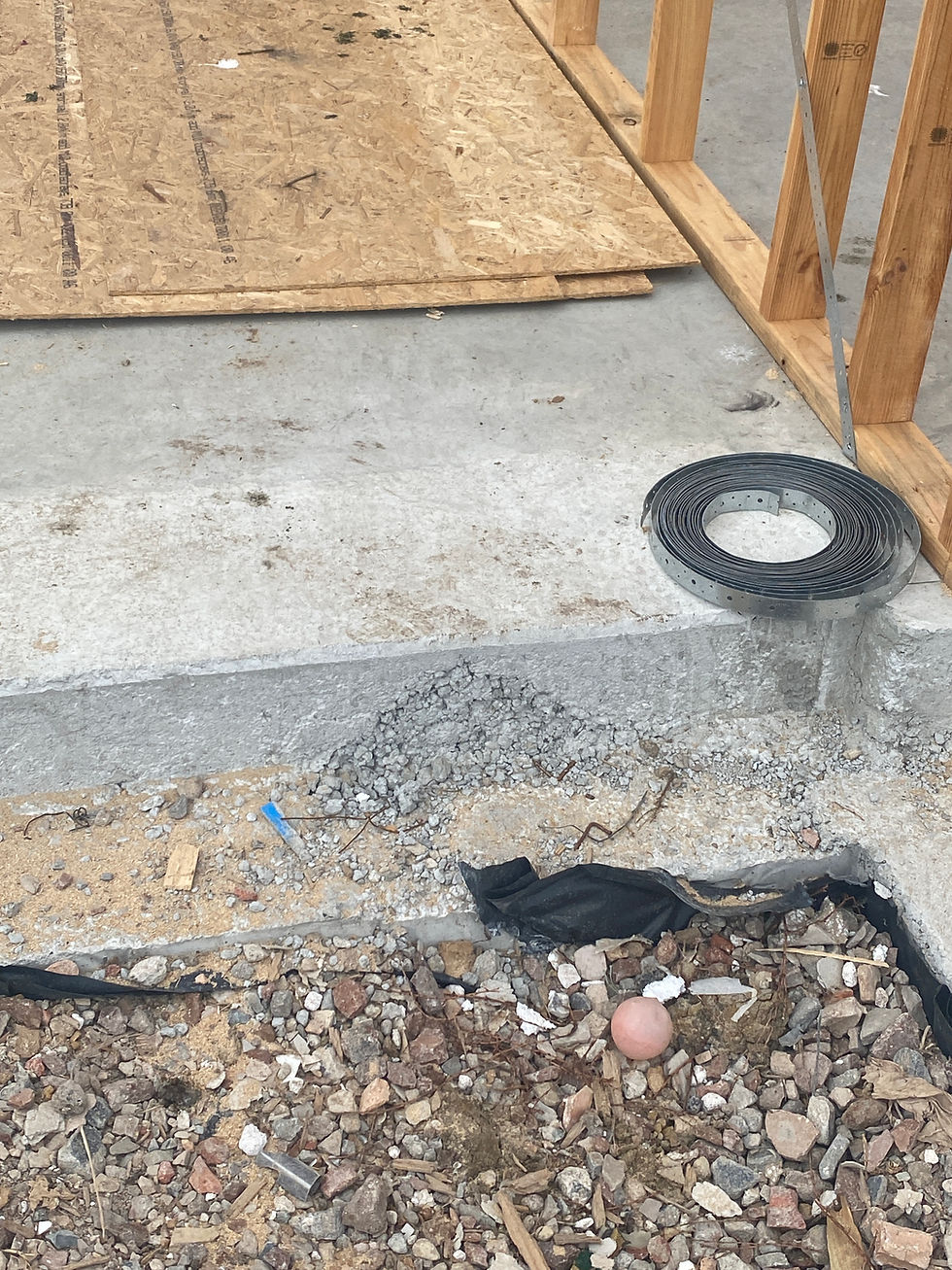
Vapour barrier installation issues
A vapour barrier is typically installed beneath the slab to reduce moisture transmission from the ground.
Common observations include:
torn plastic sheeting
gaps in the membrane
poorly sealed joins
If moisture barriers are not continuous, ground moisture can potentially migrate through the slab over time. Inspectors typically document these observations so builders can review and correct them before the pour.
Plumbing penetrations poorly positioned
Plumbing pipes often pass through the slab to supply water, sewer and drainage connections.
Inspectors sometimes observe:
pipes positioned incorrectly relative to walls
penetrations placed too close to slab edges
penetrations not aligned with the building set-out
When identified early, these adjustments can often be made quickly prior to concrete placement.
Slab edge alignment issues
Formwork installed around the perimeter of the slab controls the final shape and dimensions of the foundation.
Occasionally inspectors observe:
slab edges that appear misaligned with the building footprint
formwork that has shifted
edge dimensions that differ from typical slab layouts
Because slab edges determine the final wall positions above, alignment is important to verify during this stage.
Our article Slab Edge Alignment Issues in New Homes: What Inspectors Look For Before the Concrete Pour, shows where incorrect formwork positioning can impact how external walls and brickwork sit later in the build.
Incorrect set-out of the building footprint
Before slab preparation begins, surveyors and builders establish the set-out of the building footprint.
Inspectors sometimes observe situations where:
structural elements appear offset
penetrations do not align with the building plan
slab layout differs from expected dimensions
These observations are documented so builders can confirm layout accuracy before the slab is poured.
Poor compaction of sub-base
Before reinforcement and concrete are installed, the underlying ground surface must be properly prepared.
Inspectors sometimes observe areas where:
sub-base material appears uneven
preparation areas show signs of disturbance
compaction appears inconsistent
Proper sub-base preparation helps provide stable support beneath the slab.
Inadequate cover to reinforcement
Concrete cover refers to the distance between reinforcement steel and the surface of the concrete. If reinforcement sits too close to the surface, it may be more exposed to moisture and environmental conditions over time. Inspectors review reinforcement placement to ensure appropriate cover appears to be provided before concrete placement.

Inconsistent slab thickness
Some slab installations may show signs that thickness could vary across different areas.
Inspectors may review:
reinforcement height
slab edge depth
preparation levels
These observations help identify potential inconsistencies before concrete placement.
Drainage fall issues around slab edge
External drainage around the slab perimeter can influence how water moves away from the home.
Inspectors sometimes observe:
surface levels directing water toward the slab
limited fall away from the slab edge
unfinished site grading
These observations may be documented so site drainage can be reviewed as construction progresses.
What Inspectors Actually Review at Slab Stage
A slab stage inspection is typically a visual inspection of accessible elements prior to concrete placement.
Inspectors commonly review:
reinforcement placement
mesh overlap
vapour barrier continuity
slab penetrations
slab edge formwork alignment
termite barrier installations (if present)
The inspection does not involve destructive testing. Instead, inspectors document visible installation conditions and provide observations for the homeowner and builder to review.
Later inspections may focus on different types of issues.
For example:
both explain issues commonly identified during frame stage inspections.
While slab stage inspections focus on early structural elements, later-stage defects such as roof drainage issues can still arise. These are explored further in Are Rainheads Installed Incorrectly? Common Roof Drainage Defects Found in Melbourne New Builds, where improper installation can lead to significant water ingress.
Why Melbourne Growth Corridors Often Highlight Slab Issues
Many new homes in Melbourne are built within large residential estates across growth corridors.
Suburbs such as:
have experienced significant construction activity in recent years.
Large developments can involve multiple trades working across numerous sites simultaneously. Builders typically coordinate tight construction schedules to keep projects moving efficiently. Within these high-volume environments, small installation oversights can occasionally occur during early construction stages.
Homeowners building in these areas sometimes choose to arrange independent inspections for additional visibility during the build.
Suburb-specific inspection information can also be found in:
What Happens If an Issue Is Found
If an observation is documented during a slab stage inspection, the typical process is straightforward.
The inspector will:
document the observation
provide photos where relevant
describe the installation detail observed
The builder can then review the observations before the concrete pour. In many cases, slab stage observations are relatively simple to correct when identified early. Once the slab is poured, however, modifications become significantly more complex. This early review process is one reason many homeowners arrange inspections at multiple construction stages.
For example, some defects may only become visible much later in construction, such as moisture-related observations discussed in: Water Stains on Ceilings in New Homes — What They Mean During a Stage Inspection or waterproofing issues explained in:
How Slab Stage Fits Within the Overall Inspection Timeline
Slab stage is usually the first major inspection during construction.
A typical inspection timeline may include:
Each stage focuses on different construction elements as the home progresses. Understanding this sequence helps homeowners know when inspections are most valuable.
A detailed explanation of the inspection sequence can be found in our recent article, Why Melbourne Independent Inspections Are Carried Out at Multiple Stages of a New Build.

FAQ
What does a slab stage inspection check?
A slab stage inspection typically reviews visible installation elements before the concrete slab is poured, including reinforcement placement, mesh overlap, vapour barriers, slab penetrations and formwork alignment.
Is reinforcement checked before concrete is poured?
Yes. Reinforcement steel is normally installed before the concrete pour, which allows inspectors to visually review placement during the slab stage.
Are slab stage issues common in Melbourne builds?
Most slab installations proceed without major issues, but inspectors occasionally observe installation details that may benefit from adjustment before concrete placement.
Can slab defects be fixed before the pour?
Many slab stage observations can be corrected before the concrete is poured if identified early.
Do slab stage inspections delay construction?
In most cases they do not. Inspections are usually scheduled before the concrete pour and often occur within the normal construction timeline.
What happens if an issue is found?
Inspectors document the observation and provide a report. The builder then reviews the information and may adjust the installation before proceeding.
Conclusion
The slab stage represents one of the earliest structural milestones in a new home build. It is the point where the foundation of the home is formed and where many critical construction elements, reinforcement steel, plumbing penetrations, moisture barriers and slab set-out, become permanently embedded once the concrete is poured.
Because these components are concealed after the pour, slab stage is often one of the most valuable moments for an independent inspection. Observations made during this stage can help identify installation details that may benefit from adjustment before they become locked into the structure.
Across Melbourne growth areas such as Tarneit, Clyde North, Officer, Donnybrook and Beveridge, construction projects move quickly once the slab has been completed. Early inspections provide an opportunity for homeowners to gain visibility into the work being carried out before framing begins and the home starts to take shape.
Importantly, most observations documented during slab stage inspections are relatively straightforward for builders to review and adjust before the concrete pour proceeds. Identifying them early simply allows the construction team to confirm that preparation elements appear consistent with expected building practices.
For homeowners wanting to understand how this stage fits into the broader construction process, it can also be helpful to read New Build Stage Inspections in Melbourne — A Complete Guide to Every Inspection Stage, which explains how slab inspections connect with later inspections such as frame, lock-up, pre-plaster and practical completion.
By understanding what happens during slab preparation and what inspectors typically review, homeowners can feel more informed about one of the most important structural stages of their new home build.


Comments