Bathroom Ceiling Mould When the Exhaust Fan Is Running
Start with where the marks appear
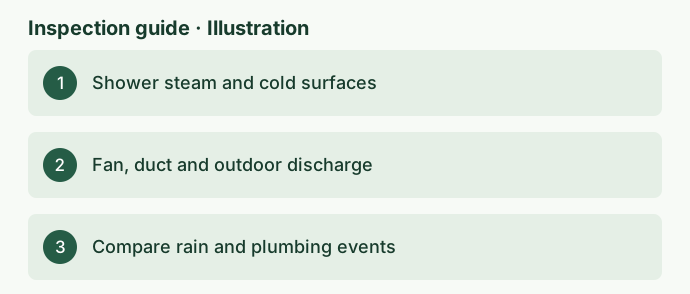
You run the bathroom fan every time someone showers, but dark spotting keeps returning on the ceiling. The useful question is where the moisture is coming from and whether the fan is removing enough of it. Begin with a bathroom ceiling moisture timeline. Write down the first room and surface affected, what was happening around the time you noticed it, and whether the same area changed after a shower, during rain or while the bathroom was idle. A photo from the doorway with the fan, ceiling edge and shower in view often gives more context than a close-up of the spots alone.
Look for differences between the marks. Scattered spotting on a cold outside corner and beading on the mirror after a shower can fit a condensation pattern. A sharply bounded stain near a ceiling penetration that grows after rain makes an external water path worth investigating. Flaking paint or a discoloured patch that carries over into a room next door changes the area to inspect. None of those patterns proves where the moisture starts. Water can travel along framing or behind linings before showing up, and surface condensation can coexist with an older leak stain.
If the same type of marking appears on furnishings or around a bedroom wall, the guide to mould behind furniture and inside wardrobes explains why those areas need their own observations. Keep each location separate in your notes so an inspector can tell whether several spaces appear to share a pattern or whether each has its own likely source. Note when any area was last cleaned or painted so changes to the finish can be separated from changes in moisture.
Follow the exhaust path from grille to outlet
Hearing the fan tells you something is running. Effective extraction also depends on where the air goes and whether replacement air can get into the room. The grille and fan connect to an air path that may include duct, bends, a damper and an exterior outlet. If a duct is disconnected or the discharge point is inside a concealed space, the equipment can shift moist air from the bathroom to somewhere it can still create problems. If the air path is restricted, the fan may run while clearing steam slowly. The equipment model, its installation and its present condition matter.
From floor level, note how the fan switches on, whether it switches off with the lights or keeps running, and how the steam clears during normal use. When the window is usable, note whether it is normally shut and whether the room door is normally closed. A tight room needs a replacement air path for effective extraction. Treat a change when the door is ajar as a clue about airflow to pass on, rather than a measurement of fan performance. Avoid holding things against the grille, removing the cover or reaching into the roof space.
Ask whether the exterior outlet can be identified from a safe place. A nearby grille may belong to a different room. Your renovation paperwork or fan model can help a contractor trace the system. The roof-space condensation guide covers clues above the lining when moisture appears even in dry weather. An inspection may be able to document what can be seen safely, while a suitably qualified contractor can trace concealed ductwork or measure airflow if the findings depend on it. Keep the two tasks clear when requesting quotes.
Compare showers, rainfall and periods without use
Choose observations from everyday use rather than trying to recreate a leak. On a dry day when people shower, note which surfaces fog up and how long they remain wet. On a rainy day when the bathroom has been idle, check from a safe position whether the patch grows or whether a fresh tide mark appears. Record what happens if someone uses a fixture upstairs, if there is one. These observations give the practitioner a way to compare room humidity with other moisture events. A single dry day or one shower without a visible change may provide little information about an intermittent issue.
Also note when the bathroom was renovated, whether a fan or light fitting has been moved, and whether insulation, roofing or plumbing has been touched nearby. A marking that appeared after roof work may direct attention above the room. Marks that started after an old opening was sealed may change the questions about air movement. A ceiling below another wet area raises a separate question about fixtures, pipework or waterproofed areas. Those are possible paths to compare against the layout and timing, rather than assumptions about what work caused the problem.
Where there is a wet area overhead, the guide to shower tiles, seals and concealed moisture describes why visible wet-area finishes can give only a partial picture. Give your inspector a sketch of the two levels if it is hard to describe what lies above. A plumber may need to isolate or test fixtures. Water near a light, fan or electrical fitting calls for urgent qualified advice. Keep clear and avoid operating the affected equipment while waiting for that advice.
Check whether one area stays colder or wetter
A small patch can come back in the same ceiling corner because that surface behaves differently from the middle of the room. Near an outside wall, changes in insulation or construction can leave a colder area even while the room feels warm. The surface can become wet as the air next to it cools. An inspector can compare the location of the marking with the wall and ceiling layout, look for related patterns at the window and other edges, and decide whether a closer look at insulation continuity or exhaust performance would help.
Moisture and temperature readings can add context when taken at relevant locations and compared with similar, apparently unaffected material. A reading immediately after bathing may describe a temporary condition. A reading on a dry afternoon may miss what happens during morning showers. An instrument result should be recorded with its location, surface and conditions. Concealed areas, coatings and different building materials can limit what surface readings tell you. The guide to mould returning after cleaning explains the value of documenting recurrence before committing to repeated surface treatment.
Illustrative scenario. A household has spotting along an outside bathroom ceiling edge, while the central ceiling looks clear. Steam lingers with the door closed. The owner also recalls a separate stain around an old light, but it looks the same in photos through several rain events. Those observations justify looking at both airflow and the cold edge, while checking the old stain as a separate finding. If the stain expands after rain while the room is unused, that would change the priority and make investigation of the area above it more pressing.
Define what the visit needs to establish
Tell the practitioner what decision is holding you up. You may be deciding whether to ask an electrician about the extraction system, a roof plumber about a rain path, or a plumber about a fixture upstairs. Ask for the visible findings, the evidence that makes a cause more or less likely, and the checks that would narrow the possibilities. The ClearScope special-purpose inspection overview shows how a visit can be framed around a particular building concern rather than a broad condition assessment.
Access can change the scope. A high exterior terminal, a locked upstairs unit or a tightly lined ceiling void may leave important parts out of view. If you live in an apartment, advise the building manager or owners corporation about relevant access and ask who can arrange it before the visit. Get permission before opening finishes or entering another lot. An accessible visual inspection can describe the evidence at the time of attendance, including visible moisture patterns and areas that could not be checked. Duct testing, opening linings or investigating a hidden leak can require a separate appointment and a different trade.
Record what has already been done, including painting, fan replacement, previous roof work or an earlier moisture inspection. Bring reports or invoices where you have them. They help the practitioner see which parts of a repair were actually included. If you have health concerns about mould exposure, use Victorian public health guidance and discuss symptoms with a health professional. A building report can document visible conditions and guide investigation of the building, while sampling and remediation assessment are separate scopes.
Agree on a way to check the result
When someone proposes work, ask what moisture pathway it addresses and how they will check that it works. If the question is air extraction, ask who will verify the discharge path and whether measured performance is needed. If the suspected issue is water entry, ask which fixture or exterior detail will be investigated and how the area will be monitored after repair. Arrange any cleaning, drying and finish repairs around the findings so the person responsible for each step understands what evidence should be recorded first.
Use dated photographs taken from the same position to compare the area after normal bathroom use or subsequent weather. Keep notes about whether the conditions are similar and whether any visible marks were removed before the comparison. An old stain may persist after the source has been addressed. A fresh mark or changing patch needs to be considered in the context of its timing and other observations. The ClearScope report examples show the sort of photographic record you can ask for when you need to pass findings on to a trade or building manager.
For a targeted enquiry, send the suburb, affected room, fan details if available, and whether the marks change with shower use, rain or both. Add any prior repair photos and identify who can grant access if the area above belongs to someone else. A clear brief helps set the inspection limits before the visit and helps you make the next booking based on the evidence that is actually available.
References
Ask ClearScope about your property
Tell us where you noticed the issue, when it appears and what previous checks or repairs have been made.
Request an inspection