Damp Patches Inside a Garage Wall Below Outside Ground
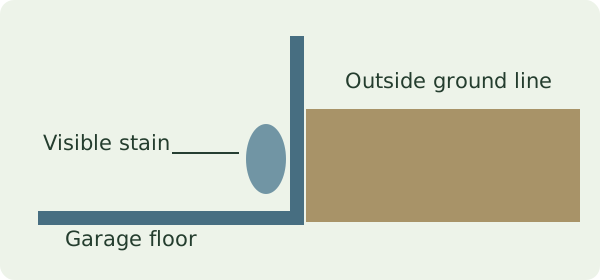
You come into the garage the morning after rain and find another patch on the wall behind the shelves. Outside, the garden is higher than the garage floor along part of that wall. A contractor has suggested painting the inside and someone else has mentioned digging outside. Before getting either quote, document where the moisture appears and which adjoining areas can be checked safely. The height of the outside ground helps frame the investigation, but it does not identify the route the water took. A garage can collect moisture in several ways, and a wall against soil may also have a retaining role that matters to the repair.
Start with a drawing of what is visible
Sketch the garage and put the damp patch relative to the opening, corners and any visible outlets or pipes. A photograph of the whole wall is useful because a close photograph alone may make the patch look much larger than it is. Include the floor line and a recognisable object for orientation. If there is paint lifting near the floor, a fine line at a joint or chalky residue higher along the wall, record each separately. Even where several symptoms appear together, they may have different histories. Photograph the outside ground with permission and from somewhere you can stand comfortably.
It may be possible to relate the outside ground level to the inside from an exposed doorway or end of the wall. Where a fence, dense planting or a raised garden makes that impossible, record the area you could not see. There is no reason to clear soil, move a heavy cabinet or climb the boundary for a better photograph. Tell the inspector whether a shelf is concealing the base of the wall or the room beyond it. If paving also falls toward the door, the guide to garage entry levels can help describe the separate threshold concern.
Reconstruct the conditions before the patch appeared
Write down roughly when the patch first appeared, whether it was on the same day as rainfall and what you noticed after later dry weather. Look for a useful contrast. Does the patch grow after prolonged rain without anyone using the garage, or does it form after a wet vehicle is parked and the doors stay closed? Was garden irrigation running, and is there a downpipe near that end of the wall? Even if the rain is the most striking event, the timing may also capture two changes on the same day. Record what you know without trying to recreate the conditions deliberately.
Where irrigation has recently changed, describe its position, timing and direction from the surface. Send details of the controller schedule or the garden work if they are available. The guide to damp after irrigation explains how a comparison across watering and dry periods can help. Any observed connection is an assessment lead. A qualified drainage practitioner may still need to trace a buried pipe or establish the condition of a surface drain. Water moving around raised ground can take a less obvious path than the shortest line from the garden to the stain.
Distinguish a cold surface from outside water
Building and Plumbing Commission guidance describes moisture damage from both condensation and water ingress. Condensation can form on cold surfaces when moist air reaches them, as explained in the Australian Government YourHome guidance. In a garage it is worth recording broad droplets on cold wall surfaces, garage doors or other objects as well as isolated dark patches. Think about how the garage was being used and whether other cold surfaces showed similar symptoms. Condensation is one possibility even when a wall is below ground, while damp confined to a section opposite an external feature can focus attention on that feature.
The shape of a patch alone cannot reliably separate condensation from ingress. For example, a wall that has already become wet could stay discoloured after the room air changes, while stored boxes might restrict air movement over a small area. Inspecting after a long dry period can leave both patterns absent. The guide to condensation in a roof space uses a different construction setting to explain why timing and distribution are clues. Do not compare a cold unpainted masonry wall directly with a dry painted timber surface and assume that any difference is meaningful. The construction and materials themselves affect readings and appearance.
Check what could influence the external wall
At the surface, open ground beside the garage may direct water towards a corner, or a paved strip may carry it to a grate. Keep notes of obvious ponding, garden changes or downpipe discharge. You may see only the end of a drain or a repair band. The guide to drainage around a house explains what visible ground and outlets can tell you. Those observations do not establish the condition of a concealed membrane, the destination of a buried line or whether a drain was ever provided behind a wall. A drainage plan and old photographs may be more informative than a second close photograph of the stain.
Some garage walls hold back soil and others have a separate structure behind them. Where the arrangement is uncertain, flag it before anyone starts planning excavation or removing wall material. Changes to soil support, access and any nearby structures need appropriate professional advice. If you see significant recent displacement, loose material or a wall that appears unstable, keep away from the area and obtain appropriate assessment promptly. If water is near sockets or other electrical equipment, keep clear and seek safe assistance. An inspection request for ordinary damp staining can wait until immediate access and safety concerns have been addressed.
Keep the damage assessment useful
The stain may be on paint or bare masonry, but the next decision might concern shelving, a lining or the items stored against the wall. Write down what has become soft, distorted or visibly affected and whether the condition extends under stored items or onto the floor. Better Health Channel guidance connects damp conditions with mould management. A visual visit cannot diagnose a health concern or identify the source of mould from its appearance. A person with a specific health concern should speak to an appropriate health practitioner. Removing a visible mark while the conditions continue can leave the underlying repair decision open.
If the owner previously painted or sealed the wall, find the date and any invoice describing the work. Compare older pictures from before and after those repairs. This allows a building assessor to record whether the new mark is at a former patch or a different location. The moisture after a plumbing repair guide explains why stopping a source and assessing material condition deserve separate attention. A sensible repair brief can ask both what needs to be investigated upstream and whether damaged finishes or joinery should be replaced. It can also describe what needs to remain visible before reinstatement.
Use an example to plan who attends
Illustrative example. In a garage cut into a sloping block, the owner notices a dark patch part way along the rear wall. It has appeared after two long periods of rain, and the lower corner has affected paint. There are also droplets around the garage opening on some cold mornings, though the rear patch lasts longer. The owner takes a wide view outside showing a downpipe and raised garden, and puts repair photographs in date order. The building assessor now has enough context to compare the two symptoms individually and decide where referrals may be useful.
If the first visit indicates that the rear wall merits separate drainage assessment, the next instruction to the drainage practitioner can identify the corner, available plans and what was visible before the last repair. If signs suggest a question about the wall itself, the owner can discuss that with a suitable practitioner before opening ground. If there is distinct evidence of surface condensation elsewhere, that can be addressed separately. The examples of inspection findings illustrate how observations and limitations can be described in a report. The purpose is to reduce uncertainty about the next action, even where the exact concealed route remains unresolved.
Set a defined scope
Send the address, approximate date the issue started, photos of both faces where accessible, and any known plans or service work. Describe the conditions when the patch is normally visible and note whether there has been water on the floor, a change in external ground or a change in the use of the room. Our specific property concern service can discuss whether a targeted assessment is useful before you seek repair quotes. If what you need is a plumbing test, a soil or retaining design or invasive opening, ask who can carry out that scope safely and what evidence they will need. A visual inspection records accessible evidence and may help frame that handover.
Before the visit, list your decisions in order. You may need to protect stored belongings this week, decide whether the garage can stay in use through winter, and then compare a drainage proposal with a building repair proposal. Give the assessor both the immediate question and the longer-term one. If access to the outside face depends on a neighbour, tell them ahead of time and arrange permission through the appropriate person. A report can still identify the relevant area and explain what could not be seen. That record makes it easier to brief a later trade without accidentally treating an untested assumption as a finding.