Why Are There Unpainted Areas Behind Doors or Cupboards in My New Home?

Updated: Apr 15
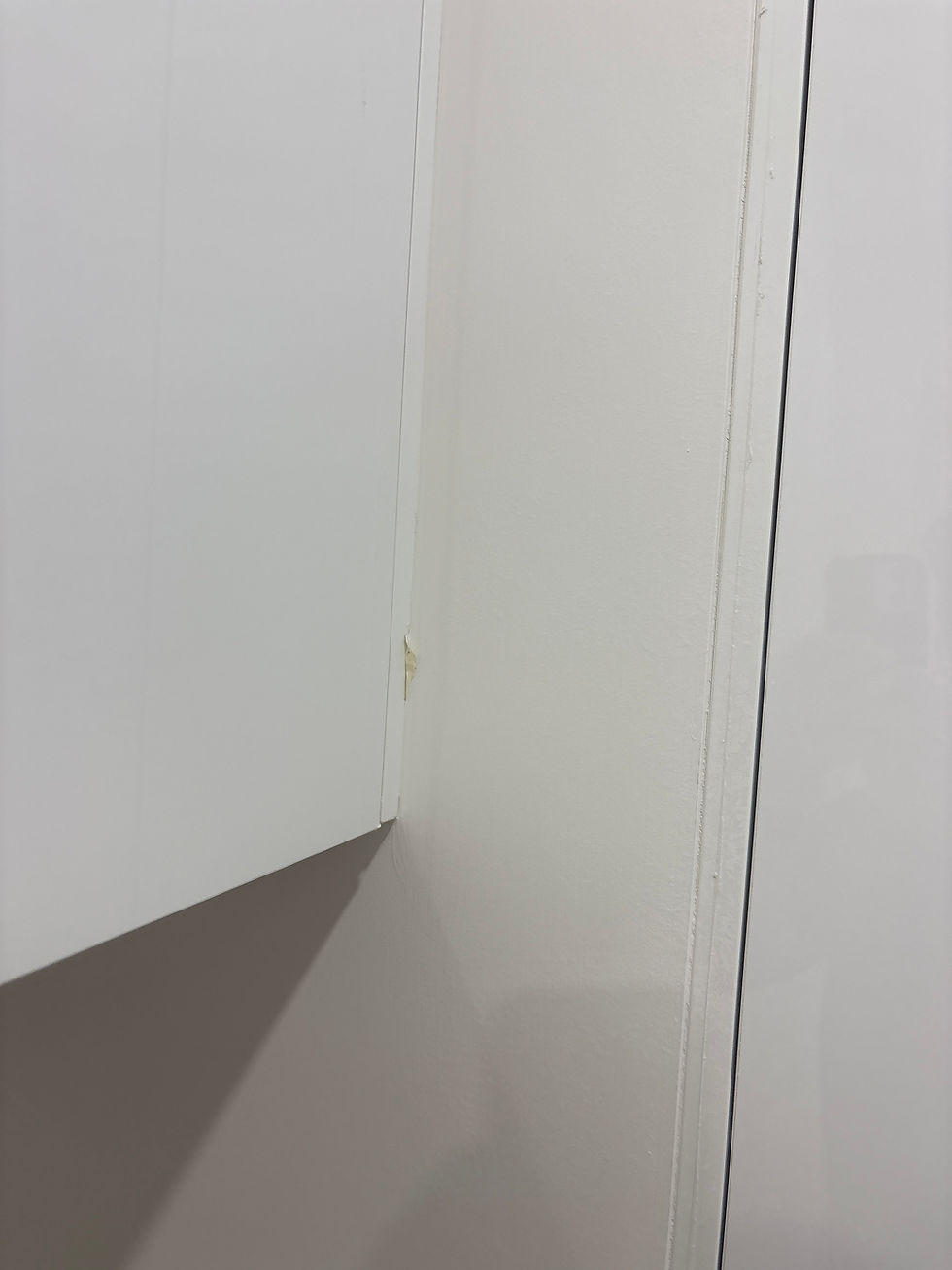
It’s a surprisingly common moment at handover. You open a cupboard, swing a door fully back, or move into a room with good natural light, and suddenly notice areas that haven’t been painted properly. It might be a missed section behind a door swing, patchy paint inside a robe, or raw plasterboard tucked behind cabinetry.
For homeowners across growth areas like Plumpton, Beveridge, Charlemont and Berwick, this can feel like a clear-cut defect. But in reality, unpainted areas behind doors or cupboards sit in a grey zone between workmanship, accessibility, and construction sequencing.
This is where understanding how inspections work becomes critical. Articles like New Build Stage Inspections in Melbourne — A Complete Guide to Every Inspection Stage, Why Independent Inspections Are Carried Out at Multiple Stages of a New Build, and When Is the Right Time to Book Each Stage Inspection for a New Build? all highlight the same thing: not every issue is visible at every stage, and some only appear right at the end.
This article breaks down what you’re actually seeing, when it’s a defect, and what to do about it.

What Does “Unpainted Areas Behind Doors or Cupboards” Actually Mean?
When homeowners raise this issue, they are usually referring to one of the following:
Completely unpainted plasterboard behind a door swing
Missed cutting-in lines where walls meet trims
Patchy or thin paint coverage inside robes or cupboards
Areas skipped because cabinetry or doors were installed before painting was completed
Visible transitions between painted and unpainted surfaces
In most cases, these are discovered during the final walkthrough or PCI stage, which aligns with what’s commonly outlined in Practical Completion Inspection (PCI) Defects in New Homes — What Inspectors Commonly Find Before Handover.
Is It Always a Defect?
Not always. This is where context matters.
There are generally three categories:
Clearly a Defect
Visible areas that should reasonably be finished
Sections exposed during normal use
Poor workmanship such as inconsistent coverage or missed sections
These would typically be captured alongside other finishing issues in guides like Paint Defects in New Homes: What Should Be Fixed Before Handover in Melbourne?
Borderline / Presentation Issues
Areas partially concealed but still accessible
Behind doors that open fully but aren’t always positioned that way
Inside cupboards where coverage is inconsistent but not entirely missing
These often fall into a “reasonable finish” discussion rather than a strict defect.
Not a Defect (In Some Cases)
Completely inaccessible areas behind fixed cabinetry
Surfaces never intended to be seen or accessed
Structural or concealed zones
This aligns with broader concepts discussed in What Defects Can and Cannot Be Seen After Plaster is Installed, where visibility and accessibility play a key role.
Not all visible defects are equal. Some can be addressed with minor touch-ups, while others affect the underlying material. Water-related cabinet damage falls into the latter category, as explained in Water Damaged Melamine Panels in New Homes: Why Replacement Is Usually the Only Proper Fix.
Why Does This Happen in New Builds?
Construction Sequencing Plays a Big Role
Painting is not always the final step. In many builds:
First coat is applied before doors or cabinetry
Final coats are done after installation
Tight timelines lead to rushed finishing
Trades overlap or work around each other
If coordination isn’t perfect, areas get missed.
Door Swings and Access Limitations
Doors are often installed before final painting is completed. If a door is fixed in place:
Painters may not fully open or remove it
Certain swing areas become hard to access
Edges and corners are easily missed
Cabinetry Installation Timing
In kitchens, laundries and robes:
Cabinets are often installed after initial painting
Final coats may not reach behind or around edges
Some areas become permanently concealed
This is why inspection timing matters, something consistently reinforced in When Is the Right Time to Book Each Stage Inspection for a New Build?
When Are These Issues Usually Picked Up?
Late Stage or PCI
Most of these issues are only visible:
After doors are installed
After cabinetry is in place
Once lighting improves visibility
During final cleaning or walkthrough
That is why they are rarely picked up at earlier stages like frame or lock-up.
The limitation of visibility is also discussed in What Defects Can and Cannot Be Seen After Plaster is Installed.
Why Stage Inspections Still Matter
Even though this issue appears late, stage inspections still help:
Ensuring earlier trades are done correctly
Reducing compounded defects
Improving final finish quality
This is the core principle behind Why Independent Inspections Are Carried Out at Multiple Stages of a New Build.
What Do Inspectors Actually Look For?
During a PCI or final inspection, an inspector will assess:
Consistency of paint coverage
Visibility of unpainted areas during normal use
Quality of cutting-in lines
Overall finish standard across the home
They won’t expect perfection in completely concealed zones, but visible unfinished areas are typically flagged.

How Doors, Robes and Cupboards Complicate Things
Door Swing Zones
Doors can hide issues until:
Fully opened
Viewed from certain angles
Seen under natural light
This is why homeowners often notice issues after moving in.
Built-In Robes and Cupboards
Inside robes:
Rear walls may have thinner coverage
Corners may be missed
Shelving and rails obstruct painting
Kitchen and Laundry Cabinetry
Behind fixed cabinets:
Full painting may not occur
Only visible edges are typically finished
This is generally acceptable if the area is truly concealed.
Cosmetic vs Incomplete — Why It Matters
This is one of the most important distinctions.
Cosmetic:
Minor inconsistencies
Slightly uneven finish
Limited visibility
Incomplete:
Clearly missed sections
Visible unpainted surfaces
Poor workmanship
The second category is far more likely to be raised and rectified.
This also links back to how inspections are staged throughout the build. In suburbs like Beveridge, Woodstock, Aintree and Weir Views, where homes progress quickly from one phase to the next, earlier inspections often provide context that helps explain why certain items only become noticeable at handover.
Why Timing of Inspections Matters More Than You Think
This issue highlights a key limitation:
Some defects only appear at the very end
Others are prevented earlier through stage inspections
The combination of both is what delivers the best outcome, as outlined in New Build Stage Inspections in Melbourne — A Complete Guide to Every Inspection Stage.
What Should Homeowners Do If They Find This?
If you notice unpainted areas:
Check visibility
Is it clearly visible during normal use?
Take photos
Document angles and lighting
Raise it at PCI
Include it in your defect list
Be reasonable
Understand concealed vs visible expectations
Follow up if required
Ensure items are rectified before final payment where possible
Real-World Context: Growth Areas and Finishing Pressure
In fast-growing estates like Tarneit, Clyde North and Officer:
Build timelines are tight
Trade overlap is common
Volume building increases pressure
This can lead to finishing items like paint being rushed or missed, particularly in less visible areas.

Final Thoughts
Unpainted areas behind doors or cupboards are more common than most homeowners expect, and they are not always as clear-cut as they first appear.
What really matters is how the area is used and seen in everyday conditions. Visibility, accessibility, construction sequencing, and inspection timing all play a role in determining whether something is a genuine defect or simply a by-product of how homes are built.
This is exactly why relying on a single end-of-build check can be limiting. When you understand how staged inspections and final handover inspections work together, it becomes much easier to identify what should be rectified and what falls within reasonable expectations.
In the end, it is not just about spotting issues. It is about knowing when they should have been picked up, how they occurred, and what a fair outcome looks like for your home.
FAQs
Are unpainted areas behind doors considered a defect in a new home?
Unpainted areas behind doors can be considered a defect if they are clearly visible during normal use or indicate incomplete workmanship. If the area is fully concealed and not intended to be seen, it may not be classified as a defect.
Should cupboards and wardrobes be fully painted inside new builds?
In most cases, visible internal surfaces of cupboards and wardrobes should have consistent paint coverage. However, areas that are permanently concealed behind fixed shelving or cabinetry may not always be fully painted.
Why do painters miss areas behind doors in new homes?
Missed areas behind doors usually occur due to construction sequencing, where doors are installed before final coats are applied. Limited access and tight timeframes can also contribute to incomplete coverage.
Is patchy paint inside wardrobes normal in a new build?
Minor inconsistencies can occur, but patchy or uneven paint that is clearly visible is generally considered poor workmanship and may be raised during the handover inspection.
Can I request repainting of missed areas at handover?
Yes, if the unpainted or poorly painted areas are visible and impact the overall finish, they can typically be included on your defect list at Practical Completion Inspection.
Are builders required to paint behind fixed cabinetry?
Builders are generally not required to fully paint areas that are completely inaccessible or permanently concealed behind fixed cabinetry, as these are not considered visible finishes.
What is considered a reasonable paint finish in a new home?
A reasonable paint finish means consistent coverage, clean edges, and no obvious missed sections in visible areas. Minor imperfections may be acceptable depending on lighting and position.
Do building inspectors check behind doors during PCI inspections?
Yes, inspectors will typically open doors and check accessible areas to assess paint coverage, finish quality, and any visible defects during a PCI inspection.
Why are some areas only painted once instead of multiple coats?
Some less visible areas may receive minimal coats due to time constraints or assumptions they will not be seen. However, visible areas should still meet an acceptable finish standard.
Is thin or inconsistent paint coverage considered a defect?
Thin or inconsistent coverage can be considered a defect if it results in visible patchiness, poor finish, or lack of durability in areas that are meant to be seen.
What causes inconsistent paint coverage in new homes?
Inconsistent paint coverage is often caused by rushed work, poor surface preparation, uneven application, or interruptions in the construction sequence.
Can lighting conditions affect how paint defects appear?
Yes, natural and artificial lighting can highlight paint defects such as patchiness, missed edges, or uneven finishes that may not be obvious under different lighting conditions.
Do all new homes have minor paint defects at handover?
Most new homes will have some minor cosmetic imperfections, but significant or clearly visible paint issues should still be addressed before final handover.
How should I document paint defects before handover?
Take clear photos from multiple angles, note the location, and include a brief description. This helps ensure the issue is properly recorded and addressed during the defect rectification process.
Should I fix minor paint issues myself after moving in?
It depends on the severity. Minor touch-ups are common, but anything clearly unfinished or below standard should be raised with the builder before handover.
Does paint quality vary between different builders?
Yes, paint quality can vary depending on workmanship standards, supervision, time pressures, and the processes used during construction.
Can unpainted areas behind doors affect resale value?
Minor issues are unlikely to significantly impact value, but poor overall presentation or visible unfinished areas can affect buyer perception.
Are paint defects covered under new home warranty in Victoria?
Many paint defects are considered maintenance or cosmetic, but more significant workmanship issues may be addressed if raised within the appropriate timeframe.
When is the best time to check paint quality in a new build?
The best time is during the Practical Completion Inspection, when all finishes are complete and visibility is at its highest.
Why do paint defects sometimes appear after moving in?
Defects can become more noticeable once furniture is moved in, lighting changes, and homeowners begin using spaces differently.
Should I check behind every door and inside every cupboard before handover?
Yes, it is recommended to check all accessible areas, including behind doors and inside cupboards, as these are common places where paint defects can be missed.


Comments