Loose or Rocking Stair Treads in an Existing Home
One stair tread feels as though it tips under your foot. You can hear a short knock, and there is a fresh gap near the painted edge. The question is whether the moving part is a finish, the tread or a larger part of the stair. The answer changes who should attend and what needs to be opened or repaired. A tread that rocks needs its support assessed before anyone treats it as a noisy stair. Keep people off a stair that appears unsafe and get professional advice promptly.
Start with the safety decision
If a step has shifted, feels unstable or shows a sudden change in shape, stop using the affected flight. Keep others away and use another safe route if there is one. Where the stair is the only way to enter or leave, contact the person responsible for the building and an appropriate professional promptly to work out safe access. If someone is in immediate danger, call emergency services. Avoid leaning on the stair, jumping on it or asking another person to walk it so you can film the movement.
Tell a repairer what you already know from normal use. One person noticed a noise near the top step after a carpet replacement. Another noticed the surface tipping while descending. Those descriptions answer different questions. Even if two people use different words, ask them where they were and what they felt. Take photos only from a stable position you can reach safely. A wider view showing the route and the suspect step is enough to start a conversation.
WorkSafe Victoria's guidance for workplaces explains how stairs can contribute to slips, trips and falls and why maintenance matters. That source is for employers and duty holders. It illustrates the type of hazard without deciding what the law requires at your home. If the stair serves several residences, notify the building manager or relevant owners corporation as well. The guide to common property condition records gives examples of why shared areas need clear access and reporting arrangements.
Identify the part you mean
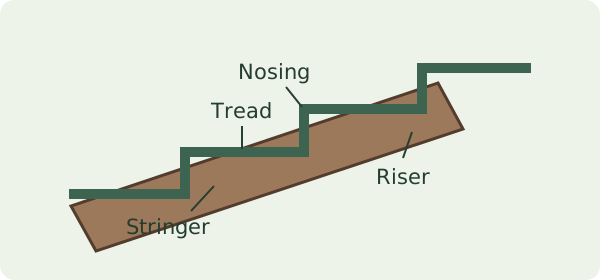
The tread is the surface you step on. A nosing is at or forms the leading edge. A riser is the upright face between successive steps where one is present. Stringers or another supporting system carry the steps. When reporting the issue, use plain descriptions if you are unsure of the terms. Say the front edge of the third step up from the bottom appears lifted, or a board against the right side of the flight has separated from the paint line.
Different finishes can obscure the moving part. On carpeted stairs, movement may be felt underfoot while the edge and joints stay covered. A timber overlay or a separate edge strip can lift while the supporting step remains out of sight. On a painted stair, cracks at a joint can show where to look more closely, but paint can crack for several reasons. A mark that crosses into the support raises a different question from a lifted strip at the exposed front.
ABCB guidance identifies stair treads and their walking surfaces as part of safe movement. The design requirements that apply depend on the building, approvals and work involved. An observation about one tread does not settle whether the stair complies. If you have drawings or a description of the stair system, give them to the person inspecting it. Ask for the suspected moving part and any concealed connections to be identified in the record.
Compare one step with the rest of the flight
When you can see the stair from a safe place, note whether the gap appears at one end of one tread or at several positions. Look at the relationship between the step and any adjacent side board, riser or landing. A photograph from the same point taken before and after a finish change can help the inspector identify which edges are original and which were covered. Paint colour or a shadow by itself is a poor way to date a gap.
A noise on several steps may come from movement where components meet. A single abrupt step change may warrant closer inspection of that tread and the way it bears on its support. If the landing also seems to move or other parts of the house appear affected, say so when booking. The guide to sticking doors and seasonal changes explains the importance of recording a pattern across different building elements, and the guide to recurring cracks explains why the repair timeline can matter.
Handrail or balustrade movement deserves its own entry in the brief. The tread surface and the barrier perform different roles. A clear description helps the inspector decide whether the flight and barrier should both be assessed. Our guide to balustrade movement at handover addresses a different stage of ownership, but it shows which connections and access questions can matter when the barrier itself is the concern.
Work out what changed before the symptom
Ask about carpet, overlay, repainting, a plumbing leak, moved furniture or other work near the flight. A recent event helps establish timing, but it does not prove who or what caused the change. Compare earlier photos, dated invoices and the position of any new materials. If a floor finish was added above the landing, document that transition separately from a report of a moving step partway down the flight.
For external stairs, describe exposure, the adjacent landing and any visible runoff or deterioration. Sun and rain can affect finishes, and water can collect near some interfaces. Visible discolouration alone does not tell you the condition inside a timber section or a concealed connection. A stair fixed to an elevated deck may require a wider brief if the deck also moves. The guide to elevated timber deck movement covers the adjoining structure when the symptoms extend beyond the flight.
There may be approval records if the stair was altered or replaced. Victoria's Building and Plumbing Commission explains that external stairs built in conjunction with dwelling works typically require a building permit, and that standalone garden stairs can be treated differently. The guidance does not decide whether approvals were required or obtained at your address. For proposed replacement or alterations, check the project with the appropriate building practitioner or surveyor before work proceeds.
What a targeted inspection can tell you
An inspection can map the affected location, describe visible conditions at the tread and surrounding parts, and explain which view is blocked by finishes or linings. An accessible underside may help clarify whether a joint or support has changed. A ceiling or enclosure below a flight can leave those parts out of view. The inspection scope depends on safe access and may need to be arranged with a contractor if an opening is required.
You can ask whether the observable issue points first to a stair specialist, carpenter or other building practitioner. If the concern involves the supporting structure or is widespread, engineering advice may be appropriate. Ask who will decide what gets opened, how the route will be kept clear or secured during work and what evidence the contractor will provide after the repair. A visual report is not a load test or a certificate of stair safety.
If the likely issue is a lifted finish, confirm who will assess the substrate before reinstating the surface. If the tread or support needs assessment, give the contractor enough room to specify the connection or replacement work. Applying adhesive, adding a slip strip or covering a visible crack can leave the original question unresolved. The report examples page shows how to describe a visible item and state the limits of a finding.
An illustrative example
Imagine an internal timber stair with one carpeted tread that feels as if it moves near its front edge. The owners report a knock after a recent carpet change. A close photo shows the carpet has lifted slightly at the edge, but the underside of the flight is enclosed. From that evidence alone, a reviewer cannot establish whether the movement comes from the carpet and trim, the tread below or the connection at one end.
The owners keep the stair out of use and tell the stair contractor which tread was affected and when they first noticed it. The contractor can consider whether a local opening at the finish is safe and sufficient, and what to do if the support moves as well. If inspection of the exposed area shows an adjacent tread or landing is also affected, the investigation widens. This example is illustrative. Actual access, scope and responsibility depend on the building and the conditions found.
What to send ClearScope
Tell us whether the stair is internal or external, what the surface is made of and which step or landing you are concerned about. Include when you first noticed movement, what recent work took place and whether the underside is visible. Point out separate concerns about the railing or landing. Send any pictures already taken from a safe position. If the flight is the only route, flag it before booking so the access question can be addressed separately.
Our inspection services page explains where a special-purpose visit fits. If the stair issue is part of a broader check after a recent build, the post-handover maintenance inspection page explains the wider scope. When your immediate question is who should assess the tread, ask for a brief that ties the location, safety concern and access limits to a practical next step. That gives the relevant contractor something specific to investigate before you agree to a finish repair or a wider replacement.
If the contractor recommends replacing the tread, ask for a short written description of which part is being replaced and which adjacent surfaces will be disturbed. The finish installer can then confirm what can be retained and what needs reinstatement. If the contractor finds a gap at a concealed joint, ask for a photograph before it is covered and a note identifying the affected step. For a shared flight, have the responsible person record the work date and tell residents when the route is available again. Those details make it easier to compare any later symptom with the original finding without asking anyone to reproduce movement on the stair.